
At a time when the Middle East is being reshaped by rapid technological escalation rather than conventional battlefield lines, Israel’s 2026 Security Prize is more than a ceremonial recognition, it is a reflection of how modern warfare is increasingly decided in laboratories, intelligence units, and orbital systems rather than on open fronts.
The award, presented by Defense Minister Israel Katz, highlights a consistent strategic reality: Israel’s defense doctrine is anchored in qualitative military edge (QME), a principle that prioritizes technological superiority over numerical parity. The 2026 winners, spanning electronic warfare systems, classified intelligence capabilities, and advances in the Ofek satellite constellation, underscore how deeply this doctrine is embedded in Israel’s security architecture.

Over the past several years, regional tensions involving Iran, Hezbollah in Lebanon, and various Gaza-based militant groups have reinforced the need for multi-domain defense capabilities. The mention of systems used during “Operation Roaring Lion” against Iran reflects a operational pattern in which Israel seeks to deter adversaries not only through kinetic strikes but also through intelligence dominance, electronic disruption, and preemptive detection.
One crucial element of the overall strategy adopted by Israel is intelligence from outer space.As the acknowledgment of the development of the Ofek satellite program as a result of collaboration between Israel Aerospace Industries and Israel’s armed forces indicates, Israel has managed to create one of the best satellite systems for reconnaissance purposes in the entire region. With respect to the original Ofek satellite that was launched back in 1988, Israel has been able to develop several satellite imaging systems that are used to monitor enemy positions and locations.
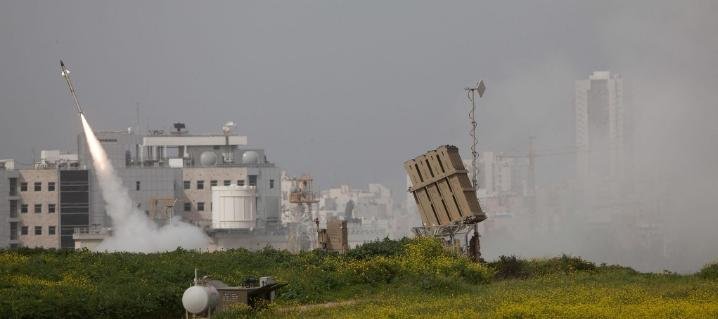
Of equal importance is electronic warfare, a field that is now considered among the key elements determining the outcome of the conflict. The systems that have won awards and were developed by the Israel Defense Forces and the mentioned defense companies like Rafael Advanced Defense Systems and Elbit Systems represent a trend toward neutralizing an opponent’s communications and radar and their unmanned aerial vehicles (UAVs). Recent conflicts in the region saw the use of electronic warfare technology to defeat missiles and UAVs attacking Israel before they reached Israeli soil.
Another dimension highlighted by the awards is intelligence fusion. The participation of the Mossad alongside military intelligence units and Israel’s defense industries signals the integration of external intelligence gathering with operational military planning. In Israel’s security model, agencies such as Mossad, IDF Military Intelligence Directorate, and elite technological units operate in close coordination, particularly in cyber intelligence, signals interception, and covert surveillance. This integrated structure has been central to Israel’s ability to maintain situational awareness across multiple fronts simultaneously.

Further indication of the heavy reliance on cyber and signals intelligence can be seen from the addition of Units 81 and 8200. 8200, which is sometimes referred to as the Israeli version of the National Security Agency in the US, is known for its work in cyber defense and cyber attacks, while Unit 81 provides technological solutions that address the operational challenges faced by military officials.
From a strategic standpoint, Israel views these advancements as essential deterrence tools. Surrounded by adversaries that are also rapidly adopting drone warfare, ballistic missile systems, and cyber capabilities, Israel’s emphasis on technological asymmetry is intended to preserve strategic stability through superiority rather than parity.
The logic is straightforward: if adversaries cannot reliably penetrate Israeli defenses or evade detection, the cost of escalation increases significantly.Of course, it is essential to acknowledge that the Israel’s awards are also indicative of the country’s powerful civil-military-industrial complex. The close working relationship between the IDF, intelligence services, and military industrial companies has resulted in a feedback loop that sees battle experience directly informing technological advances.
This process of continuous innovation has become one of the main features of Israel’s defense industry.In essence, the 2026 Security Prize is not simply about past achievements. It is a signal of future direction. Israel is investing heavily in integrated warfare systems, where satellites, cyber units, artificial intelligence, and electronic warfare platforms operate as a single networked structure. This is not just technological advancement; it is strategic necessity in an increasingly volatile regional environment.