
Strategic Analysis of Regional Alliances, Maritime Security, and Power Projection
1. Strategic Realities Beyond Immediate Borders
When Diaspora Affairs Minister Amichai Chikli pointed to the emerging geopolitical matrix connecting Ankara, Doha, and Islamabad, he articulated a strategic reality that Israeli military planners have been closely tracking. For years, Israel focused its strategic calculations on its immediate periphery. Defense doctrines prioritized air superiority over neighboring states, containment of Iranian proxies, and bilateral peace treaties.That narrow focus is no longer sufficient. The geopolitical landscape of the Middle East and its broader oceanic flanks has undergone a profound transformation. Old alliances have fractured, and unexpected alignments have emerged to take their place.Chikli’s declaration that India represents a super strategic partner while highlighting the dangers of a rising Turkey Qatar Pakistan axis underscores a vital truth: Israel’s national security is now directly tied to power dynamics stretching from the Arabian Sea to the Eastern Mediterranean.
2. Anatomy of the Tripartite Alignment
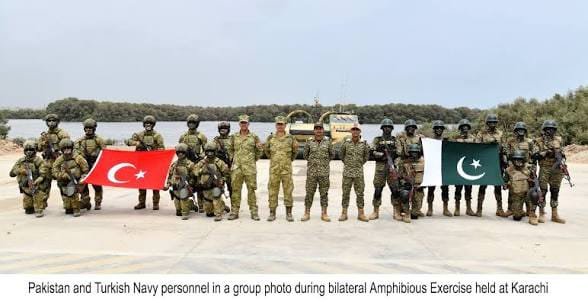
The emerging alignment of Ankara, Doha, and Islamabad is not a passing diplomatic trend. It is an intentional, multi layered alliance combining military hardware, ideological reach, and substantial financial capital.Under President Recep Tayyip Erdogan, Turkey has systematically sought to position itself as the ideological leader of regional Sunni movements, expanding its influence into northern Syria and the Levant. Qatar brings immense financial resources, hosting political offices for militant factions and deploying state backed media networks to shape global narrative battles. The inclusion of Pakistan completes this dangerous triad. As a nuclear armed power with a massive standing army, Pakistan offers hardware capabilities, military training, and deep intelligence assets.
3. Operational Impact and Diplomatic IsolationThe practical implications of this alignment became undeniable during recent diplomatic negotiations surrounding the United States and Iran. While Jerusalem found itself largely excluded from key discussions, Ankara, Doha, and Islamabad actively mediated the diplomatic process.This tripartite axis proved capable of shaping international outcomes without requiring Israeli input. For Israeli strategists, the synthesis of Turkish drone technology, Qatari funding, and Pakistani defense expertise represents a formidable challenge. It threatens to create a secondary diplomatic and military front capable of constraining Israel’s operational freedom across multiple theaters.
4. The India Anchor: Strategic Partnerships in South Asia
To counter this emerging threat, Israel has cultivated its own web of strategic friendships. At the core of this network stands India. The relationship between Jerusalem and New Delhi has evolved far beyond transactional arms purchases. It is now an essential pillar of both nations’ national security architectures.Bilateral trade between Israel and India exceeds seven billion dollars annually, with defense technology serving as the engine of cooperation. India relies heavily on Israeli radar systems, unmanned aerial vehicles, and precision guided munitions to maintain operational readiness along its contested borders. In turn, India offers Israel an irreplaceable strategic partner with massive industrial capacity, demographic scale, and global diplomatic weight. The alignment between Israel and India is rooted in shared security concerns. Both democracies face persistent threats from cross border terrorism and state sponsored radicalism. Both nations view the growing military partnership between Turkey and Pakistan with deep suspicion. As Pakistan deepens its defense ties with Ankara, India naturally aligns with partners who can balance that influence. For Israel, a strong, stable, and technologically advanced India serves as a crucial anchor in South Asia, ensuring that hostile alignments do not achieve unchallenged dominance over the Indian Ocean shipping lanes.

5. The Eastern Mediterranean Shield and Red Sea Strategic Anchorages
Further west, Israel has built a protective shield across the Eastern Mediterranean by cementing ties with Greece and Cyprus. This trilateral alliance was forged in direct response to Turkish maritime revisionism and energy claims.Building defensive depth in the Levant. Joint naval maneuvers, shared air force exercises, and coordinated intelligence sharing among Jerusalem, Athens, and Nicosia have created an effective barrier in the Levant. Israeli pilots regularly train in Greek airspace, while Cypriot ports provide vital logistics support. This Mediterranean tri party alliance ensures that Turkish power projection remains contained within its territorial waters. The strategic picture extends into the Gulf and the Red Sea. The Abraham Accords established an enduring partnership with the United Arab Emirates, providing Israel with a stable, forward thinking ally in the Persian Gulf.Meanwhile, the increasing instability along the Horn of Africa has elevated the importance of partners like Somaliland. Situated along the southern coast of the Gulf of Aden near the Bab el Mandeb Strait, Somaliland occupies one of the world’s most critical maritime choke points. As Iranian backed Houthi forces continue to threaten international commercial shipping, securing friendly maritime anchorages and intelligence posts along the African coast is no longer optional. It is a vital necessity for preserving Israel’s trade lifelines and protecting Red Sea sea lanes.
6. Broadening the Threat Matrix and Diplomatic Agility
This complex network of partnerships demonstrates that modern defense cannot be conducted solely within one’s immediate neighborhood. The regional order is being actively rewritten, and static defense postures are obsolete.The threat matrix has expanded, blending traditional state actors with non state proxies, economic pressure, and ideological warfare. Israel cannot afford to view its security through the isolated lens of its immediate land borders.Chikli’s comments serve as a timely reminder that diplomatic agility is just as important as military power. Israel paid a heavy price in blood and economic disruption over recent years to weaken hostile proxies along its borders.
7. Institutionalizing Strategic Partnerships for Long Term Security
Tactical victories on the battlefield will ring hollow if foreign powers successfully build diplomatic and military coalitions that isolate Jerusalem. Building and maintaining alliances with key global players like India, while strengthening regional ties with the UAE, Greece, Cyprus, and East African actors, provides the necessary depth to withstand hostile diplomatic maneuvers.The challenge facing Israeli leadership today is to convert these informal alignments into formal, enduring institutions. Intelligence sharing and joint military exercises must be matched by long term economic integration, joint technological development, and coordinated diplomatic strategy in international forums.The emerging Sunni axis led by Ankara, Doha, and Islamabad is actively organizing to shape the future of the region. Israel must be equally proactive. By cultivating these new friendships and recognizing the interconnected nature of global security, Israel can ensure that its strategic interests remain protected across every theater that impacts its survival.