Political Dynamics and Electoral Shifts in Israeli Politics
1. Shifting Tectonic Plates in Israeli Politics
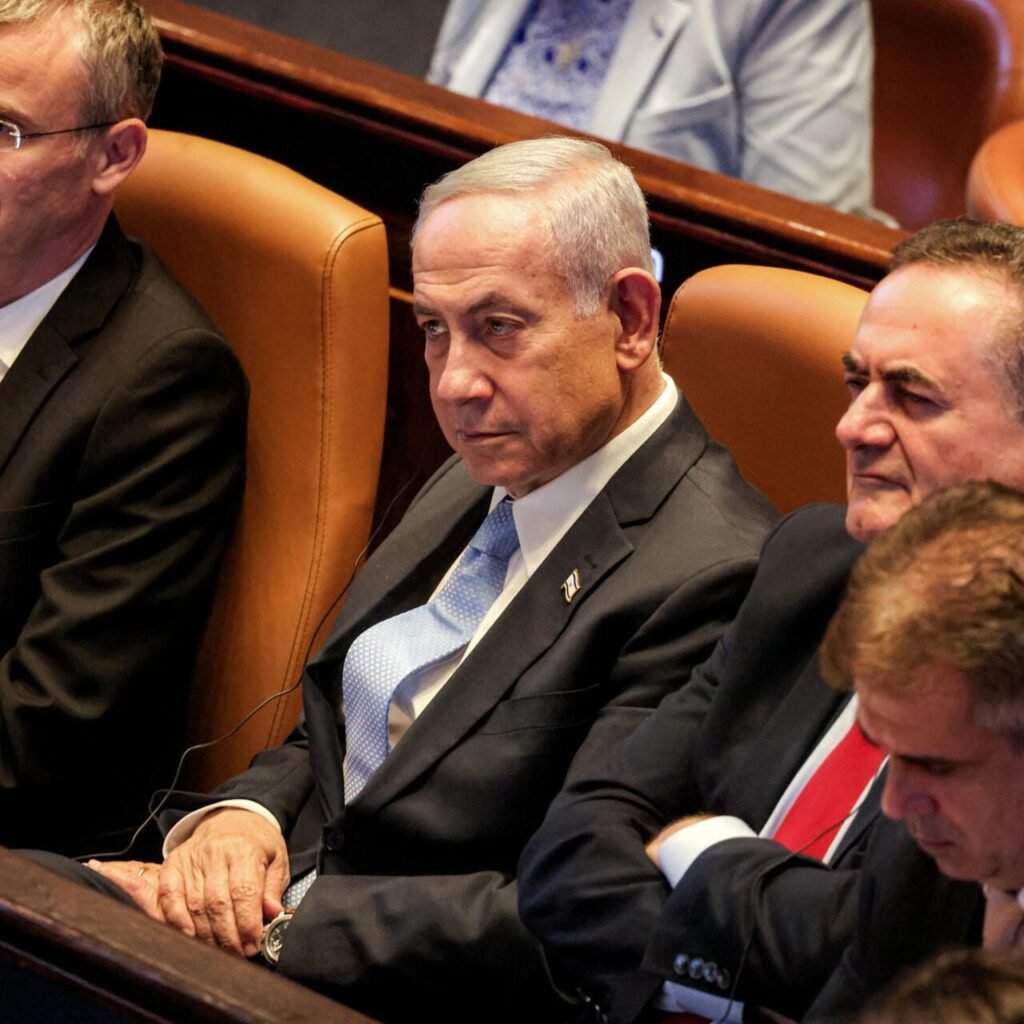
The political tectonic plates under Jerusalem are shifting in a way the country has not seen in years. According to the latest Maariv poll conducted by Lazar Research, Likud has fallen to just 20 seats. That is the lowest projection for the ruling party since June 2025. Meanwhile, former IDF Chief of Staff Gadi Eisenkot and his Yashar party have surged to a record 23 seats, opening a clear three seat lead over Prime Minister Benjamin Netanyahu.
2. Structural Warnings and Non-Ideological Stewardship
This is not merely another routine fluctuation in Israel’s endless polling cycle. It is a profound, structural warning sign for the ruling coalition. The Israeli public is growing increasingly exhausted by political paralysis, wartime fatigue, and persistent institutional infighting. In this climate, voters are actively seeking a different kind of leadership. The numbers signal a clear appetite for steady, security focused, non ideological stewardship, which is the exact brand of politics that Eisenkot represents.
3. The Ascent of Gadi Eisenkot
Eisenkot’s ascent reflects a fundamental shift in what the electorate wants from its leaders. For nearly two decades, Israeli politics has revolved around the polarizing axis of Netanyahu, creating a fiery, ideological, highly partisan debate between those who view him as indispensable and those who view him as a threat to democracy. Eisenkot cuts through that exhausted dichotomy. As a former military chief who suffered immense personal tragedy during the war by losing his son and two nephews in combat, Eisenkot carries a solemn, quiet authority that resonates deeply with a nation in pain. He does not rely on bombastic press conferences or aggressive social media campaigns. His appeal lies in perceived competence, sober realism, and a complete lack of political ego.
4. Head-to-Head Metrics and Public Trust
The head to head metrics in the survey reinforce this reality. Eisenkot leads Netanyahu on prime ministerial suitability by six percentage points, 46 percent to 40 percent. Even when matched directly against former Prime Minister Naftali Bennett, Eisenkot commands a decisive 38 percent to 23 percent lead. For a political figure who launched his party relatively recently, this is a remarkable consolidation of public trust. He has effectively positioned himself as the gravitas candidate and the calm at the center of Israel’s ongoing political storm.
5. The Stagnation of the ‘Together’ Alliance
The poll also sheds critical light on the political health of Together, the combined slate formed by Naftali Bennett and Opposition Leader Yair Lapid. While Together gained one seat to reach 17, the alliance has clearly struggled to generate the runaway momentum its founders envisioned. When Bennett and Lapid announced their joint run, the goal was to build an undeniable, overwhelming center right juggernaut that could single handedly dismantle Likud’s dominance. Instead, the survey reveals a party that is largely cannibalizing votes from within the opposition rather than expanding the bloc’s reach.Of Together’s projected 17 seats, 10 come from voters who already intended to vote for Bennett, five come from Lapid’s Yesh Atid base, and only two represent new voters brought into the fold. The merger served as a necessary defensive shield for Lapid, whose party was hemorrhaging support, but it has not proven to be a transformative force. Furthermore, the survey shows that 46 percent of Zionist opposition voters want Bennett and Lapid to remain united, while 31 percent believe they should split. This reveals a fractured, hesitant base that remains unconvinced of the long term ideological logic behind the partnership.
6. Tactical Scenarios and Consolidation Potential
The most intriguing tactical scenario highlighted by the poll involves Chili Tropper and Yoaz Hendel’s Yesodot Israel. Currently polling below the 3.25 percent electoral threshold at 2.9 percent, Yesodot Israel risks wasting thousands of critical anti Netanyahu votes. However, a full 57 percent of Zionist opposition voters believe Tropper and Hendel should merge with an existing platform. If Yesodot Israel were to integrate into Eisenkot’s Yashar, the combined entity would jump to 27 seats, widening its lead over Likud to seven seats. Such a consolidation would cement Yashar as the undisputed flagship party of the center, creating a powerful magnet for undecided voters as the election approaches.
7. Knesset Arithmetic and Coalition Resiliency
Yet, for all the headlines about Likud’s decline, the broader arithmetic of the Knesset remains stubbornly stuck in a stalemate. The Zionist opposition bloc holds 61 seats, which is the absolute bare minimum required to form a majority, while Netanyahu’s coalition stands at 49 seats, with Arab parties retaining 10 seats.This narrow margin exposes the fragility of Israel’s current political map. Even if Likud drops to 20 seats, Netanyahu’s partner parties remain remarkably resilient. Itamar Ben Gvir’s Otzma Yehudit ticked up to eight seats, matching Shas and United Torah Judaism, while Bezalel Smotrich’s Religious Zionist Party managed to clear the threshold with five seats. Netanyahu’s core religious and far right ecosystem continues to demonstrate a solid, immovable floor.
8. Opposition Fragility and Eisenkot’s Strategic Role
The primary lesson of this survey is that the opposition cannot rely solely on Likud’s attrition to guarantee a stable government. A 61 seat opposition majority on paper is exceptionally fragile in practice. It includes a wide spectrum of ideological actors, ranging from Yair Golan’s Democrats on the left with 11 seats to Avigdor Liberman’s Yisrael Beytenu on the right with 10 seats. Governing with a razor thin majority composed of such disparate factions would be an exercise in constant instability.This structural reality explains why Eisenkot’s rise is so significant. Unlike traditional party leaders who operate strictly within their political silos, Eisenkot possesses the broad, cross factional appeal necessary to construct a wide, stable governing coalition. His background as a national security figure allows him to court soft right voters who are disillusioned with Netanyahu’s reliance on extremist elements, without alienating the secular center and left.
9. Conclusion: Cracks in the Fortress
Netanyahu has survived countless adverse polls throughout his career. He remains a master tactician, capable of rallying his base and exploiting divisions among his opponents as election day nears. But the trajectory revealed by this Maariv poll suggests that his traditional political playbooks are losing their efficacy. The public is weary of political theater and perpetual crisis.The voters shifting toward Eisenkot are sending an unmistakable message. Israel wants responsible, unifying leadership anchored in national security and institutional integrity. As the campaign season intensifies, the opposition’s challenge will be turning this polling surge into a durable election day victory. For Netanyahu, the message is equally clear: his political fortress is showing its deepest cracks in years.