
Imagine a single covert operation turning a diplomatic summit into the most dangerous international crisis of the decade. Imagine a peace conference in Switzerland ending not with a communiqué, but with a military confrontation between two nuclear-armed states. That is why claims surrounding the alleged assassination plot against Pakistan’s Army Chief, General Asim Munir, deserve attention, even if they remain entirely unverified.
For clarity, there is no proof from the public domain of the assertion by analyst Pepe Escobar. The two countries have not confirmed this assertion, and hence, it can only be seen as speculation. However, strategic analysis often involves examining hypothetical scenarios because sometimes the consequences of an event matter as much as the event itself. If such a plot had existed and if it had been carried out, the repercussions could have fundamentally altered the geopolitical landscape of the Middle East and South Asia.
According to Escobar’s account, Pakistani intelligence allegedly intercepted the plot and delivered an unmistakable warning to Israel: “If you touch our delegation, we’re going to wipe you off the map.” Whether such a message was ever sent remains unknown. But the significance lies not in the wording itself, it lies in the fact that Pakistan is one of the few states in the world capable of making such a threat and being taken seriously.
Pakistan is not Yemen. Pakistan is not Lebanon. Pakistan is not even Iran. It is a country of more than 250 million people, possesses one of the world’s largest armed forces, and maintains an estimated nuclear arsenal of around 170 nuclear warheads according to international assessments. Any attack on the country’s top military commander during an international diplomatic mission would not have been viewed in Islamabad as a usual covert operation from Mossad. It would have been interpreted as a direct attack on the Pakistani state itself.
History suggests that countries react with maximum aggression to threats against their leaders. The assassination of Archduke Franz Ferdinand in 1914 exemplifies the ability of one action to set in motion much more than intended. As the old proverb warns, “For want of a nail, the kingdom was lost.” Strategic miscalculations frequently begin with decision-makers assuming they can control escalation after the fact. Reality usually proves otherwise.
If an assassination attempt against Pakistan’s army chief had occurred on foreign soil during sensitive negotiations, Islamabad would have faced immense domestic pressure to respond. No government could easily absorb such an event and move on. The Pakistani military establishment would almost certainly have viewed it as an attack on national sovereignty, institutional credibility, and deterrence itself. The question would not have been whether to respond, but how.
What makes this hypothetical scenario particularly dangerous is Pakistan’s strategic culture. The Pakistani military has historically framed itself not merely as a national defense institution but as the guardian of a nuclear-armed Islamic republic. Any attack on its top commander could have been interpreted through both national-security and ideological lenses. In such circumstances, calls for restraint would have struggled to compete with demands for a powerful response.
This is when the threat takes on special significance. While a threat to “wipe Israel off the map” is not necessarily going to be seen as requiring a nuclear retaliation, it shows that Pakistan was willing to put every option on the table. Deterrence operates on the principle of ambiguity as well as capacity. States do not have to specify what they are doing; rather, they only need to convince adversaries that escalation carries unacceptable risks. Pakistan’s status as the only Muslim-majority country possessing nuclear weapons gives its strategic messaging a weight that few other states can match.
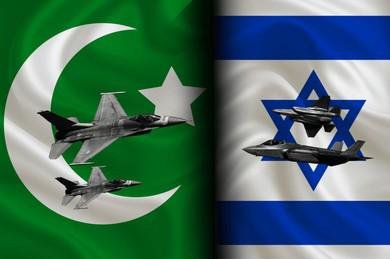
For Israel, if such a scenario were true, it would have represented one of the most reckless strategic gambles imaginable. Israel has demonstrated remarkable intelligence capabilities over the years, but strategy is not merely about what can be done; it is about what should be done. There is an old military saying: “The enemy gets a vote.” Any operation must be evaluated not only by its tactical success but by the strategic environment it creates afterward.
The challenge for Israel would be clear. Unlike many of the actors it regularly confronts, Pakistan is a sovereign military power with extensive conventional capabilities, expansive intelligence networks, and strategic partnerships throughout the Muslim world. Pakistan is also connected to countries with a large regional influence, such as China, Turkey, Saudi Arabia, and a number of Gulf states. A crisis involving Pakistan would not be an isolated bilateral dispute.There’s also the nuclear dimension. Analysts often warn about the dangers of casually wielding nuclear weapons in geopolitics, but the fact of the matter cannot be denied. Predictability and restraint are essential for strategic stability between nuclear powers.
Any event with the potential to result in direct military confrontation between states with nuclear weapons at their disposal becomes a global concern immediately. Crises have a way of gaining momentum of their own, even when neither side is intending to escalate.
Perhaps the most important implication concerns strategic logic itself. If the objective of any covert operation is to improve national security, then provoking a confrontation with Pakistan would appear difficult to justify. Israel’s security challenges are already extensive, involving multiple fronts and complex regional dynamics. Opening an additional conflict with a large, nuclear-armed state would create risks vastly exceeding any conceivable tactical gain. Rather than strengthening Israel’s position, such a move could have isolated it diplomatically and forced it into a confrontation it could neither easily control nor predict.
As the old military maxim goes, “The first casualty of war is certainty, and the second is control.” A wise statesman must be able to distinguish between boldness and recklessness. Even if this alleged plot never existed, it is an interesting, but unverified, geopolitical rumor. If it did, though, it may have been the kind of strategic miscalculation that historians later describe as a narrowly avoided catastrophe. And certainly, it would have been one of the greatest disservices to Israel. In geopolitics, not every bullet that is fired changes history. Sometimes the bullet that is never fired changes it even more.