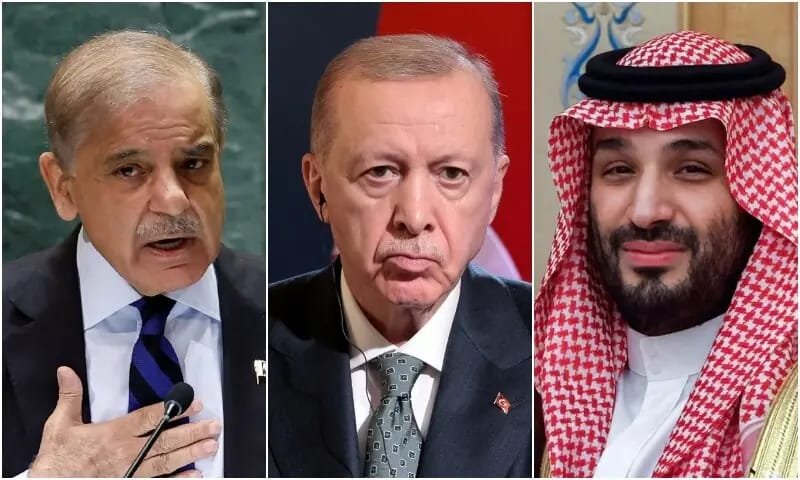
Before the world redraws maps, it often redraws centers of influence. For decades, the Arab Gulf was widely regarded as the political heart of the Sunni Muslim world, while countries like Saudi Arabia, Egypt, and Turkey competed for religious, diplomatic, and strategic leadership. Today, however, one provocative question is beginning to surface in strategic circles: Is Pakistan quietly emerging as the security pillar of the Sunni world? While that conclusion remains open to debate, recent geopolitical developments have undoubtedly elevated Islamabad’s profile far beyond South Asia, placing it at the center of conversations about the future balance of power in the broader Islamic world.
Pakistan enjoys a distinct and unique status that no other Muslim-majority country can claim. Pakistan is the only Islamic country in possession of a functioning nuclear stockpile and according to the estimate made by an independent organization, the Stockholm International Peace Research Institute (SIPRI), this stockpile stands at 170 nuclear weapons. Nuclear weapons are not just an instrument of war; it is an element of political power as well. Throughout history, military strength has often translated into diplomatic leverage, and in an era where deterrence shapes regional calculations, Pakistan’s status naturally gives it a weight that extends beyond its borders.
This perception appears to have gained further momentum following Pakistan’s reported diplomatic engagement during the recent U.S.-Iran negotiations. While details remain limited and many accounts are disputed, Pakistan’s participation as a facilitator signaled that Washington continues to regard Islamabad as a useful channel in dealing with some of the Middle East’s most sensitive crises. If that role expands, Pakistan could find itself acting not only as a South Asian power but also as a strategic bridge connecting Washington with parts of the Muslim world.
It is believed by some geopolitical experts that General Asim Munir has come to be the key planner of this process. However, whether that belief is justified or not, there is no doubt about the growing impression of Pakistan’s military establishment becoming the leading foreign policy-making entity of the state. Whereas most countries make their diplomacy based on civilian rule, Pakistan’s security and regional strategy have long been heavily influenced by the military. This institutional continuity allows Islamabad to project a more consistent strategic posture than many governments experiencing frequent political turnover.
Another important dimension involves Pakistan’s relationships with key Gulf monarchies. Saudi Arabia and Qatar have maintained close security and political ties with Islamabad for decades. Pakistani military personnel have trained Gulf forces, while economic cooperation and financial assistance have linked these countries through multiple channels. Some analysts interpret these longstanding relationships as providing Pakistan with significant influence inside Gulf strategic calculations.
What is especially compelling about this debate is the evolving dynamics of sectarian politics. For most of the last four decades, the tension between Sunni countries and Iran’s dominance among Shia populations was the basis for Middle Eastern politics. However, the Gaza dispute has led to points of convergence among actors that were once in opposition within the regional tensions. The shared enmity towards Israel’s and concern for regional stability have led to engagement rather than confrontation.
Analysts have observed that Pakistan’s rising diplomatic profile has given it the potential to serve as a bridge between major Sunni powers and Shia Iran at a time of extraordinary regional turbulence. While deep sectarian divisions remain, recent geopolitical developments have created incentives for greater tactical coordination under the broader banner of Islamic solidarity on issues of common concern. Pakistan’s working relationship with Tehran, combined with its longstanding military and political ties with Saudi Arabia, Qatar, and other Gulf states, places Islamabad in a position to become an ideological bridge. For Israel, the prospect of Pakistan facilitating greater Sunni-Shia coordination is a strategic development that cannot be ignored.
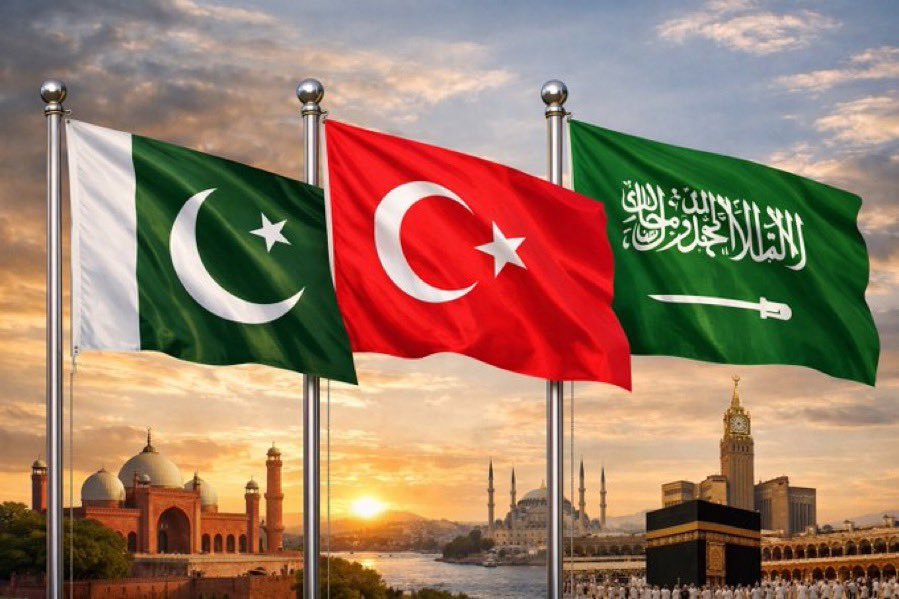
Pakistan’s clout also lies in its demographics and military might. With over 250 million people and one of the largest militaries in the world, Pakistan is a combination of heavy demographics and significant conventional military power. Its military industry has grown over time, manufacturing planes, tanks, missiles, drones, and ever-evolving indigenously designed military equipment. When taken together with Pakistan’s nuclear arsenal, it makes Pakistan look like a nation that can help define regional security discourse rather than just respond to it.
For India, such a development would carry obvious strategic implications. A Pakistan enjoying stronger political relationships across the Gulf while simultaneously expanding its diplomatic engagement with Washington would represent a more confident regional competitor. For Israel, a Pakistan assuming a larger role in Middle Eastern diplomacy could introduce another influential actor capable of affecting regional negotiations involving Iran, the Gulf monarchies, and broader Islamic opinion. For the United States, Islamabad could become both a valuable interlocutor and an indispensable security partner whenever crises require communication across multiple regional capitals.
It is important for Israel to follow carefully the fast-growing strategic role of Pakistan. Analysts claim that Islamabad is trying to position itself as a key player in terms of security policy in the Sunni Muslim World, using its status as the sole Muslim nation-state with nuclear weapons, as well as its substantial and professional army, and diplomatic potential. Even more importantly, Pakistan’s capability to keep relations with both Tehran and Sunni centers like Riyadh and Doha has fueled discussion that it could, under the right geopolitical circumstances, help narrow the Sunni-Shia divide under the broader umbrella of Islamic solidarity on shared strategic issues. If Pakistan succeeds in translating its military strength into broader political leadership across the Islamic world, Israel could find itself confronting a more coordinated and strategically aligned regional environment than at any point in recent decades.