
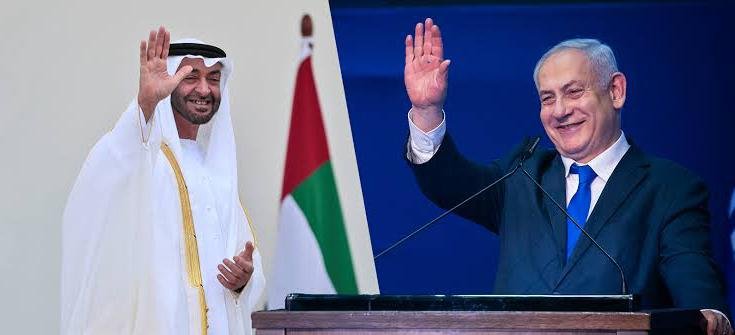
Wars do more than redraw battlefields, they reveal who stands beside you when the missiles start flying. The recent confrontation with Iran appears to have delivered precisely that lesson for Israel. While many regional governments issued carefully balanced statements designed to avoid provoking Tehran, the United Arab Emirates demonstrated a willingness to align itself far more closely with Israel’s strategic vision than many had anticipated. For Israeli policymakers, this is not merely another chapter in the Abraham Accords. It is the emergence of what could become Israel’s most important Arab strategic partnership.
The Abraham Accords, signed in 2020, turned decades of backchannel connections between Israel and the UAE into fully normalized diplomatic relations. In the aftermath of the accords, there has been a significant surge in bilateral economic trade amounting to billions of dollars. The collaboration has now gone far beyond economic interests to include cooperation on artificial intelligence, cybersecurity, renewables, fintech, agriculture, logistics, and defense. What initially appeared to many observers as an economic agreement is steadily evolving into a broader geopolitical alignment driven by shared concerns over regional security.
The latest confrontation with Iran accelerated that transformation. Geography does not allow the United Arab Emirates much choice but to act on its fears. Located on the other side of the strategically vital Strait of Hormuz through which one-fifth of the world’s oil flows, Abu Dhabi knows very well that an escalation in the region means a threat not just to its own security but to its entire economic model. For a country whose prosperity depends on uninterrupted trade, stable financial markets, and global investment, prolonged confrontation with Iran carries enormous costs.
That reality explains why the UAE increasingly views Israel not simply as a diplomatic partner but as a strategic asset. Israel possesses some of the world’s most advanced missile-defense technologies, electronic warfare capabilities, intelligence networks, cyber expertise, and drone-defense systems. These are precisely the capabilities Gulf states seek as missile and drone warfare become defining features of modern Middle Eastern conflict. Security cooperation that once occurred discreetly now serves mutual interests more openly.
The relationship extends well beyond military considerations. Israel has earned the nickname “Startup Nation” through its concentration of technology companies and research institutions, while the UAE has invested hundreds of billions of dollars in diversifying its economy beyond hydrocarbons. The combination is strategically complementary. Israel contributes innovation, research, and technological expertise. The UAE contributes capital, global logistics infrastructure, sovereign wealth funds, and access to international markets. Few regional partnerships offer such an obvious economic fit.
The planned expansion of the India-Middle East-Europe Economic Corridor (IMEC) is a case in point. Intended to establish land connections between India and Europe, via Gulf nations and Israel, this route aims at decreasing reliance on maritime chokepoints by developing new paths for the exchange of goods, energy, and data flows. Once accomplished, it will turn both Israel and the United Arab Emirates into indispensable transit zones connecting Asia, the Middle East, and Europe. This makes the partnership a matter of international significance.
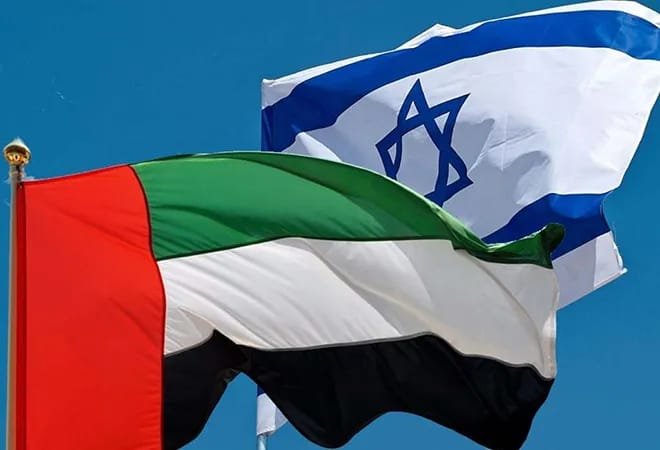
The partnership also reflects shifting regional power calculations. For decades, Israel’s security architecture rested heavily on overwhelming military superiority and extensive American backing. Those foundations remain important, but recent regional developments have highlighted the value of building durable partnerships with influential Middle Eastern states themselves. The UAE offers something Washington cannot: geographic proximity, regional legitimacy, financial resources, and sustained political engagement within the Arab world.
Perceptions of a common threat also serve to solidify the connection between the two states. Both governments are apprehensive about the power of Iran within the region, skeptical of political Islamist groups, and interested in keeping safe trading routes in the Gulf and the Red Sea. Strategic partnerships rarely require identical interests; they require overlapping priorities substantial enough to justify long-term cooperation.
The economic incentives are equally compelling. The UAE has positioned itself as one of the world’s leading financial and logistics centers, handling massive volumes of global trade through ports such as Jebel Ali. Israel, despite its comparatively small population, ranks among the world’s leading innovation ecosystems, particularly in cybersecurity, artificial intelligence, medical technology, and defense industries. Combining Emirati investment with Israeli technological capacity creates opportunities extending far beyond the Middle East.
The wider trend is hard to overlook. Strategic alliances can only be put to the test during times of uncertainty in the region, not during diplomatic ceremonies. The current row with Iran seems to have only strengthened the rationale for Israel’s engagement with the UAE. Security considerations, technological synergy, economic ambitions, and common regional perceptions continue to drive both nations together.
The Middle East is entering an era in which alliances are defined less by historical rivalries and more by practical interests. In that emerging landscape, Israel may discover that its most valuable regional asset is not simply American support, but a durable strategic partnership with an ambitious Gulf state that sees its own future tied to stability, innovation, and regional influence. If that trajectory continues, the UAE could become not only Israel’s closest Arab partner but one of the pillars upon which its long-term regional strategy is built.