
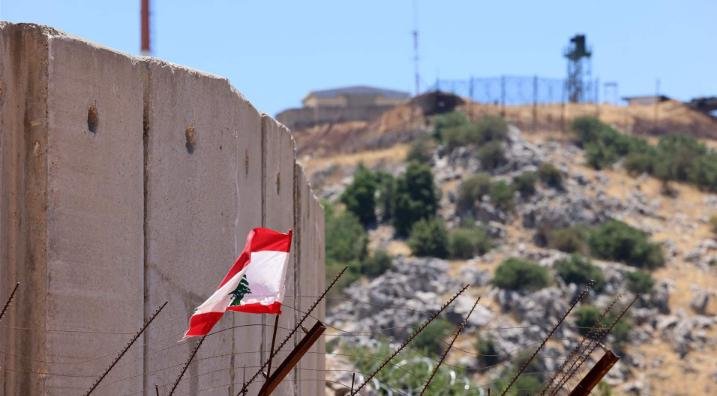
The remarks by IDF Chief of Staff Lt.-Gen. Eyal Zamir during his operational assessment in the Mount Dov sector depict a major shift in the nature of Israel’s northern security challenge, one that is particularly defined not by conventional cross-border fire alone, but by the rapid evolution of unmanned aerial systems in the hands of non-state actors.
However, the specific menace raised by the current case, FPV drones operated by Hezbollah, is not an individual tactical challenge, but rather part of a broader evolution taking place in asymmetric warfare. FPVs tend to be cheap, fiber-optic-guided, and even difficult to disrupt using electronic jammers.
Such drones are already known to have been deployed in various conflicts around the world. The particular example of their deployment against the Iron Dome system demonstrates the key challenge that traditional air defense systems were simply never intended to handle; i.e., they were designed to counter rockets and missiles.
The assertion that “operational and technological solutions are already in development and implementation” signals a recognition within the IDF that adaptation cycles must now be compressed. In previous decades, the Israel’s defense establishment relied on long development timelines to maintain qualitative superiority.
However, the FPV drone challenge compresses this advantage. The cost asymmetry is stark: relatively low-cost commercial or modified drones can force the deployment of highly expensive interception systems, creating a sustainability problem even for technologically advanced militaries.On the other hand, Zamir’s focus on “strike upon launch squads, operators, and commanders” is consistent with the IDF’s long-standing practice of going after the entire operational environment rather than just the weapon itself.
In this sense, it fits into the context of Israel’s general policy of counter-forces. This means that Israel tries not only to reduce the enemy’s capability but also to eliminate the infrastructure and human resources behind that capability. However, in the case of FPVs, such an approach becomes more complicated due to their decentralized nature.
The operational environment also underscores the persistent role of Iran as a strategic enabler. The linkage he draws between strikes on Hezbollah and a “blow to the Iranian axis” reflects the entrenched Israeli assessment that Hezbollah functions as a forward deterrence and pressure mechanism for Tehran. In this framework, northern front dynamics cannot be separated from regional escalation thresholds involving Iran’s broader network of aligned militias.
What makes the current phase distinct is that technological diffusion is narrowing the gap between state and non-state actors. Hezbollah’s reported ability to field FPV drones with operational effectiveness demonstrates how battlefield innovation is no longer monopolized by states. Lessons from other conflict theatres have accelerated this diffusion, enabling rapid adaptation cycles that challenge Israel’s traditional qualitative military edge (QME) doctrine.
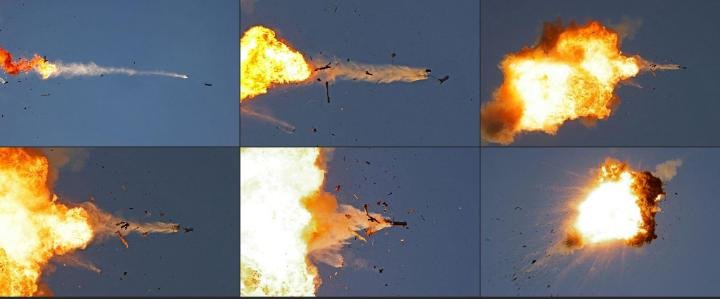
The IDF’s emphasis on “rapid integration” of defensive solutions therefore reflects not only tactical urgency but structural necessity. Air defense systems such as Iron Dome remain highly effective against conventional rocket barrages, but the FPV drone threat introduces a different problem set: low altitude, minimal radar signature, and human-in-the-loop control that can evade automated interception protocols.
This requires layered solutions combining electronic warfare, kinetic interception, and real-time intelligence fusion.Another aspect of deterrence which needs to be addressed in relation to Zamir’s observations is the factor of psychological resilience. Recognition of fatigue amongst the troops and the operational stress involved shows that repeated front experience, especially at the Lebanese border, entails more than just adjustment to technology; it requires perseverance on an institutional level.
In conclusion, the Mount Dov exercise serves as an indication of a period of transition in northern security trends. While Israel may have previously been readying itself only for a repeat of past combat models against Hezbollah, it must now prepare itself for an ever-evolving battlefield where technological ingenuity among opponents is key.
The dilemma facing the IDF here is thus two-fold, first, deterring an opponent that is well-armed and backed by Iran, and second, adapting quicker than battlefield technologies evolve.