
The New York Times recently published a sprawling, multimedia cartographic project titled “How a Nation of Immigrants Traces Its Roots.” It is a technical marvel, documenting the ancestral flows that have sculpted the American landscape over centuries. From the Scandinavian pockets of the Midwest to the vibrant Yemeni enclaves in Detroit, it purports to be the definitive atlas of American diversity. Yet, for all its meticulous detail and data-driven ambition, the map suffers from a glaring, almost deliberate act of erasure. Across the entire United States, in every borough of New York and every suburb of Florida, the Jewish people, a group that has arguably shaped the American immigrant experience more profoundly than perhaps any other, are nowhere to be found.
The authors of this project lean on a predictable defense: the United States Census Bureau is legally barred from querying citizens about their religious affiliation. They argue that their hands were tied by the limitations of federal data. They note that private surveys, while available, lack the granular, localized detail required to populate such a massive mapping project. It is a sterile, bureaucratic alibi for an intellectual failure. By hiding behind the “religion-only” definition of Jewish identity, the Times has managed to perform a feat of demographic alchemy that makes millions of Jewish Americans vanish into the background noise of the nations from which their ancestors fled.This is not merely a technical error; it is a profound failure to understand the nature of the Jewish people.
To categorize Jewishness solely as a religion is to engage in the very reductionism that Jewish scholars and historians have spent decades fighting. Judaism is a civilization, an ethnicity, and a nationhood that transcends borders and labels. When an Eastern European immigrant arrived at Ellis Island in the early 20th century, they did not just leave behind a nationality, they carried with them a collective history, a unique language, and a shared covenant. For the Times to ignore this, while highlighting every other ethnic niche, is to tell the world that while everyone else belongs to a traceable “people,” Jews are merely practitioners of a private faith who happen to be scattered at random.
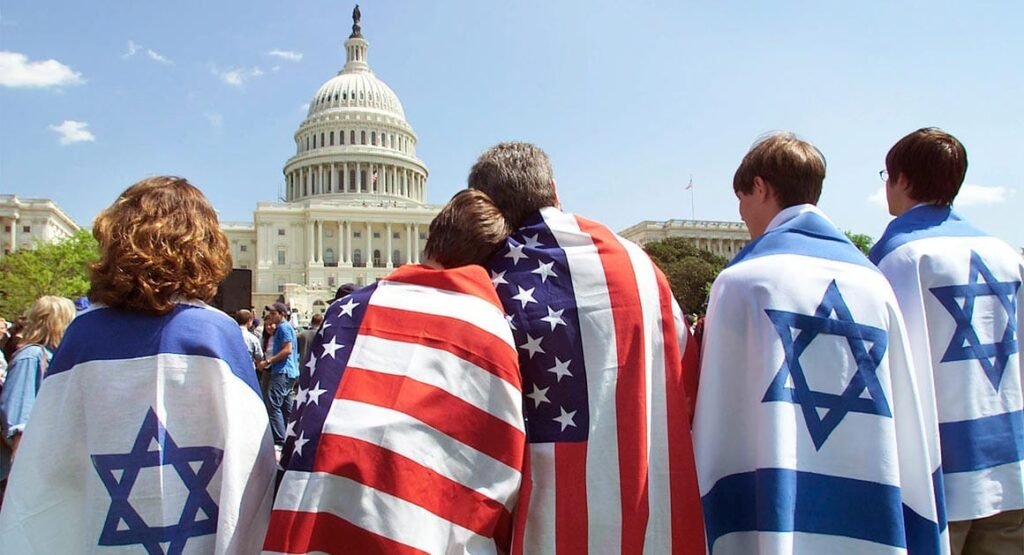
The irony here is sharp. The Times map tracks “Israeli” as a distinct category, and it correctly identifies pockets of Persian and Bukharian Jews under the guises of their national origins. But it fails to grasp the common thread that binds these groups together. It turns a blind eye to the reality that Jewish identity is a parallel, enduring membership in a global tribe. This erasure is particularly stinging because it aligns with a growing, dangerous tendency in contemporary American discourse to strip Jews of their collective agency. We see this in the political sphere, where ideological actors declare that Jews cannot be both a nation and a religion, or that their national aspirations in Israel are somehow an illegitimate “privilege.” When you erase the demographic reality of a people, you make it easier to erase their political and historical legitimacy.
The historical context of this silence is rooted in genuine fear. As the Pew Research Center has noted, Jewish leadership in the post-Holocaust era was justifiably wary of official government counts of religious minorities. The trauma of the 20th century taught us that centralized data on “who the Jews are” often serves as a roadmap for persecution. Yet, there is a massive difference between the state’s desire to track a minority and a private media outlet’s inability to map a community that is physically, culturally, and socially visible to anyone who walks down a street on the Upper West Side or in Teaneck.The New York Times map is a mirror that reflects the American story back at the reader, but it is a cracked mirror. It tells us that America is a tapestry of specific, named ethnic origins, but it leaves a blank white space where the Jewish contribution should be. This “city without Jews” is a fiction. It denies the existence of the very communities that built the infrastructure of American social, cultural, and intellectual life. It is an erasure that mirrors the broader, growing discomfort with Jewish identity in the public square.We are reaching a point where the “blended identity” of the American Jew, the feeling of being both fully at home in the West and emotionally and historically tethered to the global Jewish people, is being treated as an administrative nuisance. When the Times decides that it cannot map us because it cannot categorize us by nationality or religion, it is telling us that we don’t fit the mold. It is suggesting that our history is too messy, our solidarity too complex, and our existence too inconvenient for their data models.
The blank spots on that map, from the condos of South Florida to the streets of Brooklyn, are not just empty spaces on a digital grid. They are a statement. They represent the continuing struggle to define what it means to be a Jew in a diaspora that invites us to belong, but often demands we surrender the “Otherness” that defines our soul. We know who we are, even if the mapmakers choose to look away. We are a people who have survived the pogroms of the Russian Empire, the horrors of the Holocaust, and the shifting winds of American political favor. We are not a subset of “German” or “Russian” or “Polish” immigrants, and we are certainly not an error in a database.
The Times claims this map tells the story of immigration in America. They are wrong. It tells the story of who they find acceptable to recognize. If the goal was a celebration of diversity, the exclusion of the Jewish story is a glaring, inexcusable omission. It suggests that the Jewish experience is something to be whispered, something that defies the clean, state-approved categories of the census, or perhaps something that no longer fits the narrative of a “nation of immigrants” that is increasingly turning its back on the very identity that has made the American Jewish experience so unique. It is a reminder that in a world of labels, the Jew remains, as always, the outlier, the people who refuse to be fully defined by the maps that others draw for them.