By Eitan Levi
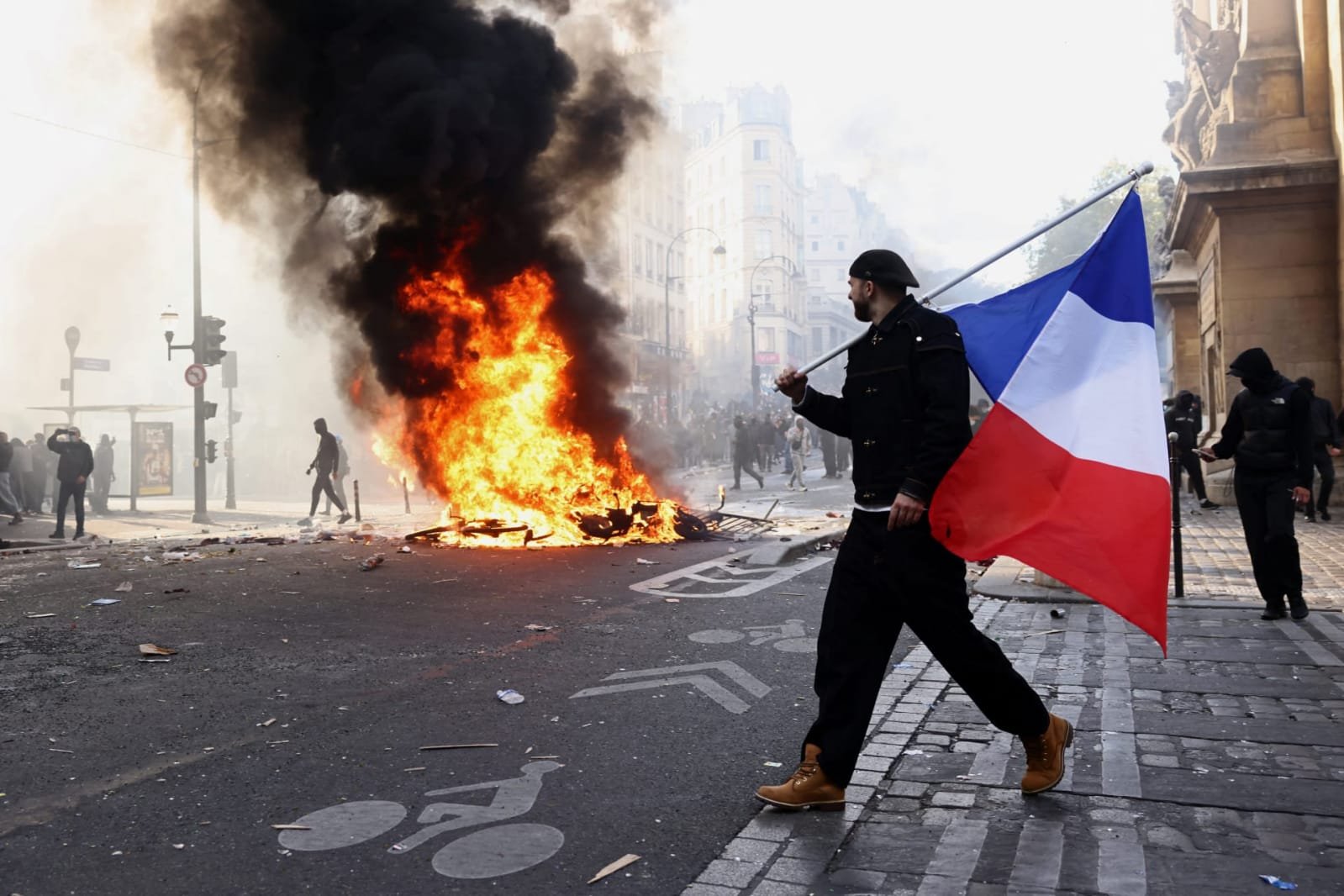
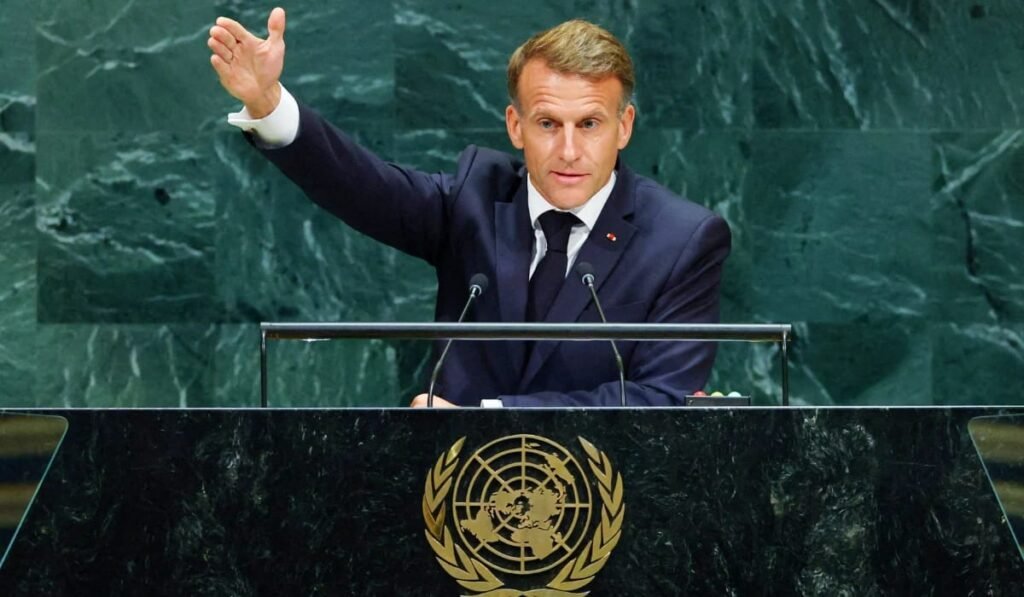
France loves to play the part of the world’s moral compass. You hear it everywhere, at the United Nations, in Élysée Palace press briefings, French leaders hand out lessons on human rights and boast about their devotion to liberty, equality, and fraternity. But look at the reality on the ground: civil unrest is breaking out in French cities, storefronts are burning, police become targets, Jewish institutions face vandalism. The gap between Paris’s lofty international rhetoric and what is actually happening at home is not just wide, it is glaring. Here is a country that will not stop lecturing Israel on how to handle conflict, yet it cannot manage the basic responsibility of any sovereign state: keeping its own citizens safe.
What is happening goes way beyond just lost control in the streets, it is a direct rebuke to President Emmanuel Macron’s leadership. The country’s bogged down in economic stagnation, life’s getting more expensive, students are striking, and instead of acting, the government just puts out empty statements. Sure, peaceful protest is part of democracy, but when protests turn into waves of arson, looting, and violence, that is no longer dissent, it is betrayal of every law abiding citizen. Nobody’s educational complaint backs up torching someone’s shop. Rising prices cannot excuse attacking police. And dressing up criminal behavior as “social justice” does not make someone brave or righteous, it is just giving chaos a political pass.
Whenever lawlessness sweeps through French cities, the Jewish community bears the brunt. During recent riots, attackers broke into a synagogue in Paris’s 19th arrondissement, pried open the Torah ark, and desecrated holy items. It is not a new story, there is a long history of anti Jewish violence. Remember the arson attack on the Beth Yaacov synagogue in La Grande Motte, when a police officer got hurt after a guy wrapped in a Palestinian flag set off an explosion? There is no logical or ethical reason to connect economic gripes to targeting Jews. When protest movements morph into focal points for anti Jewish hate, they stop being civic actions and become breeding grounds for extremism.
Numbers do not lie. In 2025, France saw 1,320 antisemitic incidents. That level of hate is not about random bad apples, it is a sign of something deeply broken in society. When the government has to deploy soldiers and riot police outside Jewish schools, community centers, and places of worship just to guarantee people’s safety, it is not just dealing with isolated threats, it is facing a systemic failure. Jewish citizens do not need another polished speech from the Élysée Palace after the next assault, they need the law to be enforced, with no compromise.
So much paralysis comes from politicians who are scared stiff to face radical ideology on their own turf. A recent survey amongst France’s Muslim population showed that 44% prioritize religious law ahead of France’s secular rules, with a sizable group favoring Sharia over civil authority. When government treats its laws as optional, it effectively surrenders control. No city block should be a “no go zone” for police or the law. Nobody should live under intimidation because of their identity or beliefs. By always worrying about elections and appeasing radical factions, politicians have not just let things slide, they have put everyone’s safety on the line, including moderate Muslims who genuinely want peace and belonging.
For Israelis, the current situation in Paris feels all too familiar, and it stings. Israel knows how easily French grandstanding morphs into betrayal. Look back to 1967, when Israel faced annihilation from Arab armies, France slapped on an instant arms embargo, keeping 50 Mirage fighter jets Israel had already bought and paid for, later putting them in its own air force. When political expediency demanded, friendship and promises got tossed aside.
And let us not pretend France’s warnings to the world come from some unimpeachable record. The nation’s history is littered with state sanctioned violence that flies right in the face of its universalist ideals. In Algeria, French forces oversaw systematic torture and disappearances, and Macron eventually had to admit to the murder of activist Maurice Audin. In 1961, Paris police violently crushed an Algerian protest, killing dozens and dumping their bodies in the Seine.
The shadow of colonial brutality extends far beyond North Africa. In Madagascar, French troops ruthlessly smothered the 1947 independence movement, tens of thousands of civilians died, and President Hollande later called it “tragic repression.” In December 1944, in Senegal’s Thiaroye camp, French soldiers shot West African veterans demanding their back pay. It took eighty years for a French president to acknowledge that massacre in 2024. Time after time, the liberty France claims as its gift to the world was denied to those under its thumb, and often with force.
Today, Western governments often turn a blind eye to extremism while scolding Israel, and it is creating real problems. Philosopher Maarten Boudry recently pointed out that indulgence toward hostile movements, especially those that foster antisemitism, just ends up undermining the West itself. Walking alongside radicals, waving flags that glorify violence, tolerating anti West hate, it does not calm unrest, it pours gasoline on it.
France is now reaping the consequences of sitting on the fence and talking out both sides of its mouth. Human rights should not be elastic, used to criticize other democracies while letting decay run rampant inside your own borders. If Macron and his diplomats want to lecture Israel about security or sovereignty, they need to first bring stability to France’s streets, root out extremism, and make sure Jewish kids can walk through Paris with no fear. Real moral authority has to start at home. You show it by governing well, not by delivering self important speeches to the rest of the world.
About the Author
Eitan Levi is a Security and Geopolitical Analyst with expertise in Israeli defence strategy, Iran’s regional operations, Middle Eastern power rivalries, and Israel’s security partnerships.