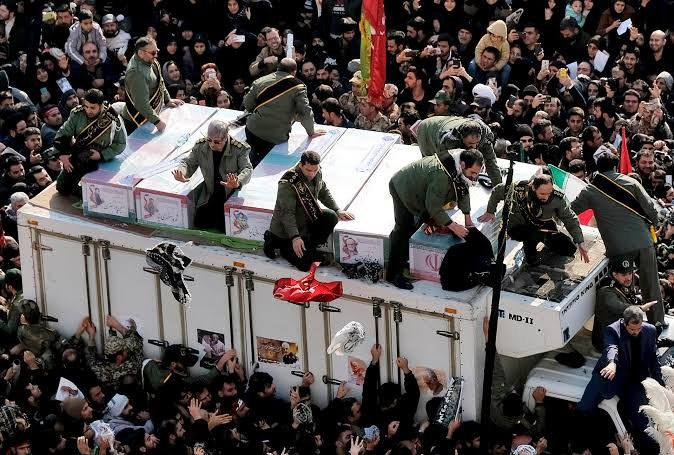
The spectacle of a week-long funeral procession spanning Iran and Iraq is, in the eyes of the Iranian regime, a projection of enduring strength. As millions prepare to flood the streets of Tehran, Qom, Mashhad, Najaf, and Karbala, the message from the Islamic Republic is clear: the state survives, the ideology persists, and the alliance remains unbroken. Yet, beneath the orchestrated displays of grief and the defiant rhetoric of military commanders, there lies a profound vulnerability. The death of Supreme Leader Ali Khamenei in the opening salvos of the 2026 war, the joint U.S.-Israeli operations “Roaring Lion” and “Epic Fury”, dealt a blow from which the regime is still desperately trying to recover. Now, as they lay their leader to rest months after his actual passing, the funeral is less a mourning ritual and more a high-stakes gamble for legitimacy.
The warning from Ali Abdollahi, commander of Khatam al-Anbiya, that any “miscalculation” during these processions would trigger a “harsh and regrettable response” is a desperate attempt to manufacture a zone of immunity. Iran is effectively turning a funeral into a human shield, betting that even in the current climate of total war, Israel and the United States would baulk at a strike that would undoubtedly result in massive civilian casualties. It is a cynical, yet predictable, tactical calculation. The regime is banking on the visual optics of millions of mourners, estimated by the mayor of Tehran at 15 to 20 million in the capital alone, to act as a deterrent. They are daring us to strike, hoping that the moral and political fallout of such an event would force a change in our operational tempo.
At the center of this grim theater is the succession. The transition to Mojtaba Khamenei, the son of the late leader, has been shrouded in the necessary secrecy of an underground government. The pivotal question that now haunts the intelligence community is whether Mojtaba will risk a public appearance to bury his father. To emerge from the shadows would be a powerful signal of continuity, a “coronation” of sorts that could galvanize a weary base. Yet, it would also make him the most exposed target in the world. Having already seen his father, sister, and other family members eradicated in a precise strike, Mojtaba knows that he is likely at the very top of our target list.
Staying underground serves two purposes: it ensures his personal survival, which is paramount for the regime’s stability, but it also reflects the profound existential fear that has gripped the leadership since February. If the new Supreme Leader cannot attend his own father’s funeral for fear of being vaporized, then the regime’s claim to “divine” resilience rings hollow. It underscores a reality that the cheering crowds on state television cannot hide: the Islamic Republic is currently a decapitated leadership functioning on autopilot, terrified of the very sky it claims to defend.
The presence of other high-level officials, such as IRGC Commander Ahmad Vahidi and Parliament Speaker Mohammad Bagher Ghalibaf, serves as a facade of normalcy. These individuals, seen mingling among the mourners and preparing for the arrival of foreign dignitaries from over 30 countries, are playing a dangerous game. They are attempting to project a “business as usual” attitude while the state’s conventional military apparatus has been significantly degraded. Ghalibaf’s fiery rhetoric, demanding that the people “rise up” and “avenge the blood” of the leader, is the standard revolutionary script. It is designed to mobilize a populace that has been battered by months of war, economic strain, and the relentless pressure of a military campaign that has successfully targeted their industrial and command nodes.
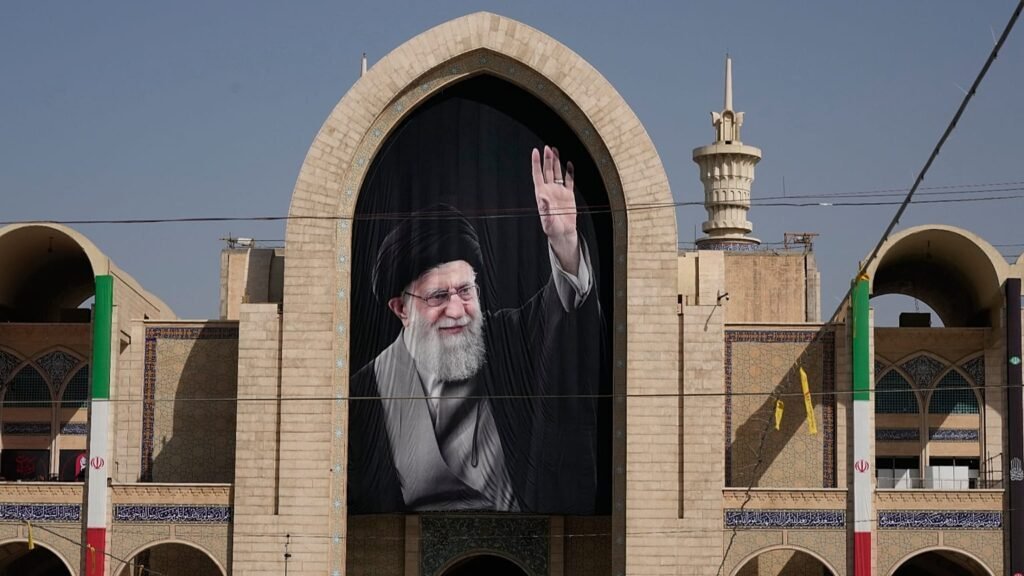
The involvement of the Amal Movement and other regional proxies is also telling. It reveals that the “axis of resistance” is not just mourning; it is desperately trying to maintain its regional cohesion in the face of our continued pressure. By bringing the funeral to Najaf and Karbala, the regime is attempting to leverage the sanctity of these holy sites to bind its Iraqi allies closer to its cause. It is an effort to maintain a regional footprint that is being systematically dismantled by our operations.
However, the sheer logistical complexity of this event is its greatest weakness. Moving millions of people across international borders, managing the security of foreign religious leaders from over 90 countries, and maintaining the security of senior officials in public spaces is a nightmare that no military command, not even the Khatam al-Anbiya, can fully control. The “miscalculation” that Abdollahi warns of may not even come from our side. In a crowd of 20 million, the potential for internal chaos, stampedes, or even local uprisings by those disillusioned with the current leadership is non-trivial.
For Israel, the funeral is a window into the regime’s psyche. We see a leadership that is hiding its new head, relying on the bodies of its citizens to protect its commanders, and using an antiquated propaganda machine to mask the strategic catastrophe of the last few months. Mojtaba’s absence would confirm what we already know: the regime is not confident, it is in survival mode. The display of the coffin is not about the past; it is about the regime’s desperate need to prove it still has a future. As we observe the ceremonies, our focus remains on the men who are actually managing the conflict from the bunkers. We know who they are, we know where they are, and we know that no amount of flowers or weeping crowds can hide them from the reality of the situation. This funeral is a final tribute to a leader who lost his way, and his life, in a war he could not win. Whether his successor emerges to witness the end of that era remains to be seen, but the vulnerability is evident, and the clock for this regime is still ticking.