
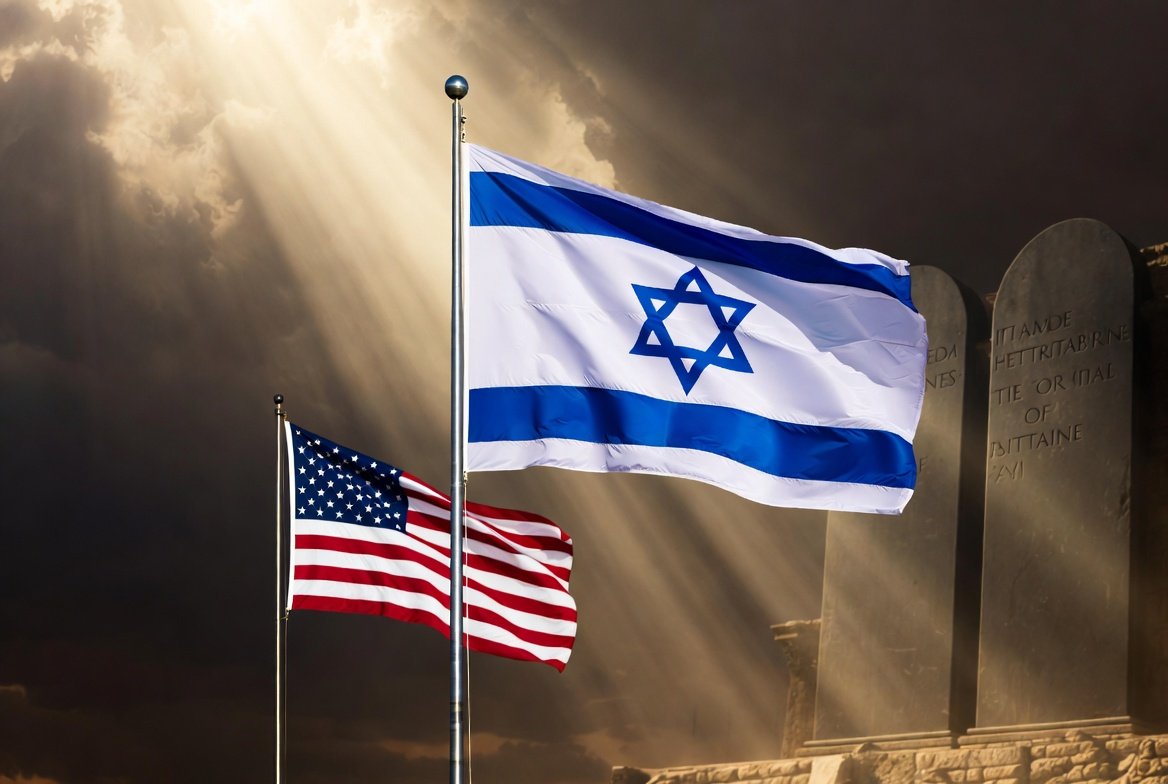
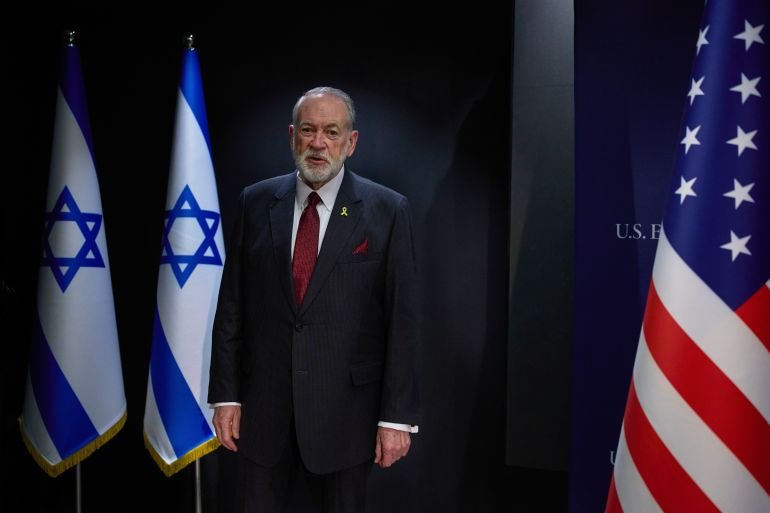
The foundation of the U.S-Israel alliance was long believed to be etched in stone, a covenant born of shared values, biblical heritage, and a mutual recognition that the survival of both nations is inextricably linked. In a recent interview, U.S Ambassador to Israel Mike Huckabee has reiterated his deeply held conviction: “Without Israel, without the Jewish foundation, there would not be the US.” This assertion remains the bedrock of a shared identity that many in Jerusalem view as the only true constant in a volatile world. It is a profound, albeit increasingly inconvenient, truth for the current political climate in Washington. The Ambassador’s words serve as a stark reminder that the American project is not merely a secular political construct; it is, in his view, rooted in the Judeo-Christian values that trace their lineage directly back to this land. To sever the tie to Israel is, by this logic, to sever the very roots of the American experiment.
However, as Israel watches the current administration, the distance between that theological imperative and the reality of the US policy has never been wider. Israel is witnessing a fundamental drift, a hardening of the heart in Washington that suggests the “Judeo-Christian” bond is being sacrificed on the altar of a misguided geopolitical pivot toward Tehran.
The irony of the current moment is suffocating. While Ambassador Huckabee reminds Israel of its ancient, immutable connection, President Donald Trump offers a starkly different, transactional calculus. “Without me, there would be no Israel,” he declared at the G7, reducing the survival of a sovereign nation to the ego of a single politician. This is not the language of an ally; it is the language of a master addressing a client state. Worse, it is a precursor to abandonment. The U.S. is no longer merely asking Israel to coordinate; it is demanding Israel subordinate its survival to a diplomatic framework with Iran that serves Washington’s fleeting interests, not Israel’s existential security.
The rebuke from the White House regarding Israel’s military operations in Lebanon is the clearest evidence of this dangerous shift. When Trump lectures Israel about apartment buildings and the “proportionality” of the fight against Hezbollah, he is ignoring the basic reality of the neighborhood. He speaks as if Israel is conducting a police action in the suburbs of France, not an existential battle in a war zone where enemies use civilians as human shields. By signaling that the U.S. will no longer provide “rhetorical cover” for Israel’s efforts to degrade the Iranian threat, Washington is essentially handing Israel’s enemies a veto over Israeli security policy. They are prioritizing a fragile, illusory peace deal with Tehran over the security of their only democratic partner in the region.
The Iranian “pivot” is perhaps the most stinging betrayal. Israel has spent decades warning the world that the regime in Tehran is a fanatical, expansionist power that seeks the annihilation of the Jewish state. Now, Israel is told by the President of the U.S. that these are “rational,” “strong,” and “smart” people who are “looking to help their country.” This isn’t just a difference of opinion; it is a total inversion of reality. By whitewashing the nature of the Iranian regime, the U.S. is not only betraying Israel; it is blinding itself to the danger that is already lapping at Israel’s collective gates. They are trading a proven, ironclad alliance for a gamble with an adversary that has never once reciprocated a diplomatic overture with anything other than violence.
Crucially, this drift is being facilitated by a shift in Washington’s regional calculus. There is a growing, quiet influence in the halls of power that suggests a new, “pragmatic” security architecture. This involves cultivating ties with other regional players who promise a smoother, less “contentious” path than the one offered by the State of Israel. There is the hand of Pakistan, for instance, in providing security guarantees for the Iranian delegation, a move that effectively bypasses Israeli intelligence and provides legitimacy to a regime Israel is fighting to dismantle. By integrating these new partners into their diplomatic fold, the US is signaling that Israel is no longer the sole, indispensable anchor of its regional strategy. It is looking for a cheaper, quieter alternative, and finding it in the corridors of Islamabad and the diplomatic backrooms of the G7.
While the US ambassadors speak the language of heritage, the US allies are speaking the language of exit. The feeling of abandonment is no longer a fear; it is a policy. When analysts describe Israel and the U.S. as being at a “fork in the road,” they are being too polite. Israel is being pushed off the road entirely. Prime Minister Netanyahu has been humiliated, excluded from critical memoranda with Iran, and lectured on “civilian harm” by a White House that seems to have forgotten the very values it claims to defend.
The danger is that Washington believes it can compartmentalize its “Iran deal” from its commitment to Israel. It cannot. By legitimizing Tehran, by forcing Israel into a corner, and by prioritizing third-party “stability” over Israel’s qualitative military edge, the U.S. is weakening the very foundation Huckabee claims to hold sacred. If the U.S. indeed owes its existence to the values fostered in this land, then by turning its back on those values to appease a radical, expansionist regime, it is eroding the very moral ground upon which it stands.
Israel remains a people who have survived the worst the world could throw at them, and it is not a state that will outsource its survival to the changing moods of Washington. If the U.S. chooses to deviate from the alliance, to chase the mirage of Iranian reasonableness, and to trust the security of the region to those who have actively conspired against Israel’s survival, then Israel will continue to act alone. Israel has been “rational” enough to know that when an ally starts talking about Israel’s disappearance, it is time to rely solely on its own strength. The “Judeo-Christian foundation” is a pillar of history, but the defense of Israeli homes is a matter of the present, and it is a burden Israel can carry without the partner it once trusted most.