Israel’s response to France’s evolving diplomatic stance is becoming more informed by strategic concern rather than the normal diplomatic disagreements. In the context of Israeli security considerations, France is no longer being perceived as a European observer commenting on Middle Eastern politics from afar, but as a player in its own right that is prepared to interact, either directly or indirectly, with parties classified as terrorist organizations by Israel, the US, the EU, and the UK. This is not a merely semantic issue in Israeli strategic considerations; it is a structural one, with direct implications for deterrence, intelligence coordination, and regional stability.
At the heart of the dilemma is the French demand to push a political endgame despite the highly unstable security landscape. France has been working tirelessly to foster new momentum in developing a solution that revolves around the two-state framework, which often uses the 1967 lines as the foundation for any future peace agreement. Although the position is not unique in European diplomatic circles, the urgency and the prominence of this stance have greatly intensified following the October 7 attacks by Hamas that led to the deaths of over 1,200 people in Israel, and created a multi-front conflict between Gaza, southern Lebanon, and other Iran-backed groups. For Israel, the central lesson of that rupture is that political frameworks detached from hard security guarantees do not freeze conflict, they often postpone and intensify it.
This is where French diplomacy becomes particularly contentious in Israeli eyes. Any diplomatic engagement that appears to bring Hamas-linked political structures into indirect legitimacy, even under the language of “dialogue,” “exploration,” or “de-escalation”, is interpreted in Israel as a dangerous erosion of the post, the October 7 consensus. That consensus, at least in Israeli security doctrine, is anchored on a simple premise: actors responsible for mass-casualty attacks cannot simultaneously be integrated into conventional diplomatic architecture without prior disarmament and accountability.
Reports of French engagement with Hamas-affiliated political figures, even if informal or exploratory, have therefore carried disproportionate strategic weight in Jerusalem. In Israel’s intelligence-driven policy environment, where every diplomatic signal is assessed alongside battlefield developments and hostage negotiations, such contacts are not viewed as isolated diplomatic experiments. They are read as indicators of shifting Western thresholds, signaling that parts of Europe may be recalibrating what constitutes a “legitimate interlocutor” in the conflict.
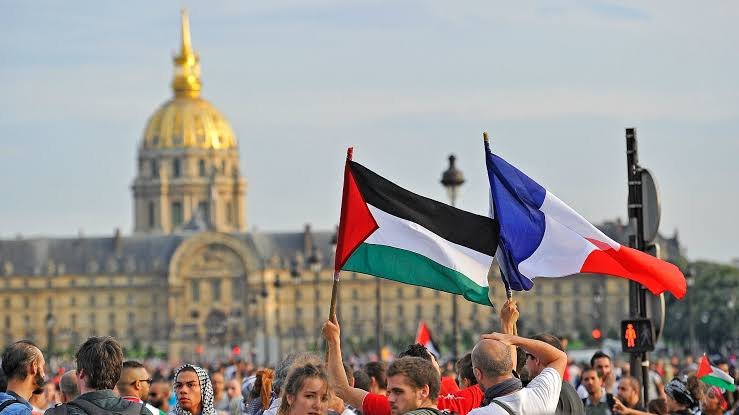
The feeling is further magnified through France’s increased diplomatic efforts. Indeed, France has established itself as one of the most assertive voices in Europe in pushing for the implementation of ceasefire agreements and quick political recognition of Palestinian statehood. Its recognition of a Palestinian state in an international forum in 2025 was interpreted in Israel not as a neutral diplomatic gesture, but as a political acceleration that preceded the establishment of stable governance or unified security control. The Israeli strategic planners cite the precedent in Gaza, especially the 2005 disengagement and subsequent Hamas takeover in 2007, as a benchmark for the dangers that ensue from separating political or territorial advances from security measures.
Israel’s defense establishment operates in a threat environment shaped by continuous multi-front pressure, from Hezbollah’s northern deployments, Iranian strategic backing, and persistent instability in Gaza and the West Bank. In that context, European diplomatic moves that appear to broaden the political space for non-state armed actors are seen as directly affecting deterrence credibility. The concern is not abstract recognition; it is the downstream effect such recognition may have on funding channels, diplomatic legitimacy, and international legal framing.
France’s domestic political and legal environment further complicates the picture. Judicial scrutiny, public investigations linked to the conduct of the war, and increasingly polarized public discourse in Europe have contributed to what Israeli officials perceive as the “judicialization” of the conflict in Western forums. Even when legal processes are procedural and non-binding, their political signaling effect is significant. They shape narratives, influence parliamentary debates, and gradually redefine diplomatic baselines.
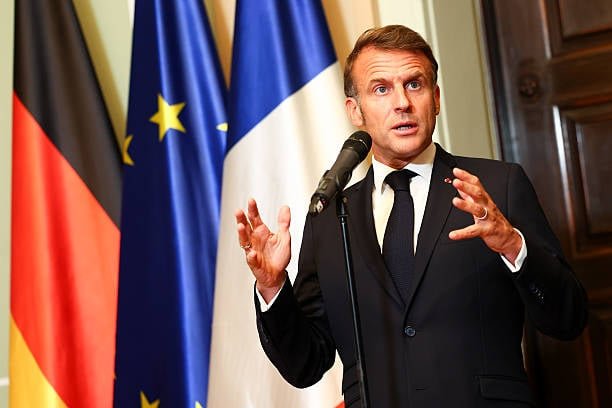
While Israel is confronting the realities of terrorism, hostage crises, rocket fire, and regional proxy warfare, France’s leadership increasingly appears determined to chase diplomatic symbolism regardless of security consequences. The Macron government seems convinced that political recognition and engagement can somehow substitute for deterrence, even though the Middle East is littered with the wreckage of peace initiatives that ignored hard security realities.
The question is not that France and Israel prioritize things differently. The question is that France seems more and more detached from the lessons of the past two decades. Paris thinks about political horizons, while Israelis are forced to deal with immediate threats measured not in years but in minutes. France speaks the vocabulary of meetings, statements, and road maps; Israeli leaders speak the language of missile shelters, infiltration along borders, and hostage situations. What Paris portrays as bold diplomacy is increasingly viewed in Israel as strategic naivety masquerading as statesmanship.
This is why every new French initiative is greeted in Israel with growing suspicion rather than optimism. The reported secret meeting between French political figures and Hamas representatives has only deepened those concerns. Whether Paris intended it or not, the optics are devastating: while Israel is still dealing with the aftermath of October 7 and fighting a regional war against Iranian-backed forces, French-linked officials are reportedly holding quiet conversations with the very movement that ignited the conflict. For many Israelis, that does not look like diplomacy, it looks like rewarding violence with political access.