
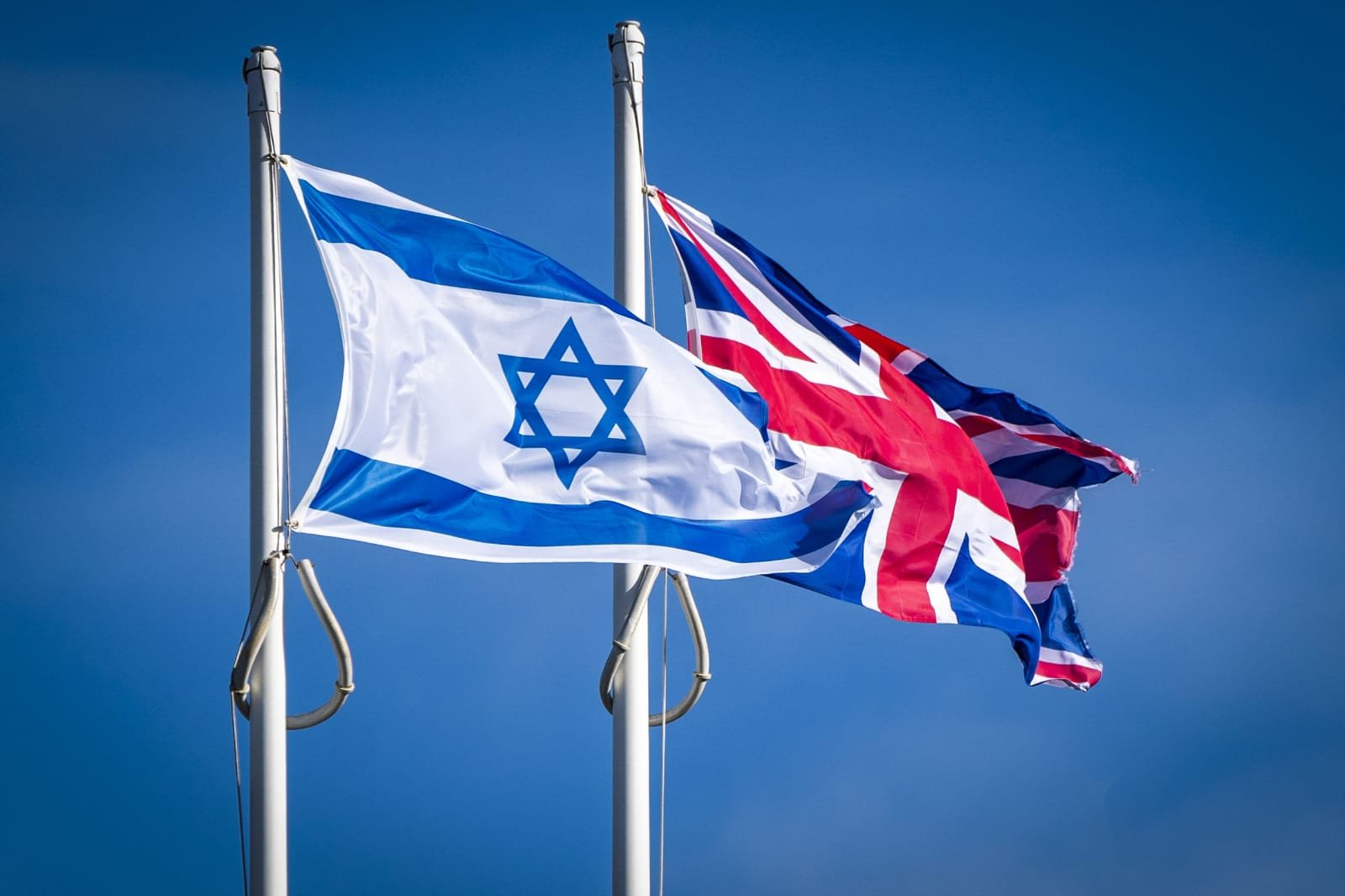
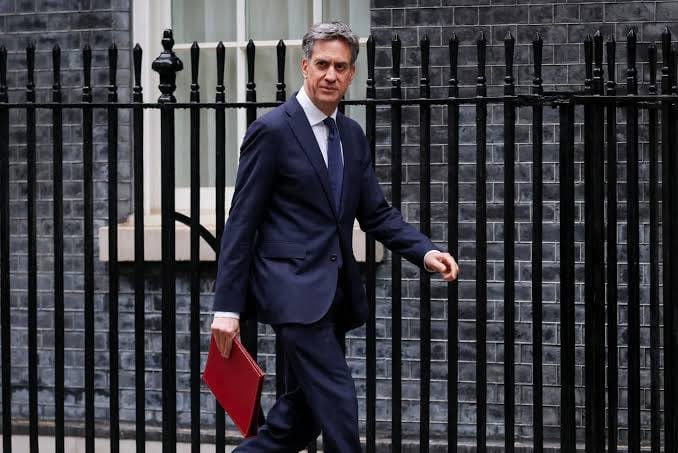
The decision by Foreign Secretary Ed Miliband to prohibit trade with Israeli communities across the Green Line, ban settlement goods, and restrict related financial services is a masterclass in political cynicism. Masked in the high-minded vocabulary of international law and human rights, this sweeping policy exposes a glaring, indefensible double standard at the core of British foreign policy. By hurling incendiary accusations of ethnic cleansing at the Jewish state from the dispatch box of the House of Commons, London has knowingly poured fuel on a domestic fire, sacrificing the safety of its own Jewish citizens to appease radical elements in its domestic political arena.
The timing of the announcement reveals the depth of Whitehall’s disregard for the British Jewish community. Delivering this policy blow just three days before Rosh Hashanah forced congregants across the United Kingdom to enter the High Holy Days behind locked doors, metal detectors, and heavy security barriers. For British Jews, the threat of physical violence is not a theoretical debate. The memory of the horrific October 2025 Yom Kippur attack at Heaton Park Hebrew Congregation in Manchester, where two worshipers, Adrian Daulby and Melvin Cravitz, were killed during prayer, remains an open wound.
Chief Rabbi Ephraim Mirvis was undeniably correct when he called the government’s decision a dark day for British Jews. When senior ministers officially validate the inflammatory tropes of anti-Israel activists, they dismantle the crucial distinction between the State of Israel and local Jewish citizens. Protesters on the streets of London and Manchester no longer feel they are operating on the radical fringe. They view their harassment of synagogues, Jewish schools, and kosher businesses as the informal enforcement of official state policy.
Furthermore, deploying these sanctions weeks before an Israeli election led President Isaac Herzog to denounce the move as gross interference in Israel’s democratic process. Far from encouraging moderation, penalizing an entire nation during an election campaign routinely backfires, strengthening the very political figures London seeks to marginalize.
The hypocrisy powering this policy becomes undeniable when examining Britain’s own territorial record. London calls Judea and Samaria an unlawful occupation, treating historical Jewish presence in Hebron, Shiloh, and Beit El as an inherent violation of global norms. Yet, when British strategic interests are at stake, the rules instantly change. The Falkland Islands, claimed by Argentina since 1833, are politely designated a British Overseas Territory. Whitehall justifies its presence there by pointing to historical ties, strategic geography, and the self-determination of the local population. These are the exact arguments Britain routinely denies Israel the right to make.
The situation surrounding the Chagos Archipelago is even more revealing. In 2019, the International Court of Justice explicitly ruled that Britain’s ongoing administration of the Chagos Islands was wrongful and must end rapidly. Did Britain immediately pack up and leave? It did not. Westminster negotiated a deal to recognize Mauritian sovereignty while leasing back the vital military base at Diego Garcia for ninety-nine years. When political shifts in Washington forced a freeze on that agreement, Britain put the entire transfer on indefinite hold.
This sequence demonstrates that when British security, strategic geography, and international alliances are on the line, international court rulings are treated as negotiable advisory notes. When British interests are involved, compromise, delay, and special arrangements are standard procedure. When Israel faces existential security threats on its immediate borders, London offers only absolute condemnation, unilateral decrees, and economic sanctions.
This glaring double standard points directly to the internal partisan panic gripping the ruling Labour Party. Facing severe electoral pressure from the Green Party and radical left-wing movements, Labour leaders chose to shore up their slipping base by adopting the language of fringe anti-Zionism. The decision to penalize Israeli commerce while ignoring territorial disputes across the globe was not a principled moral stand. It was a calculated domestic maneuver aimed at stemming a flow of votes in upcoming local contests.
In response, Jerusalem took immediate countermeasures, shuttering the British Consulate in Jerusalem and barring twelve British politicians and radical activists from entry. While ministers like Bezalel Smotrich and Itamar Ben-Gvir demanded stronger retaliation, including the potential expulsion of the British ambassador or tongue-in-cheek recognition of Argentine sovereignty over the Malvinas, Israel’s core message remains clear. Jerusalem will no longer tolerate being used as a convenient punching bag for British internal politics.
Rather than expelling diplomatic staff, Israeli officials should keep the British ambassador in his seat and ask him a fundamental question: Why are Britain’s overseas territorial disputes treated as complex, historical, and strategically vital, while Israel’s core security needs are reduced to a single condemnatory slogan?
Britain is fully entitled to manage its international affairs as it sees fit. It is not entitled to lecture Israel on international law while maintaining its own empire of convenient exemptions. An occupation, it seems, is only not an occupation when Britain is doing the occupying.