
Benjamin Netanyahu’s hard sell to the Israeli public, from the start, was the idea that he’s irreplaceable. Honestly, that’s his signature political achievement, the story he’s told for more than forty years. Back in the day, people first heard it when he was a rising star at the UN in New York, and he’s repeated it, with variations, through his recordbreaking terms as Prime Minister. The core claim never changed: Israel faces existential threats on all sides, and only Netanyahu has the intelligence, grit, and worldstage clout to protect the country from disaster.
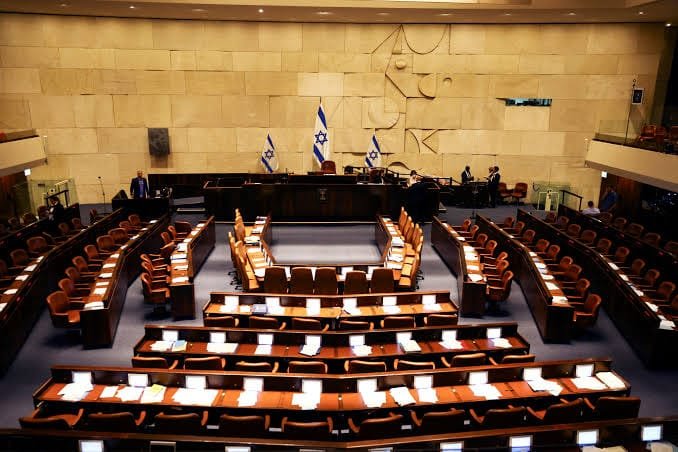
But that message doesn’t carry the same weight anymore. As Israelis get ready to vote on October 27, the narrative is crumbling. Poll after poll shows Netanyahu’s rightwing and religious coalition falling short of the 61seat Knesset majority it needs. Instead, opposition groups led by former IDF Chief of Staff Gadi Eisenkot are surging. The numbers aren’t subtle, recent polls, like the one by Lazar Research in Maariv, put Eisenkot ahead of Netanyahu 48 percent to 40 percent on the basic question of who’s fit to be prime minister. Eisenkot’s Yashar party is on track for up to 23 seats, while Likud’s looking at just 18. Even now, as Netanyahu heads to the UN General Assembly, he doesn’t seem to be in a reflective or selfaware mood. Instead, he leans into the same old theatrics, pressing that all too familiar button, defiance.
There’s a method behind it, and he’s honed it for years. Netanyahu knows how to cast every moment in the most dramatic, even terrifying, terms, and then step into the role of savior. He loved props and symbolism, a PLO calendar here, a cartoon bomb there, 44 seconds of silence, colorful maps. He framed himself as the only man who really gets the game in Washington, the only one tough enough for Congress, the only one who can keep Iran and its nukes in check.
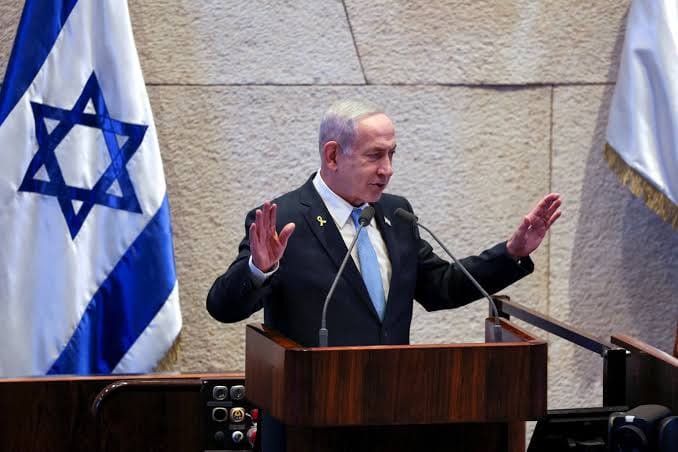
To make that playbook work, you have to make sure nobody else even gets a shot. Inside Likud, that meant Netanyahu spent years pushing aside anyone who seemed like a plausible successor. Ambitious, capable people were sent overseas as ambassadors or simply shoved out. Heeding orders mattered more than actually solving problems. That’s what led, between 2019 and 2022, to Israel slogging through five exhausting election cycles, because Netanyahu made Likud, and maybe the country itself, about one man. Survival wasn’t just his private project; it became the whole governing idea.
Then came October 7, a day so disastrous it should have blown apart that myth for good. For years, Netanyahu’s approach was to manage Hamas, not defeat it outright. His governments let hundreds of millions in Qatari money flow to Gaza, not because they missed the risk, but because it was politically convenient; as long as Hamas controlled Gaza, the Palestinian Authority stayed divided and weak. This backfired in the most horrifying way, with a day of violence unmatched since the Holocaust. Overnight, the foundation of Netanyahu’s political promise collapsed.
In most healthy democracies, something like that ends a career. A catastrophe, especially with national security at stake, means you resign and take responsibility. Not here. Netanyahu’s answer was to flip that logic: the bigger the crisis, the more reason to stay put. War became a reason to halt any reckoning. Calls for a proper inquiry got sidestepped. His corruption trial faced endless delays, security emergencies took priority, always. Shouts for early elections? Framed as reckless, even dangerous, helping Israel’s enemies.
That’s how he turned the crisis itself into job security. You could see this approach clearly in his stance on Iran. Israeli strikes damaged Iran’s nuclear program, sure, but the blowback was regional chaos, multiple fronts across Lebanon, the Gulf, the Red Sea, without any clear exit. It didn’t matter if things blew up or seemed to succeed; both became arguments for Netanyahu to stick around. That’s hardly a political strategy, it’s a loop, a closed argument that justifies itself.
The campaign ads spell it out. You walk through Tel Aviv and see billboards with foreign leaders, regional enemies, and one instruction: “They want Netanyahu to lose. Don’t let them win.” Suddenly, being disliked abroad is his main selling point at home. Diplomatic isolation? That’s supposedly proof he’s standing up for Israel, converting it into political ammunition.
But if you step back, Israel’s situation overseas isn’t improving. An ICC arrest warrant has Netanyahu stuck, he can barely travel to Western capitals anymore. These days, foreign delegations regularly get up and walk out when he starts speaking at the UN. The man who once built a reputation as Israel’s best communicator abroad now lectures to empty seats.
That international drift mirrors rot at home. Over several budget cycles, Netanyahu’s governments gutted the diplomatic services. Top ambassador jobs became political favors, given to allies and loyalists, not professionals. People who actually know the local scene, career diplomats, got shoved aside. So now, Israel’s message abroad is delivered by party operatives, not experts. Foreign capitals start tuning out.
The result? A dangerous illusion takes root in Israel. The story they sell is that international isolation is just bad PR, maybe not enough money for ads, weak social media, poor spokespeople. This lets leaders off the hook. Instead of a hard look at real policy failures, blame shifts to “messaging.” Meanwhile, leaders skip the real debate: the longterm price of these choices is mounting, and it’s not just about spin. Foreign pushback is often about what the government actually does.
Sure, Israel deals with a uniquely tough crowd. There’s no shortage of double standards, international campaigns to delegitimize, outright antisemitism, all baked into how the world sees the country. The UN, for example, singles out Israel way more than any number of actual dictatorships. That bias is real, and it runs deep. Still, external hostility doesn’t explain away every problem. When ministers chase applause at home instead of putting Israel’s future first, they’re the ones undercutting its place in the world.
Really, the biggest trick Netanyahu ever pulled was selling the public on the idea that Israel needs him to survive. It’s an insult. Israeli society has always been resilient, the IDF is tough, and the country’s democracy runs deeper than any one prime minister. Israel thrived before Netanyahu, and it’ll keep thriving long after he’s gone. This coming election isn’t about choosing between safety and chaos. It’s about choosing to remember that no leader stands above the country he serves.