
How a Botched Doha Airstrike Gave Washington Strategic Control Over Jerusalem’s Gaza Strategy
Jared Kushner didn’t bother with diplomatic niceties this weekend. Instead, he came right out and called out Washington’s almost transactional approach to its relationship with Jerusalem. Speaking via livestream to a security conference in Kyiv, Kushner, Donald Trump’s special envoy and inner circle strategist, just laid it out. He said Israel’s September 9, 2025, airstrike in Doha, Qatar, was a disaster. Not just a bad night at the office, but a clear cut military flop that threw Israel into what he described as the worst international isolation the country’s seen in years.
The operation was supposed to be precise: hit the Katara district of Doha, take out top Hamas political leaders who were in the city for ceasefire talks, and send a message. But things hardly went as planned. The main targets got away. Six people died, including a Qatari security officer, and suddenly Israel found itself buried under a mountain of worldwide backlash for violating a mediator’s sovereignty. The fallout came fast, and it was brutal. European governments lined up to condemn Jerusalem, the UN scrambled for emergency meetings, and the Arab states, the same countries that Israel had been wooing for normalization, slammed the brakes on those talks. Inside Israel, the mood soured even further as families and politicians grew frustrated by the lack of progress on hostage releases. In short, Israel’s diplomatic shields were shattered overnight.
You might think the US would step in and shield its ally. Instead, Washington saw a rare opening. Kushner laid it out plainly, almost too plainly for some ears: the Trump administration seized on Israel’s moment of isolation, applying maximum pressure on Prime Minister Netanyahu’s government and forcing through a Gaza deal that Israeli leaders had opposed for months.
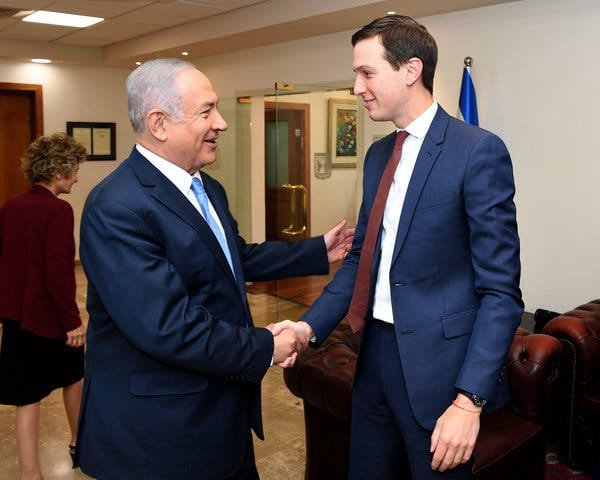
What makes Kushner’s comments so striking is how they peel back the curtain on US Israel relations. Usually, American presidents talk about the alliance in glowing terms, shared values, ironclad commitments, that sort of thing. But Kushner didn’t even pretend. He spelled out a hard nosed calculus. While Israeli commanders said the Doha strike was a necessary attempt to eliminate the masterminds behind the October 7 attacks, Washington just saw a failure that made Israel vulnerable to U.S. persuasion.
Almost immediately, Washington used that leverage. They pressed Jerusalem while it was politically cornered, and by October 9, 2025, the two sides hammered out an agreement. That deal was significant: it freed 48 hostages and set up a step by step plan to demilitarize Gaza, including a new administrative authority to take over from Hamas. Israel’s leaders were visibly uncomfortable, Kushner said, but in his mind, that awkwardness was a price worth paying. He argued that the result, a stable, postwar Gaza and greater Israeli security, outweighed the sting of being forced to the table.
But Kushner also insisted that hunting for leverage wasn’t a matter of simple opportunism. The Trump team, he explained, had spent months laying groundwork, structuring agreements, talking to Saudis, the Emiratis, other regional powerbrokers. The airstrike wasn’t the start of Washington’s effort. It was just the spark that broke Jerusalem’s resistance. Without all that prep, Kushner claimed, the Doha misstep wouldn’t have triggered a breakthrough, just deeper isolation.
From the Israeli perspective, Kushner’s story lands like a slap to the face, a reminder that in the brutal game of international politics, nobody is immune to power plays, not even old friends. The lesson here? Even the tightest alliances boil down to cold numbers and interests. When a partner stumbles and loses global support, the US isn’t shy about exploiting that weakness and shaping outcomes to fit its own strategy.
For Israel, the incident proved how quickly a show of force, especially one lacking international approval, can transform from a calculated move into a strategic headache. The Doha strike was meant to prove Israel’s reach. Instead, it ended up handcuffing Jerusalem and forcing it to accept American deals at the expense of some independence.
There’s a bigger message tucked into Kushner’s speech, one that cuts deep for Israel’s security planners. As the government tries to steer Gaza toward peace and reconstruction, the margin for error has shrunk. Domestic politics in Israel often push leaders toward bold, even risky, military actions, especially under public pressure. But with each botched operation, international support slips away and the country has no choice but to rely on the US for diplomatic lifelines.
The bottom line? American support doesn’t come on a silver platter, not now, and probably not ever. The Trump administration’s handling of Doha shows that what matters most in Washington is leverage and interests, not sentiment. If Israel wants to preserve its freedom of action, it has to think twice before embarking on military adventures that isolate it internationally.
Kushner’s words are a wake up call for Israeli leaders: In a neighborhood defined by power and hard choices, smart strategy has to match military muscle. Counting on the US to clean up after a diplomatic crisis will always come at a cost, sometimes a very steep one. Jerusalem must remember that every failed strike that misses its target doesn’t just spare adversaries; it hands your closest partner the power to reshape your strategy on their terms. It’s a lesson they can’t afford to ignore as Israel charts its next moves.