
A leaked forty four page Russian government document just pulled back the curtain on a quiet, step by step plan for forging a robust Eurasian alliance, one built to stick around long after fleeting political trends come and go. Approved on September 2, 2024, and clearly labeled for official use, the document, called “Plan for Cooperation Between the Russian Federation and the Islamic Republic of Iran for 2024 to 2026,” hands out precise orders to ministries, central banks, state companies, and regulatory bodies in both Russia and Iran. If you’re sitting in Jerusalem and watching the region, this plan signals something much deeper than the usual diplomatic games. Moscow isn’t just buying drones from Tehran or trading favors; it’s creating a permanent, intertwined relationship and embedding Iran in a sanctions resistant, tightly run autocratic system.
At its heart, this roadmap has a very clear economic mission: hit right at the core of Western power, which is the global dominance of the US dollar and the financial surveillance network behind it. The blueprint sets out to increase non dollar transactions between Russia and Iran to a hefty seventy one percent by the end of 2026. To make that happen, they’re expanding their web of bilateral banking relationships. And it’s not just talk; Russian Deputy Prime Minister Alexei Overchuk actually said that most trade between the countries now uses their own currencies and works through independent messaging channels, far from Western eyes. Plus, by connecting Iran’s Shetab payment system directly with Russia’s Mir, they’ve sidestepped any threats of being kicked out of SWIFT, the big international banking network. The document even tells their central banks to dig into cross border digital currencies, making payments smoother and faster. Piece by piece, they’re closing the loopholes that would normally expose them to outside pressure, and weaving together a kind of shadowy, unmonitored financial network. This system shields their economies from Western sanctions, and keeps the money flowing to proxy groups around the Middle East, out of sight from Western governments.
But the implications don’t stop at finance. What really has Israeli defense officials worried is how deep and organized the energy and nuclear cooperation has become. Russian state energy firms like ZN Vostok have received orders to work directly on key Iranian oil and gas projects, like the Shadegan oil field, and soon enough, new ventures in Kish and North Pars. At the same time, Russia’s massive nuclear company, Rosatom, is still at the center of operations in Iran’s Bushehr nuclear plant. Rosatom is responsible for the fuel supply and technical maintenance on Unit 1, and helping build Units 2 and 3. Throughout all the instability in the region, Russian crews have kept showing up at Bushehr to swap out fuel and do repairs, offering Iran top technical expertise under the respectable banner of “civilian energy.” In practice, all this gives Tehran a double layer of protection, both practical and diplomatic, over its most vital infrastructure, making any future diplomatic or military effort to check Iran’s nuclear ambitions an even tougher and riskier calculation.
The deal also lays out a clear plan for the aviation and manufacturing industries. Instead of just trading finished products, Russia and Iran have agreed to find ways to repair or even build aircraft parts inside Iran itself. Through Russian oversight, three Iranian companies can now carry out safety and maintenance work on Russian operated planes. The agreement even spells out milestones, like working up to making prototype parts right there in Iran. This back and forth arrangement creates a tightly linked military industrial base: Iranian drone technology fills Russian needs on the battlefield, and Russian industrial knowledge boosts Iran’s own production.
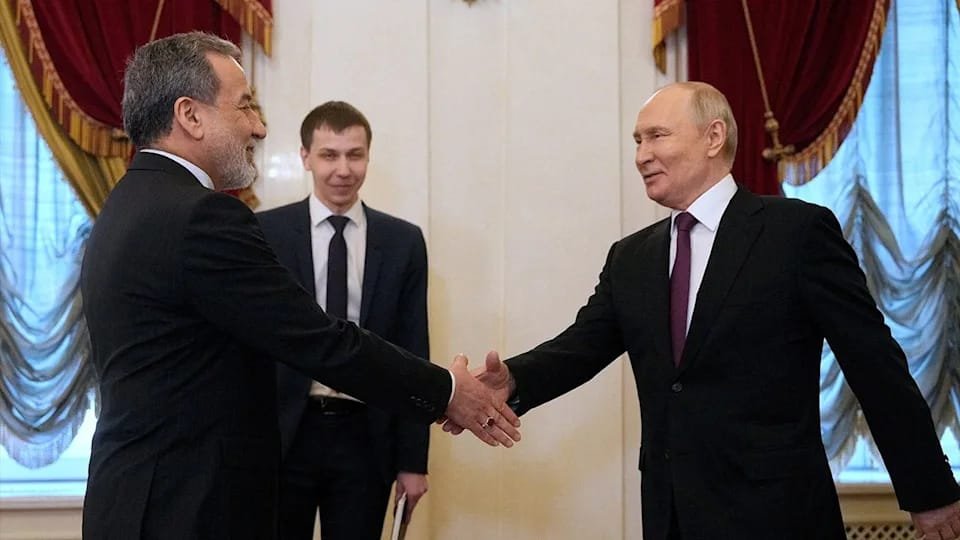
Supporting all this is a major push to rewire the region’s transportation and logistics networks to anchor Russian access to warm water ports. A big highlight is the International North South Transport Corridor, including the Rasht Astara railway and a bold plan for a broad gauge rail line reaching the Persian Gulf. Russia and Iran aren’t just planning on paper; they’re already sending engineering teams to survey routes, determined to build supply chains no one else can break. At the same time, Iran is investing in Russian port facilities along the Caspian Sea, especially in Astrakhan, building logistics hubs, grain silos, and bulk storage. This setup gives Moscow a direct route south for trade and military shipments and hands Iran an inland lifeline for machinery, raw materials, and military supplies, all well beyond the reach of Western navies.
But the alliance goes even further. The roadmap dives into information security, technology, and tightly coordinated diplomacy. Russian tech firms are gearing up to win contracts in Iran for telecommunications, cybersecurity, and digital infrastructure. On the media side, state outlets are ordered to collaborate, producing joint content, swapping reporters, and shaping the narrative for audiences across the Global South. Diplomatically, the two countries will closely coordinate in major groups like BRICS, actively working to undermine Western sanctions. As Foundation for Defense of Democracies analyst Keti Korkiya notes, this plan isn’t just about dodging sanctions. It’s part of a larger effort to rewrite the rules of the international system, launching a challenge to the very notion of Western led economic enforcement.
All in all, this leaked document makes one thing clear: Western attempts to isolate Russia and Iran have actually driven them to lock arms and build something much bigger. Moscow and Tehran aren’t just improvising anymore; they’re building an alliance backed by their bureaucracies, industries, banks, and defense sectors. The game has changed for Israel and others watching the region. Now, they face not an isolated Iranian regime, but a strengthened, Russian backed power with nuclear know how and financial defenses built to weather almost anything the international community can throw at them.