
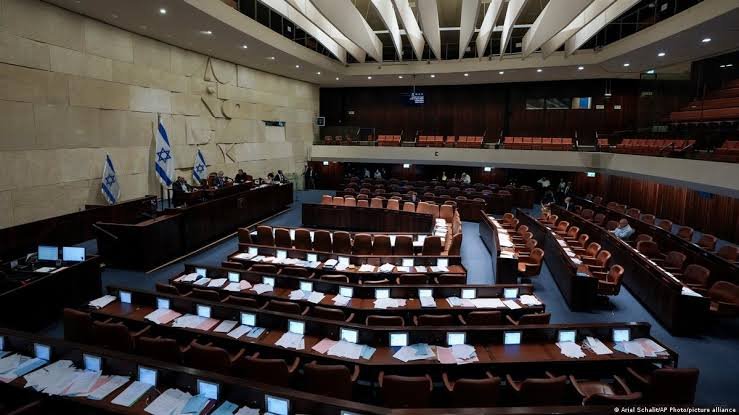
Israel’s politics is not just being judged in the Knesset now; it is getting a lot of attention in Washington, Beirut, and Tehran too. With today’s Middle East, having internal political stability is a big part of showing strength externally. So, the talk about a national unity government is more than just about making coalition math work. It is really about whether Israel can stay strategically united when dealing with an ongoing multi-front security crisis.
Since October 7, 2023, Israel has been in a constant state of conflict. Based on Israeli defense estimates and what international monitors say, the war has called for huge military efforts. At peak times, over 300,000 personnel have been mobilized. This makes Israel one of the most militarily active nations on a per-capita basis. The question is whether politically divided coalitions can handle this ongoing stress. It is key in debates right now.

The economy amplifies this issue too. The Bank of Israel and global financial forecasts warn that ongoing multi-front conflicts boost fiscal costs dramatically. Defense spending skyrockets beyond pre-war levels. In recent years, war-related expenses are estimated in the tens of billions, pushing defense expenditure to shares of GDP last seen decades ago. So, there is a strong connection between political stability and economic strength. Moreover, global investors keep a close eye on sovereign risk measures, which underscores how important fiscal management is in times of conflict.
In such a context, proponents of unity governments argue that fragmented coalition politics can weaken strategic decision-making. Israel’s history offers partial support for this claim. The national unity government before the 1967 Six-Day War is often cited as an example of how political consolidation can accelerate military preparedness and reduce internal friction during existential threats. Similar dynamics were visible in other crisis periods where broad coalitions enabled faster alignment between civilian leadership and defense institutions.
The external diplomatic scene reinforces unity advocates’ arguments too. Israel relies greatly on U.S. military support, which usually comes from the long-standing annual aid framework averaging about $3.3 billion. However, American domestic politics is getting more polarized, with growing debates in both major parties on conditions for aid and long-term strategy in the region. So, the once steady support is not as certain as before.
This makes Israel’s internal political image a factor in external diplomatic leverage. A fragmented coalition system can be interpreted abroad as strategic disunity, potentially complicating negotiations during periods of heightened conflict. Conversely, unity governments often project stability and consensus, which can strengthen diplomatic positioning in Washington and other allied capitals.
At the regional level, adversaries pay attention to signs that their rivals are cohesive or divided. Iran, spending over $10 billion yearly on defense and operating through a broad network of aligned non-state actors, keeps up its strategy of multi-front pressure. Hezbollah, for example, has long-range strike capabilities as seen by Israeli intelligence. Even with constant efforts to degrade these, Hezbollah stays a threat. Therefore, perceptions of Israel’s political division can affect how those adversaries calculate their moves.
Despite this, the unity argument hits some structural limits. Israeli society stays deeply split on key issues like judicial reform, military conscription for ultra-Orthodox communities, settlement policy, and the long-term Palestinian governance question. These divides are not temporary; they are fundamental, showing rival ideas of what the state should represent, which cannot easily fit into one coalition setup.However, unity governments might boost short-term coordination, but they could also squash vital political debate.
This stifling can cause policy stagnation or hold-ups in addressing social tensions, especially in societies already dealing with big demographic, economic, and security pressures.Still, the reasoning behind the unity debate is hard to miss. Israel has faced over a year of intense conflicts on multiple fronts. During the peaks of these conflicts, tens of thousands of residents were displaced due to rocket fire and border issues in both the north and south. So, there is significant temporary displacement feeding domestic instability directly from the external conflicts.
The question is not whether political disagreements in Israel will vanish, because they will not but if they can be managed in a way that keeps the country strategically coherent under constant pressure. In an atmosphere of long conflicts, changing alliances, and unreliable support, unity is becoming less about a political goal and more about a tool for national resilience.