By Israel Dispatch
When Likud and Yashar negotiating teams finally met face to face, Israel jumped into a familiar but truly tense political spectacle. The November 2026 Knesset elections did not give anyone a clear win, so Prime Minister Benjamin Netanyahu and Yashar leader Gadi Eisenkot ended up circling each other, each working the unity angle. Outwardly, these talks look like a patriotic move, trying to form a government amid heavy security threats, ongoing wars on several fronts, and big shifts in Washington’s attitude. But honestly, under all that, what is really happening feels more like each leader is covering his bases. Neither truly expects their parties, so fundamentally opposed, to suddenly become one happy family. Yet neither wants to risk being branded as the spoiler, the guy who closed the door on unity and let the country down.
There is no mystery about what is motivating these post election maneuvers. The numbers lay it out clearly. Eisenkot has the presidential mandate, handed to him by Isaac Herzog, thanks to 67 parliamentary recommendations. That puts him first in line to put together a government. Thing is, his own alliance has just 48 seats, a pretty flimsy foundation. To hit the 61 seat majority needed to govern, Eisenkot faces three tough choices. If he leans on support from Arab parties, he risks splitting his own team and sending Avigdor Liberman’s Yisrael Beytenu straight into opposition mode. If he turns to the ultra Orthodox factions, he would have to ditch the universal conscription pledge, which was basically the heart of his platform.
That leaves Likud, the biggest single party in the Knesset. But there is no chance Likud ditches Netanyahu, he is not going anywhere. Yet Eisenkot was elected precisely to get rid of Netanyahu’s government. So, he is stuck. That is why Eisenkot is juggling multiple strategies, keeping channels open with the haredim even as he sends top people to the Likud table. Among them is Yoav Horowitz, Netanyahu’s former chief of staff, now aligned with Yashar. Bringing Horowitz in was a bold move. Having run the show between 2016 and 2019, Horowitz knows exactly how Netanyahu tries to slip in ambiguous terms, and he is alert for any attempted loopholes.
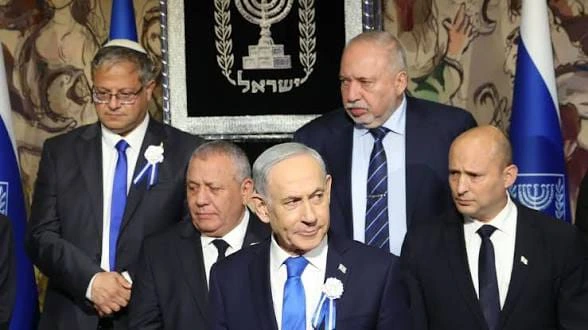
Netanyahu is not exactly sitting pretty either. He has lost his usual right wing majority and now heads a caretaker government. He has got to look like a real leader while the country is jittery. His Saturday night TV speech called for Eisenkot to come to talks with no preconditions, a warm gesture, at least to casual viewers. But the key is not what Netanyahu said, it is what he did not say. He never mentioned rotation or gave up anything solid about who gets to be prime minister. By dodging the leadership issue, Netanyahu got to look reasonable, while shifting the burden onto Eisenkot to explain why he would not accept the invite. Eisenkot brushed it off as another bit of political theater, but honestly, he could not just ignore the talks altogether without taking heat.
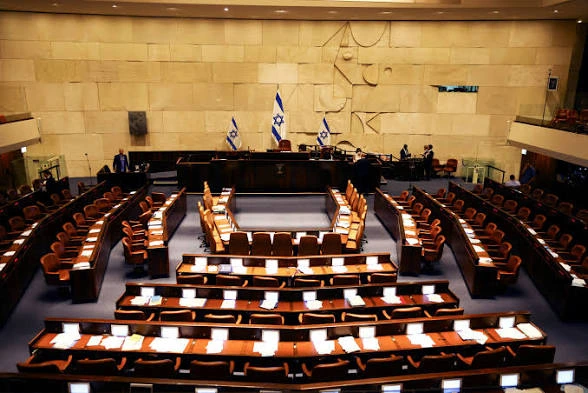
Outside the room, public pressure for compromise is getting louder. One real moment came when Elisha Medan, a new parliament member and a soldier who lost both legs in Gaza, took his oath. His quiet bravery managed to freeze the chamber, everyone applauded, no matter their politics. Medan then pitched a unity tent right outside the Knesset. Suddenly, the usual haggling over coalition deals felt weighed down by moral urgency. Sure, Medan’s tent will not magically bridge the gaps, like Likud and Yashar’s clash over investigating October 7, or drafting the ultra Orthodox, but it makes walking away harder for either side. Neither leader wants voters to see stubbornness blocking the nation’s chance to heal.
This drawn out caretaker phase is not just a nuisance, it is risky. The security cabinet has not met for more than a month, and Israel’s defense people are scrambling over what to do about Iran and the northern front. Government paralysis could not be clearer. Netanyahu uses these dangers to argue that Israel needs a broad government, not some fragile coalition relying on outside parties. Eisenkot throws back the same security logic, insisting a caretaker prime minister who has lost his majority should not be making huge decisions nobody can take back.
In the end, whether these unity talks are real statesmanship or just elaborate drama depends completely on how badly Netanyahu and Eisenkot need a way out. Eisenkot might figure out that neither the Arab nor haredi routes will lead to a stable government, and drag himself back to the negotiating table. Netanyahu, staring down the possibility of losing power, might decide that sharing control or agreeing to rotate the premiership beats total exile. For now, both keep playing their parts. It is less about actually forming a government and more about making sure, when it all falls apart, the other guy gets blamed.
About the Author
Israel Dispatch provides authoritative, non-partisan analysis on Israeli security, political dynamics, regional geopolitical shifts, and sovereign foreign policy.