By Noam Shalev
As coalition talks enter a high stakes phase in Jerusalem following the October 2026 elections, the Israeli political class is dangerously tempted by an appealing illusion. Many inside the opposition bloc led by Yashar chairman Gadi Eisenkot assume that simply removing Benjamin Netanyahu from the Prime Minister’s Office will automatically thaw frozen diplomatic ties in Washington, Brussels, and Arab capitals. A more respectable face at the podium, a calmer tone in English interviews, and a fresh team of articulate spokespersons will surely reset the clock. Yet as veteran peace negotiator Gershon Baskin argued in a sharp intervention published today in The Jerusalem Post, cosmetic rebranding will no longer fool a skeptical world. Israel does not suffer from a public relations deficit; it suffers from a policy deficit. Rebuilding shattered international confidence demands a fundamental strategic pivot, not merely a change of personnel.
For more than three years since the trauma of October 7, 2023, Israeli political discourse has been trapped inside a defensive crouch. Successive crises in Gaza, Lebanon, and the broader Iranian theater conditioned both leaders and voters to equate national survival exclusively with tactical military dominance. While maintaining overwhelming deterrence against armed proxies remains an absolute necessity, military superiority is a shield, not a national destination. Across the United States and Europe, Israel’s international image has become increasingly defined not by its legitimate right to self defense, but by prolonged civilian devastation in Gaza, unchecked settlement expansion, and violent lawlessness in the West Bank. Continuing the exact same policies under a more polite administration would squander a historic window of opportunity.
True diplomatic rehabilitation must begin by dismantling the self fulfilling prophecy that Israel lacks a Palestinian partner. For nearly two decades, Israeli governments actively weakened moderate Palestinian institutions while insisting no credible interlocutor existed. Today, an entire generation of Palestinians in the West Bank, east Jerusalem, and Gaza has grown to adulthood without ever casting a ballot, as presidential elections have not taken place since 2005 and legislative elections have been frozen since 2006. With Palestinian Authority President Mahmoud Abbas delaying renewed voting until September 2027, Jerusalem has a clear choice. Rather than exploiting Palestinian political stagnation to avoid diplomatic engagement, a new government under Eisenkot should join Washington, the European Union, and regional Arab states in actively facilitating free, internationally monitored Palestinian elections at the earliest feasible date. Declaring openly that Israel welcomes democratic renewal among its neighbors, provided elected leaders reject terror and recognize Israel’s right to exist, would instantly transform Jerusalem’s moral posture abroad.
That rhetorical shift must be matched immediately by concrete execution on two urgent fronts: Gaza and the West Bank. In Gaza, President Donald Trump’s 20 point framework, endorsed by the United Nations Security Council, provides a structured blueprint for post war stabilization, demilitarization, and civilian governance. Cherry picking only the military security clauses while stalling humanitarian reconstruction or obstructing a Palestinian technocratic administration will guarantee an endless cycle of insurgency. Reopening commercial crossings, restoring vital infrastructure, and supporting an international stabilization force to disarm Hamas are essential steps toward reunifying Gaza and the West Bank under legitimate, non violent Palestinian governance. Security arrangements divorced from a political horizon merely set the stage for the next war.
Simultaneously, the next prime minister can demonstrate genuine resolve overnight by restoring the rule of law in the West Bank. For too long, ideological extremists have established unauthorized outposts, torched agricultural lands, and terrorized Palestinian villages while enjoying political immunity and selective law enforcement. Directing the police, Shin Bet, military, and State Attorney’s Office to prosecute settler violence aggressively, dismantle illegal outposts, and freeze unilateral settlement expansion is not a favor to foreign critics. It is an urgent restoration of Israeli sovereignty and moral clarity.
The strategic payoff of such decisive action extends far beyond bilateral ties with Western democracies. Across the Middle East, pragmatic Arab states including Saudi Arabia, the United Arab Emirates, Egypt, and Jordan remain eager to build an integrated regional architecture of security cooperation, economic investment, and infrastructure ventures such as the India Middle East Europe Economic Corridor. Yet Riyadh and its neighbors have made unmistakably clear that expanding the Abraham Accords requires a credible, irreversible pathway toward Palestinian self determination. By linking regional normalization with concrete steps on the Palestinian track, Israel can anchor itself inside a powerful Sunni Western alliance capable of containing Iranian aggression for decades.
Domestically, restoring international standing also requires healing Israel’s own democratic fabric. Protecting judicial independence, establishing a formal state commission of inquiry into the failures of October 7, and treating Israel’s Arab citizens as full civic partners rather than a parliamentary nuisance will reinforce the foundational values of the 1948 Declaration of Independence.
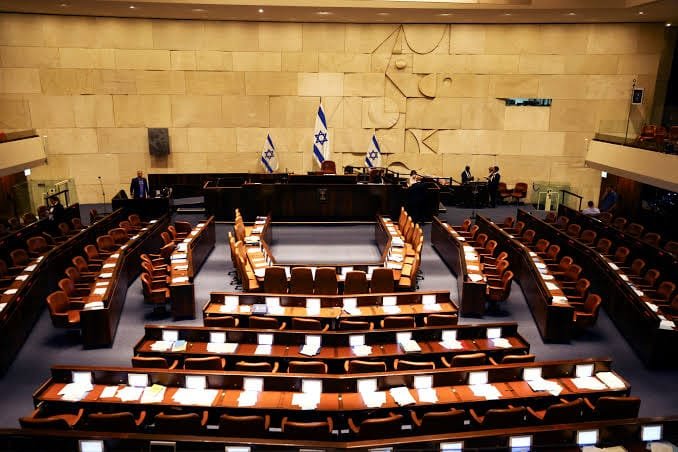
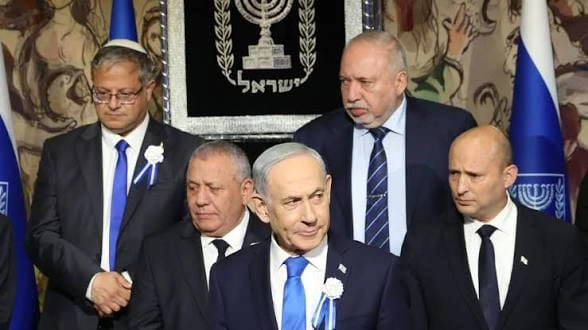
As Eisenkot negotiates with potential coalition partners like Naftali Bennett, Yair Lapid, Avigdor Liberman, and Yair Golan to bridge the parliamentary divide in the 26th Knesset, the temptation to avoid controversial diplomatic commitments in order to keep a fragile coalition intact will be immense. Yielding to that paralysis would be fatal. Israelis have endured years of trauma and institutional erosion, and they deserve leadership bold enough to offer a genuine horizon rather than merely managing the next emergency. Israel will recover its place among the nations not when it hires better publicists, but when the world sees a confident democracy extending its hand for a real, durable peace.
About the Author
Noam Shalev is a Political Affairs Commentator covering Israeli government policy, US Israel relations, coalition politics, and diplomatic engagement across the Middle East.