

While Israel’s military focus remains consumed by tactical engagements on its physical borders, an insidious new front has opened in the halls of Western parliaments and financial institutions. Israel is fighting a war on the financial front, and the uncomfortable truth is that the country is completely unprepared. For years, warnings regarding economic delegitimization were dismissed as alarmist rhetoric or anti-Zionist noise. Today, those theoretical warnings have transformed into binding policy. The announcement by Britain, France, and Canada targeting trade with Israeli settlements across Judea and Samaria marks a dangerous escalation from symbolic protest to institutional coercion.
These initial restrictions—banning settlement imports and targeting entities facilitating infrastructure and construction beyond the Green Line—are explicitly designed to distinguish between sovereign Israel and its presence in the territories. However, financial sanctions are inherently expansionary. What begins today as a targeted ban on a settlement construction company tomorrow extends to the local bank providing its project financing, the logistics firm paving its access roads, and the international equipment suppliers providing its machinery. The line between sovereign corporate entities and green-line infrastructure in a small, integrated economy like Israel’s is practically impossible to maintain under legal scrutiny.
The precedent has already been set. When the Biden administration issued an executive order in 2024 imposing sanctions on violent Israeli individuals and organizations in the West Bank, a critical legal taboo was broken. Even though President Donald Trump rescinded those specific measures upon taking office, the mechanism was validated. European partners quickly followed suit, going as far as placing sanctions on senior cabinet ministers, including Finance Minister Bezalel Smotrich and National Security Minister Itamar Ben-Gvir. Assuming that this financial boycott has reached its outer boundary is a dangerous exercise in self-delusion.
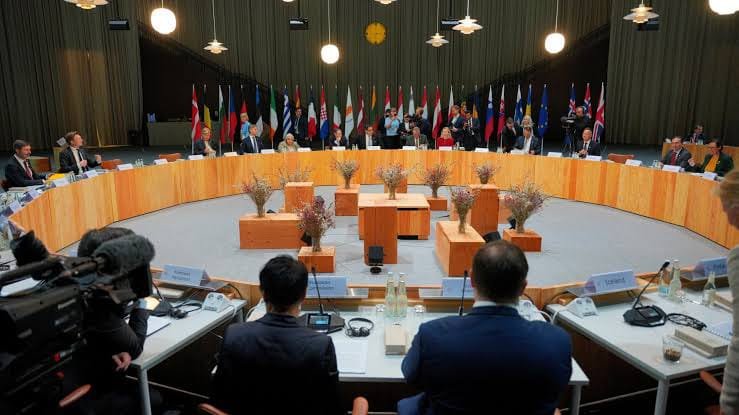
A comprehensive, expanding European sanctions regime would not merely restrict the travel schedules of fringe politicians or freeze the accounts of a few activists. It poses a structural threat to the entire Israeli economic model. Foreign investors are risk-averse; when maintaining operations or funding startups in Tel Aviv carries complex international legal exposure, capital flees. High-tech firms, which form the primary engine of Israel’s growth, will simply reincorporate abroad to safeguard their global supply chains and venture backing. Brain drain, already a quiet concern among academic and tech leadership, would rapidly accelerate into a structural flight of talent.
The dismissive attitude of several cabinet members toward Europe ignores basic trade reality. While political figures loudly proclaim that Europe’s opinions do not matter, the balance sheet tells a starkly different story. The European Union remains Israel’s largest single trading partner. In 2025 alone, trade in goods between Israel and the EU reached €43.3 billion, representing roughly one-third of all Israeli imports and nearly thirty percent of its exports. Losing unrestricted access to this market would not be an uncomfortable inconvenience. It would fundamentally impoverish the Israeli middle class, disrupt critical supply chains, and transform a thriving global economy into an isolated regional island.
The root of this vulnerability lies in Jerusalem’s total failure to treat financial and diplomatic warfare as a strategic domain equal to physical battlefield operations. For decades, successive governments treated settler violence and illegal outposts as domestic law enforcement nuisances rather than strategic liabilities. By failing to aggressively enforce the rule of law at home, Israel handed its international adversaries a golden weapon on a silver platter. Simultaneously, public diplomacy was treated as a political welfare office. The National Public Diplomacy Directorate sat without a permanent director for over two years during an active multi-front war, while cabinet ministers made inflammatory off-the-cuff statements that were promptly weaponized against the state in foreign courts.
Even in the realm of information warfare, response mechanisms have been reactive and embarrassingly slow. It took three years of sustained international accusations and high-profile cultural boycotts—such as the international acclaim for anti-establishment films in Venice—for the military to establish a dedicated, multidisciplinary team tasked with systematically debunking false claims against IDF operations. Rhetorical bravado from political leaders on international podiums cannot substitute for disciplined, proactive statecraft.
Addressing the United Nations General Assembly in New York, Prime Minister Benjamin Netanyahu showcased his trademark oratorical skill. He spoke with force, utilized visual theater, and delivered memorable soundbites for domestic audiences. But a speech, no matter how brilliantly executed, is not a strategy. It cannot reverse three years of compounding diplomatic decay, nor can it neutralize complex regulatory legislation being drafted in foreign capitals.
Israel can undoubtedly adapt if forced to. Israeli innovation is resilient, and trade relationships can be expanded across Asian markets where the Israeli-Palestinian conflict carries less domestic political weight. Supply chains can be rerouted over time. But the country that emerges on the other side of that shift will be fundamentally altered. It will be a nation that is far more isolated, significantly more expensive to live in, chronically starved of foreign investment, and severed from the Western economic and democratic ecosystem it spent three-quarters of a century integrating into.
A sovereign nation must be willing to pay a price for decisions that are genuinely vital to its existential security. However, national security requires an honest accounting of costs, not a stubborn refusal to see them. Ignoring the legal, financial, and institutional machinery currently mobilizing against the Israeli economy is not courage; it is strategic negligence. Israel is engaged in a complex war that spans battlefields, international courts, media ecosystems, and global financial networks. Winning on the frontlines while forfeiting the economic engine that funds the military is a path to defeat. It is time for Jerusalem to wake up to the financial war before the price becomes impossible to pay.