
The current regional alignment under Operation Roaring Lion (the 2026 joint U.S.-Israeli campaign against Iran) has placed Israel and Egypt on the same side of a major conflict. However, analysts suggest this “marriage of convenience” faces a precarious future.
On Seder night we retell how the Children of Israel fled Egypt. Today, however, the relationship between the modern states of Israel and Egypt tells a very different story.
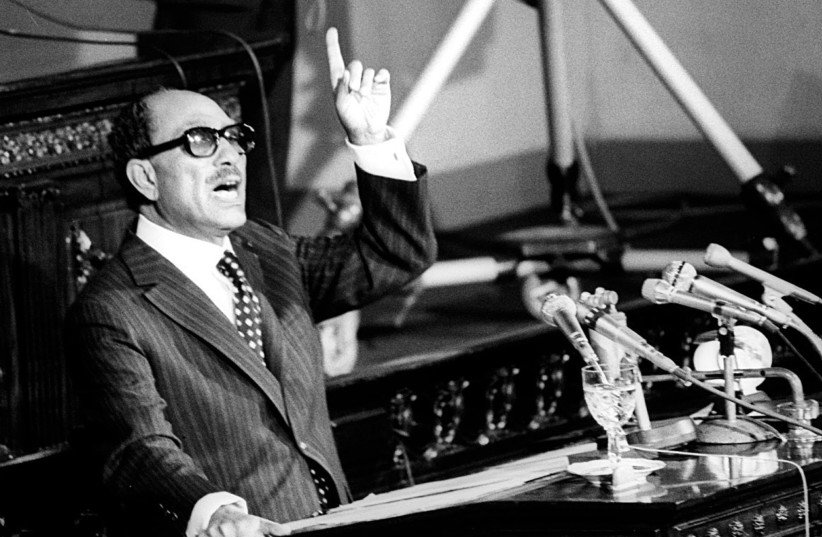
Nearly 50 years ago, then-Egyptian president Anwar Sadat made history by flying to Jerusalem — the first Arab leader to visit Israel. Israeli intelligence, suspicious that the visit might be a ruse, even posted sharpshooters on nearby rooftops, fearing Egyptian soldiers might disembark and open fire. Instead, Sadat’s address to the Knesset persuaded many Israelis that he sought peace.
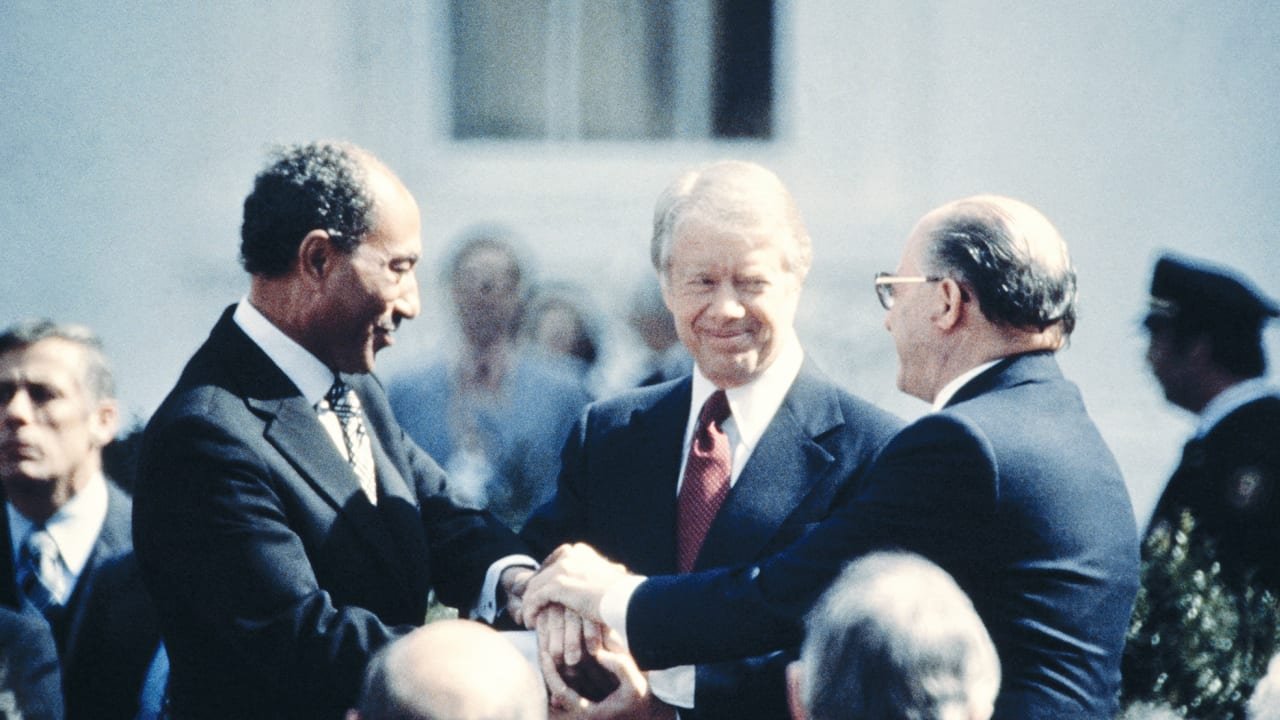
“Today, I have come to you with firm steps, to build a new life and to establish peace,” he declared. “We all, on this Earth, Muslims, Christians, and Jews alike, worship God and nobody but Him. God’s teachings and commandments are love, sincerity, purity, and peace.” His visit set in motion a process that culminated in the 1979 Egypt-Israel peace treaty — a cornerstone of Israeli national security for more than four decades.
The relationship, however, has had its ups and downs. After Sadat’s assassination in 1981 — partly linked to his signing the peace treaty — many feared his successor, Hosni Mubarak, might scrap the agreement. Those worries resurfaced when Mubarak was ousted in 2011 during the Arab Spring.
Cooperation on security issues has remained important. Israel and Egypt have worked closely to limit the threat posed by ISIS in the Sinai, a concern for the many Israelis who visit the peninsula. In the decades immediately after the treaty, Israeli tourists poured into Egypt — Cairo and especially Sinai benefited — but the enthusiasm was uneven. Egyptians who applied to visit Israel often faced Mukhabarat screenings, professional penalties, and social pressure; Egyptian media has also published antisemitic content. Still, David Guvrin, Israel’s ambassador to Egypt from 2016–2019, called the treaty “the major Israeli diplomatic achievement in the history of Israeli diplomacy.” It also paved the way for later agreements, including the 1994 peace with Jordan and the 2020 Abraham Accords with the UAE and Morocco.
The Israel-Hamas war that began on October 7, 2023, strained relations. Egypt, which borders Gaza and controlled it until 1967, fears mass displacement into its territory and prioritizes stability along its border. Amira Oron, Israel’s ambassador to Egypt from 2020–2024, said the war and regional tensions have created “major tensions and difficulties” in the relationship.
Analysts describe today’s ties as more complicated and uncertain than at Camp David. Dan Diker of the Jerusalem Center for Security and Foreign Affairs criticized Egypt’s inconsistent approach toward Hamas, alleging it turned a blind eye to weapon flows through Sinai tunnels. Egypt and Qatar did, however, play key mediation roles during the war in securing the release of more than 160 hostages taken on October 7. Those releases were part of a U.S.-backed deal that called for Hamas disarmament and Israeli withdrawal from much of Gaza.
Implementation of that plan has been partial. Israel controls just over half of Gaza, but most of that territory is sparsely populated; the other half, populated by about two million people living in tents with limited food and water, is under Hamas control. The next phase — full demilitarization of Hamas and further Israeli withdrawal — stalled before the broader conflict with Iran and now appears unlikely to proceed soon.
U.S. President Donald Trump had proposed a “Gaza Riviera” plan, hoping to rebuild Gaza with Gulf funding while Palestinians temporarily — or permanently, in some cases — relocated to ease reconstruction. Diker said Egypt opposed any plan that involved moving Gazans out, calling such proposals unacceptable and another example of Cairo’s inconsistent stance.
There is also disagreement over who should govern Gaza. Egypt favors a role for the Palestinian Authority alongside elements of Hamas; Israel opposes involvement by either the PA or Hamas.
Economic ties have advanced despite political tensions. In December 2025, Israel and Egypt signed a $35 billion energy deal — the largest in Israel’s history — under which Israel will export 130 billion cubic meters of natural gas from the Leviathan field, operated by Chevron. The gas will help meet Egypt’s growing energy needs as its population approaches 120 million. Analysts see Eastern Mediterranean gas as central to the region’s future energy landscape.
During Operation Roaring Lion (Epic Fury), a war pitting Israel and the United States against Iran and Hezbollah, Egypt aligned with Israel and the Gulf states politically, though it did not join the fighting. Cairo’s long-standing hostility toward Iran further aligned its interests with Israel’s.
When the conflict with Iran ends, Trump may revive the Gaza reconstruction plan, potentially reigniting tensions between Egypt and Israel over Gaza’s future governance and population movements. For now, the relationship remains cooperative in key areas but marked by deep disagreements and uncertainty.