
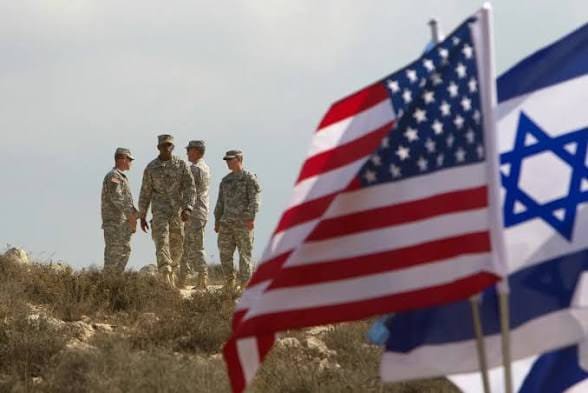
The recent intelligence provided by Israel regarding an Iranian plot to assassinate President Donald Trump is far more than a routine security update. It is a sobering reflection of the depth and necessity of the US-Israel partnership. While political discourse often frames this alliance as a one-way street, a relationship characterized by American support for Israel, the reality is a symbiotic defense arrangement. In a complex geopolitical era defined by asymmetric threats, Israel has once again demonstrated that it is not merely a beneficiary of American security, but an indispensable provider of it.
The intelligence provided regarding the threats against the President’s life highlights a capability that is uniquely Israeli. For years, Israel has invested heavily in human and electronic intelligence networks that penetrate the most guarded chambers of the Iranian regime. Tehran’s desire to retaliate for the 2020 strike on Qassem Soleimani has never waned; it has only evolved. The fact that Israeli intelligence could identify this specific, credible threat confirms that Israel possesses an unrivaled ability to track the movements and intentions of actors who pose an immediate, lethal danger to American leaders. By sharing this data, Israel acts as a critical shield, protecting not only the life of a president but the integrity of the American political order.
This intelligence sharing is not an isolated act of diplomatic courtesy. It is a manifestation of an integrated, high-stakes security architecture that has been quietly hardening for decades. When Iranian officials target the United States, they do not view the American-Israeli partnership as two distinct entities; they treat the two nations as a single, combined objective. This is precisely why the intelligence Israel collects is vital to the American military. The threats emanating from Tehran, whether they be ballistic missile programs, drone proliferation, or state-sponsored terrorism, are directed at both nations with equal fervor. Consequently, every time Israel disrupts an Iranian plot, it is not just “doing a favor” for Washington; it is engaging in a preventative action that is fundamentally tied to its own survival.
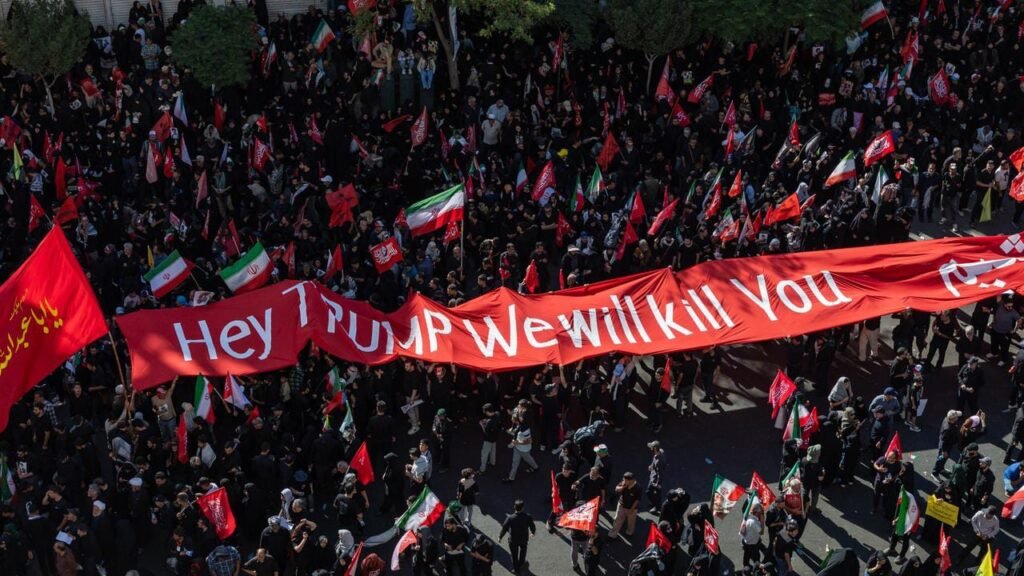
The value of Israel to the United States has expanded significantly in recent years, particularly since the formal transition of Israel into the U.S. Central Command (CENTCOM) area of responsibility in 2021. This move was a recognition of a reality that security planners had known for a long time: Israel is a regional force multiplier. By integrating Israeli capabilities into the broader U.S.-led defense framework, the United States has gained an ally that provides sophisticated missile defense, advanced cyber-warfare capabilities, and a battle-tested understanding of the Middle East’s shifting power dynamics. This partnership allows the United States to maintain a strong posture in a volatile region without the necessity of overextending its own ground forces.
Critics of the alliance often suggest that Israel is a strategic liability that drags the United States into unnecessary conflicts. Yet, the history of the last two decades suggests the exact opposite. Israel’s intelligence, research and development, and operational expertise have provided the United States with a unique strategic edge. For instance, the collaboration on technology like the Iron Dome, Arrow, and David’s Sling has not only saved countless lives in Israel but has provided the U.S. military with invaluable data and defensive innovations that have saved lives on American battlefields elsewhere. In the realm of cyber security, the intelligence and defensive methodologies developed by Israeli units are frequently shared with American counterparts, helping to protect critical U.S. infrastructure from state-sponsored attacks.
Furthermore, the U.S. security apparatus depends on the stability of a region where democracy is a rarity. Israel acts as the only reliable, stable partner in the Middle East that shares fundamental democratic values with the United States. In a world where Washington is being forced to confront the rising influence of China and a resurgent Russia, maintaining a secure, technologically advanced, and militarily potent partner in the Levant is a strategic imperative. The presence of Israel allows the U.S. to focus its resources elsewhere, secure in the knowledge that one of its most capable allies is managing the front lines of the struggle against Iran and its proxies.
The warnings passed to Washington this week are a poignant reminder that the stakes of this alliance are a matter of life and death. The Iranian regime’s obsession with “eliminating” American influence, and the individuals who represent that influence, is a foundational pillar of its foreign policy. That Israel is able to track these threats is a testament to the sophistication of its intelligence services. When Israel warns the White House, it is essentially providing a service that no other nation can offer. It is a sentinel system that works 24/7 to ensure that American leaders remain beyond the reach of those who wish to destabilize the global order.
This synergy is built on decades of mutual trust and a shared understanding that the enemies of the West are the enemies of Israel. The bond is forged in the understanding that an attack on the sovereignty of the United States is viewed by their common adversaries as an opportunity to degrade the influence of Israel, and vice versa. Israel is not a client state; it is a peer competitor in the realm of intelligence and security, and it chooses to deploy that peer-level capability in service of the broader alliance.
As the United States continues to navigate a precarious, multipolar global landscape, the importance of this partnership will only continue to rise. Washington’s security, its ability to project power, and the safety of its leadership are inextricably linked to the strength and the success of the State of Israel. The intelligence shared this week is a proof point of a reality that should be obvious to all: the United States has no ally more committed, more capable, or more reliable than Israel. The security of both nations is a shared project, and the intelligence passed between the two capitals remains the most critical defensive line in the modern world.