
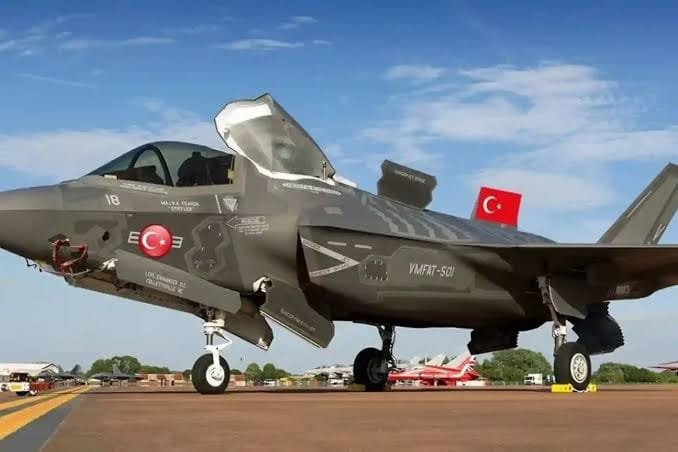
The spectacle of President Donald Trump dangling F-35 fighter jets before Turkish President Recep Tayyip Erdogan at the NATO summit in Ankara is more than just a diplomatic negotiation over hardware. It is a profound strategic miscalculation that ignores the hard evidence of Turkey’s recent military conduct. Prime Minister Benjamin Netanyahu’s urgent warning, that arming Turkey with top-tier Western technology will destabilize the region, is not just an expression of anxiety about air superiority. It is a recognition of how Ankara has already weaponized advanced tech to pursue a specific, ideological, and often destabilizing project across the Middle East and North Africa. The F-35 discussion is a distraction. The real evidence of Turkey’s strategic trajectory is not to be found in the hangar of a future jet, but on the scarred landscapes of Libya.
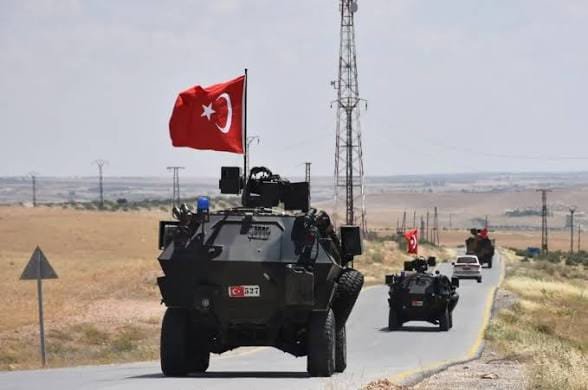
For seven years, Libya has served as Turkey’s laboratory for power projection. When Turkish Bayraktar TB2 drones entered the Libyan civil war in 2019, they were not merely sold as off-the-shelf equipment. They were integrated into a comprehensive framework of electronic warfare, Turkish-led maintenance, and boots-on-the-ground support. This intervention fundamentally altered the conflict, halting the forces of Khalifa Haftar and cementing a Turkish footprint that remains robust today. Turkey did not just provide weapons; it provided an operational doctrine that bound Libyan factions to Ankara’s political agenda. This is the “Turkey model” of influence: a dependency on Turkish platforms and maintenance contracts that grants Ankara leverage over the domestic and foreign policy of a sovereign nation for years.
This model reveals the central fallacy of the U.S. push to return Turkey to the F-35 program. The assumption in Washington seems to be that by re-integrating Ankara into the Western security architecture, the U.S. can exert a moderating influence on Erdogan’s foreign policy. This ignores the reality that Turkey has spent the last decade aggressively building an indigenous defense base specifically to escape the political conditionality attached to Western exports. From Baykar’s drone fleets to Aselsan’s electronic warfare suites and the TAI KAAN fighter program, Turkey has succeeded in creating a parallel defense industrial complex. Selling Turkey an F-35 would not introduce a new capability that Ankara lacks; it would merely validate and extend a power projection capacity that Turkey has already proven it is willing to use in service of its own regional ambitions, often to the detriment of Israeli interests.
The opportunism Turkey demonstrated in Libya is perhaps the most concerning element of its current trajectory. For years, Ankara backed the Tripoli-based government exclusively. By 2025, however, the strategy shifted toward a more ruthless pragmatism. Turkish intelligence officials began courting Haftar, the very man they spent years trying to defeat, while maintaining their hold on the west. By summer 2026, evidence suggested Turkish drones were appearing at airbases controlled by Haftar’s forces. The apparent cost of this pivot was ratification of the 2019 maritime boundary memorandum, an agreement that directly challenges Greek and Cypriot claims and impacts the security of offshore energy resources that are critical to Israel’s exports to Europe.
Turkey is now operating with a clear, cynical playbook: it will arm both sides of a conflict if doing so secures its maritime or energy claims. It treats regional rivals as parallel revenue streams rather than strategic impediments. This is not the behavior of a NATO ally acting in concert with the West. It is the behavior of a regional power pursuing an independent project that views stability as secondary to political and ideological expansion. The proliferation risk is clear. Turkey has a documented history of favoring factions aligned with its own political networks, including groups with clear sympathies for the Muslim Brotherhood. When these advanced platforms, drones, sensors, jammers, end up in the hands of ideologically driven militias rather than professional, accountable state militaries, the threat profile changes dramatically.
Israel has invested five years into building a regional architecture, anchored by the Abraham Accords, that relies on a shared perception of regional threats. This architecture depends on the belief that Sunni governments, wary of political Islam and regional instability, will align with Israel and the West. A Turkey that arms networks linked to the Muslim Brotherhood, while simultaneously maintaining a seat at the NATO table, undermines this strategic bet. It introduces a massive, unpredictable variable into a region that Israel needs to be coherent. Netanyahu’s intervention was not about one aircraft; it was about the fundamental nature of Turkey’s political project. The Libya record proves that once Ankara gains a technological edge, it uses that edge to advance a political and ideological vision that is increasingly at odds with Israeli security.
Washington is currently debating whether the value of NATO cohesion outweighs the risk of arming a state that acts with such manifest independence. But this is a false dichotomy. The real question is whether the United States is prepared to deal with the regional fallout when that hardware is inevitably turned toward objectives that run counter to Western interests. Turkey has had seven years in Libya to show the world what it does with sophisticated technology. It has used that time to build influence, rewrite maritime laws, and support ideological allies at the expense of regional stability.
Israel’s task in the coming weeks is to pierce the Washington bubble and ensure that the F-35 debate is grounded in the reality of the last seven years. The F-35 question and the Libya question are, in substance, the same question. Turkey has provided its answer through its actions. Washington’s failure to listen would be a strategic error of the highest order, one that will leave Israel to grapple with the consequences long after the summit in Ankara concludes. The arsenal Ankara has built outside of NATO’s framework is already in operation. The question is whether the U.S. is finally ready to acknowledge that it is dealing with a partner that has moved far beyond the reach of Western containment.