
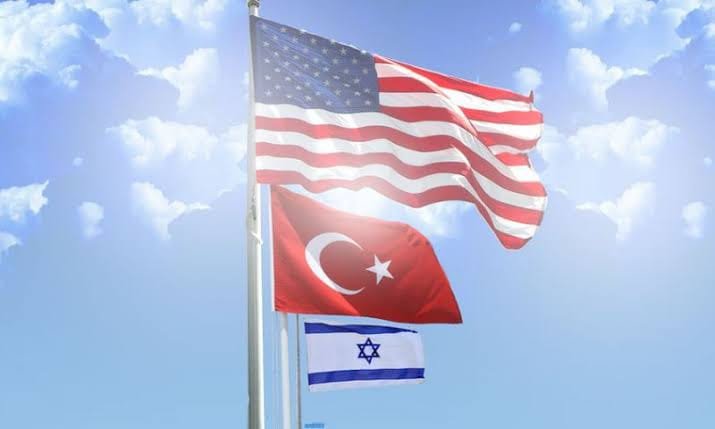
The sight of Donald Trump strolling arm-in-arm with Recep Tayyip Erdogan in Ankara is not merely a diplomatic photo opportunity; it is a profound betrayal of the strategic interests that once bound Washington to Jerusalem. While the White House plays at being a global dealmaker, the actual result of this transaction is the systematic abandonment of Israel to a rapidly consolidating regional threat. Trump’s “business-first” philosophy, which once promised a new dawn of stability in the Middle East, has devolved into a reckless gamble that prioritizes optics and commerce over the hard reality of existential threats. For Israel, this is a dangerous signal that the America that stood as a guarantor of security has been replaced by a White House that views its alliances as inventory to be traded.
Trump’s pivot toward Ankara is driven by a narrow, transactional worldview that ignores the ideological transformation of Turkey under Erdogan. Erdogan is not a typical NATO partner looking to integrate into a Western security framework. He is a neo-Ottoman revisionist who openly styles himself the “governor of Jerusalem.” His goal is regional hegemony, and he has spent the last decade dismantling the secular, pro-Western legacy of Ataturk to build a centralized, Islamist power base. Trump’s administration seems willfully blind to this, seemingly convinced that if they can just offer the right trade deals or military contracts, they can tame an adversary who has made the destruction of Israel’s regional position a core pillar of his national project.
The timing of this embrace is particularly damning. It comes as the Trump administration simultaneously pursues a fragile, desperate memorandum of understanding with the Iranian regime, despite clear evidence that Tehran is merely using the diplomatic window to regroup. While Washington focuses on managing the news cycle to ensure the 2026 midterms are not marred by images of regional chaos, the actual security architecture of the Middle East is being dismantled. Iran feels emboldened, not deterred. Its recent posturing during the funeral procession of its former leader was not the behavior of a crippled state; it was the display of a regime that recognizes a vacuum of American resolve when it sees one.
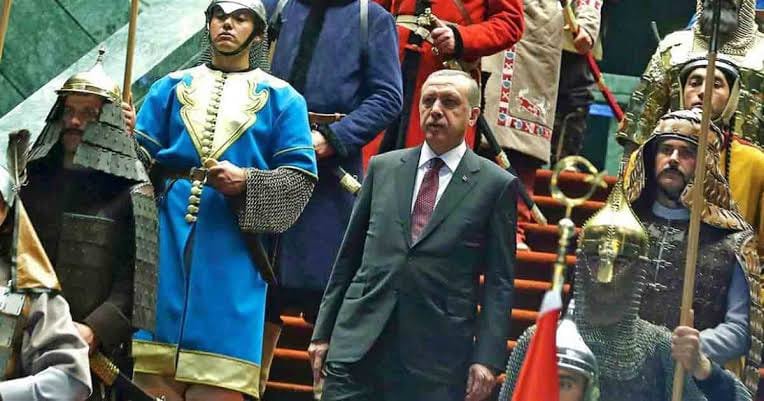
By cozying up to Erdogan while simultaneously signaling a “deal at any cost” posture toward Tehran, Trump is effectively handing the keys to the region to two powers that are fundamentally hostile to Israel’s security. Erdogan has seen the removal of Bashar Assad’s regime in Syria as his opening. He is now maneuvering to project power into Lebanon, coordinating behind the scenes with Iranian proxies and leaning on the support of Qatar. This is not the “stability” Trump promised his base. It is the creation of a new, multipolar nightmare where Turkey and Iran, despite their historical rivalries, find common cause in undermining the influence of the United States and the stability of the State of Israel.
The arrogance of Trump’s business-centric diplomacy lies in the assumption that the world can be run like a real estate portfolio. In this view, if you satisfy the ego of a strongman, you secure the deal. But in the Middle East, security is not a transaction; it is a constant, exhausting struggle against forces that do not operate according to the logic of the profit motive. When Israel watches its primary ally, the United States, court a leader who has actively worked to alienate Israel, restrict its diplomatic reach, and foster anti-Zionist sentiment, the message to Jerusalem is clear: Israel is on its own. The “Trump Doctrine” is turning into a “Trump Abandonment,” and the cost will be paid in blood and national security.
The presence of Egyptian and Saudi representatives at the recent funeral ceremonies in the region suggests that even the moderate Arab states are reading the map differently now. They see an American president who is drifting, a Vice President who is deep in the weeds of ineffective negotiations, and an Israeli government that is increasingly forced to navigate these treacherous waters without a reliable compass from Washington. If the Abraham Accords, the cornerstone of a new regional architecture, are to survive, they must be saved from this drift. Yet, Trump’s current trajectory suggests he is more interested in the appearance of a breakthrough than the hard, quiet work of building a genuine coalition of partners against the Iranian-Turkish axis.
Israel must now confront a cold, hard truth: it cannot afford to wait for the U.S. election cycle to end before it recalibrates its own security strategy. The current policy from the White House is not just “America First”, it is “America Absent.” Israel must move to strengthen its ties with Jordan and Egypt, even as these states hedge their own bets in the face of Washington’s retreat. It must push to finalize the situation in Gaza with a decisive resolution, rather than relying on international diplomatic processes that are clearly losing steam. The Mossad’s efforts to incentivize emigration from Gaza are a start, but the nation needs a broader, more aggressive posture that acknowledges the changing reality.
We are currently seeing a resurgence of the “stiff-necked” defiance that has defined the Persian and Turkish approaches to the region for centuries. They do not fear the American business card; they fear the strength and resolve of the Israeli military. This is the only language that is understood in Ankara or Tehran. If Trump thinks he can “buy” his way out of this conflict with fighter jets and trade promises, he is delusional. The history of the region is littered with the carcasses of leaders who thought they could manage the Middle East from the outside.
Israel’s internal unity, the kind displayed by veterans and reservists who still show up to defend the state with their “heart and soul”—remains our greatest asset. It is a stark contrast to the hollow, transactional politics emanating from Washington. Trump’s administration has forgotten that the bonds of an alliance are forged in shared values and common threats, not in the margins of a trade agreement. If the White House continues to prioritize personal optics over the preservation of the regional security order, Israel will be forced to act unilaterally to protect its citizens. We are very far from rest, but we are also very clear on what is at stake. The era of relying on American diplomacy is over; the era of Israeli necessity has begun.