
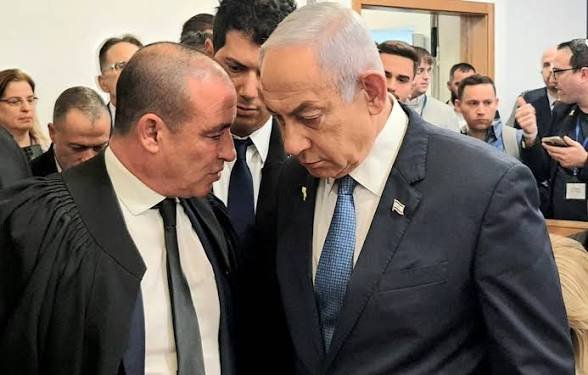
There is an old legal saying: “When the facts are on your side, argue the facts. When the law is on your side, argue the law. When neither is clearly on your side, argue the process.” Benjamin Netanyahu’s latest courtroom appearance suggests that his defense strategy is moving toward the third category.
When Netanyahu accuses the prosecution of “laying a trap” and painting a “misleading picture,” he is not simply denying the charges that have been leveled against him. Instead, he is contesting the very legitimacy of the methods used by the prosecution. This is important because, after years of investigation and political wrangling, the key issue is not whether everything said and done by the prosecution took place as the prosecution claims it did. The real battle is over credibility: whose version of events Israelis believe.
However, the importance of Netanyahu’s statements goes beyond the courtroom. For many years now, the Israeli prime minister has claimed that the charges against him form part of a larger strategy by various political and media elites, including some judges, who have failed in their attempts to get rid of him via elections and want to use the law to force him out of power. In this regard, Netanyahu’s accusations about prosecutors creating inconsistencies and “luring him into a trap” are entirely consistent with this storyline. The message is clear: if inconsistencies appear in his testimony, they are not evidence of guilt but evidence of manipulation.
This argument is not new. Similar claims have surfaced throughout the trial, particularly regarding state witnesses, police interrogation tactics, and selective leaks to the media. Yet Monday’s testimony highlights a deeper problem facing both sides. The trial has become so complex, so lengthy, and so intertwined with Israeli politics that public perception matters as much as legal procedure.
This is evident in Case 2000. The accusations involve the talks held by Netanyahu and Arnon “Noni” Mozes on measures to be taken against Israel Hayom in return for the provision of media coverage. On the surface, the case seems like an easy one to analyze. But in essence, it involves lots of interpretations, intentions, memories, and context. Exactly what was intended by the two when holding the talks? Were they serious negotiations, politics, or talks without any action?That is why Netanyahu’s focus on allegedly incomplete testimony is strategically important. His defense is attempting to convince both judges and the broader public that prosecutors highlighted selective excerpts while ignoring qualifying statements that provided additional context. If successful, this approach does not necessarily prove innocence. However, it can create reasonable doubt about the prosecution’s interpretation of events.The broader political implications are equally significant. Netanyahu is not an ordinary defendant. He still ranks among Israel’s most politically influential individuals, commanding media attention even amid polls reflecting a fall in his popularity amid controversies regarding security, diplomacy, and domestic affairs. Each statement from the courtroom has political implications.
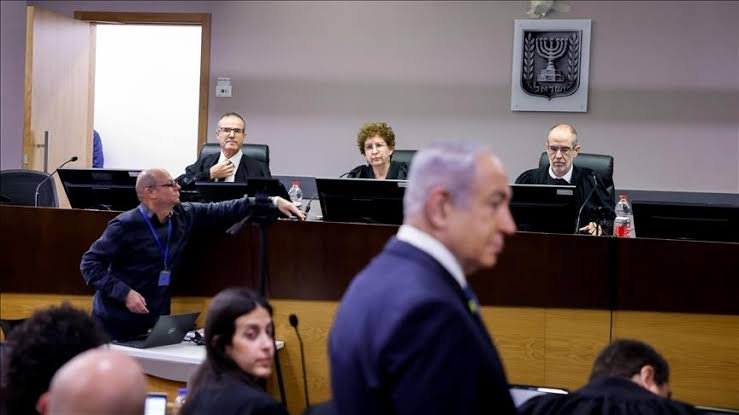
The broader political implications are equally significant. Netanyahu is not an ordinary defendant. He still ranks among Israel’s most politically influential individuals, commanding media attention even amid polls reflecting a fall in his popularity amid controversies regarding security, diplomacy, and domestic affairs. Each statement from the courtroom has political implications.
Timing also matters. Netanyahu enters this phase of the trial during one of the most politically vulnerable periods of his career. Recent polling has shown declining support for his coalition. Public debate over the Iran memorandum, tensions with Washington, military casualties in Lebanon, and continuing divisions over the Haredi draft issue have all intensified pressure on his government. Against that backdrop, allegations of prosecutorial misconduct serve a dual purpose: legal defense and political mobilization.
What makes this case very intriguing is the fact that both sides have issues with credibility. Prosecutors will have to convince the court that years of investigations, testimonies, recordings, and documents provide a consistent picture of wrongdoing. On the other hand, the side of Netanyahu will have to convince the court that inconsistencies arise from leading questions and selective presentation of the facts.
The outcome will likely depend less on dramatic revelations than on cumulative trust. Courts often evaluate not only individual facts but also the overall coherence of competing narratives. Which version appears more consistent? Which explanations seem more plausible? Which witnesses appear more credible?The importance of Netanyahu’s trial lies in the fact that political survival is directly connected with people’s trust in his ability to judge and lead. No matter how long the court procedure will take, from several months to several years, the political decision-making process is already taking place. Each court conflict adds to the image of the accused leader being either an unfortunate man or a leader struggling to explain uncomfortable facts.
The deeper lesson is that this trial has evolved far beyond a conventional corruption case. It has become a test of institutional trust in Israel itself. Confidence in the judiciary, the prosecution, law enforcement, the media, and political leadership are all being scrutinized simultaneously.
When Netanyahu says prosecutors “set a trap,” he is making more than a legal argument. He is asking Israelis to choose between two competing stories about power, accountability, and justice. The court will ultimately determine the legal verdict. But the struggle over credibility, the battle Netanyahu appears most focused on winning, may prove even more consequential for Israel’s political future than the final judgment itself.