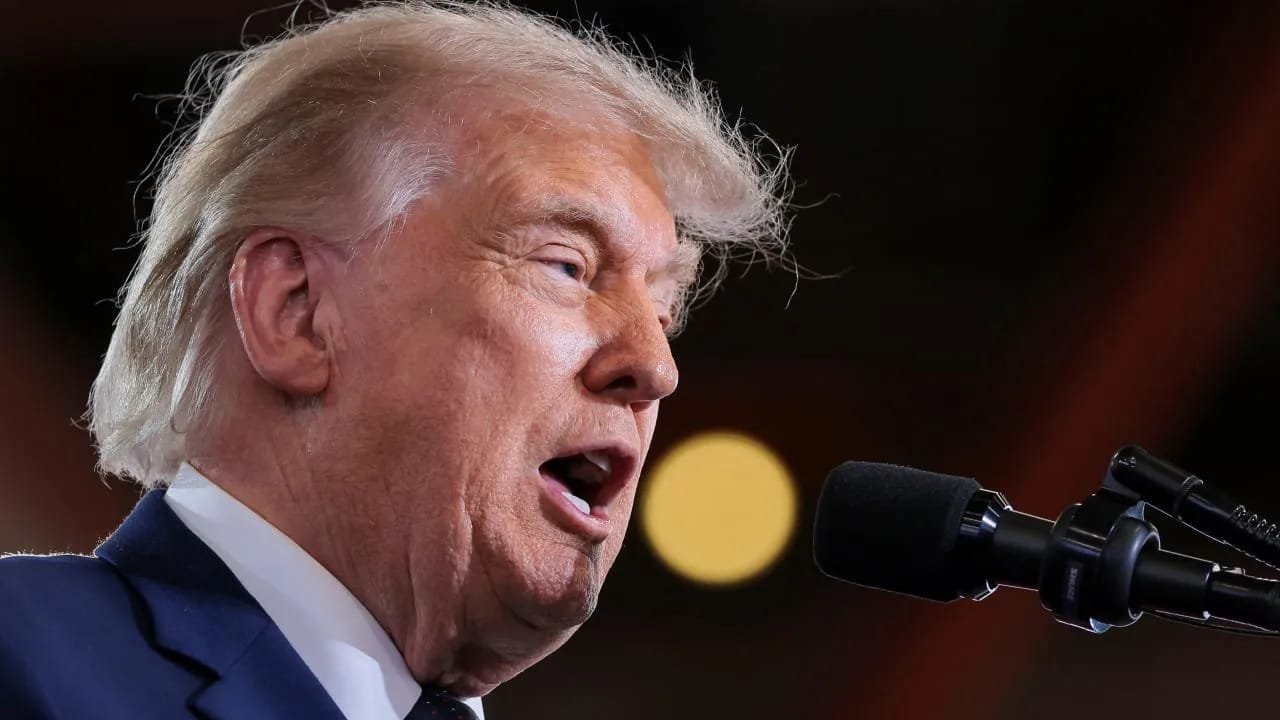
Donald Trump’s approach to global crises reflects less a coherent doctrine of statecraft and more a personality-driven style of improvisation, fast, theatrical, and frequently self-reversing. In international politics, where consistency is often the currency of credibility, this volatility has created a widening trust deficit not only among adversaries, but also within key allied capitals that depend on predictable American leadership.
At the core of this problem is Trump’s deeply transactional worldview. Everything from alliances, to agreements, to strategic commitments seems to have been seen as a tool of negotiation rather than a structure. One case in point is that of the 2015 Iran nuclear deal, from which the US walked away in 2018 despite the findings of the International Atomic Energy Agency (IAEA) that Iran was abiding by the key elements of this deal. Although the “maximum pressure” policy did succeed in imposing tougher sanctions on Iran, this period also saw the expansion of Iran’s enrichment capacity way past the 3.67% limit of this agreement, according to later IAEA reports.
The pattern that emerges is not one of linear strategy, but of abrupt shifts, withdrawal followed by escalation, escalation followed by negotiation signals, and negotiation signals followed by renewed ambiguity. For allies who calibrate their national security decisions on long-term American guarantees, this creates a destabilizing effect. In the Middle East in particular, where deterrence is built on perception as much as capability, inconsistency becomes a strategic liability.
Israel, which relies heavily on US military and diplomatic backing, receiving approximately $3.8 billion annually under a long-standing memorandum of understanding, has had to repeatedly recalibrate its threat assessments in response to Washington’s oscillating posture. Systems such as Iron Dome, David’s Sling, and Arrow are jointly financed and integrated into a broader US-Israeli defense architecture. Yet even this deep integration does not eliminate uncertainty when American policy signals shift depending on political cycles, personal instincts, or domestic considerations in Washington.
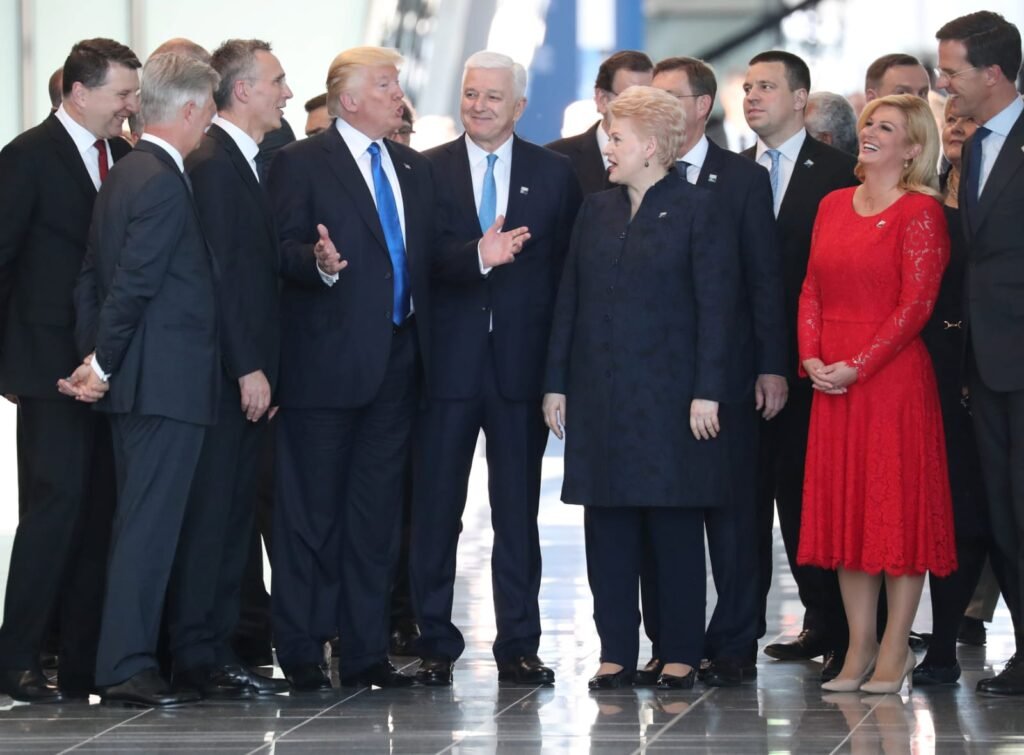
This uncertainty is further compounded by the diplomacy of Trump. Instead of gradually building alliances, Trump’s way is to make sudden announcements, hold big meetings, and announce “deals,” which are heralded as breakthroughs before their implementation mechanisms are discussed. While this might make for good media coverage in the short term, it ultimately undermines credibility because one learns that announcements don’t equal commitments.
In the context of Iran, this creates a particularly dangerous ambiguity. A state like Iran, operating through layered proxy networks in Lebanon, Syria, Yemen, and Iraq, does not respond to rhetoric alone; it responds to sustained pressure and predictable enforcement. When American policy alternates between confrontation and accommodation, it provides space for strategic recalibration in Tehran. The result is not de-escalation, but adaptation.
However, the problem does not merely concern Iran or the negotiations at hand. Indeed, Trump’s entire policy towards alliances is marked by strains on the conventional Western system. In the case of NATO, for instance, it was subjected time and again to the pressure of attaining the 2% GDP target for military spending, something that very few of the allies managed. True, the policy raised the awareness about the necessity of such expenditures throughout Europe; however, it also brought an aspect of conditional guarantees to the security alliance system.
This conditional mindset has consequences. When allies begin to question whether commitments are durable or contingent, strategic hedging becomes inevitable. Europe accelerates limited strategic autonomy discussions. Middle Eastern partners diversify diplomatic channels. And adversaries interpret ambiguity as opportunity.
The deeper concern is not disagreement over policy specifics, but the personalization of strategic decision-making. Foreign policy, under such a model, becomes an extension of individual negotiation style rather than institutional continuity. This creates a system where sudden reversals are not anomalies, they are expected features. For both friends and foes of the United States, that expectation fundamentally alters behavior.
For Israel, this translates into preparing not just for adversarial challenges but also for fluctuations in the position of its main ally. The two-level uncertainty is expensive from a strategic perspective. This makes the country constantly readjust its military posture, diplomatic communications, and cooperation on the regional level. Even successful initiatives, such as the Abraham Accords signed in 2020, which normalized relations between Israel and several Arab states, sit within this broader tension between diplomatic achievement and structural unpredictability.
Global leadership depends not just on power, but on the disciplined use of power. When decisions appear shaped by impulse, personal incentive structures, or shifting domestic narratives, the strategic environment becomes reactive rather than stable. Allies hedge. Adversaries probe. And the system as a whole drifts toward volatility.
Trump’s political brand has always thrived on disruption. But in international relations, disruption without consistency is not strategy, it is uncertainty exported at scale. And in a world already defined by multiple overlapping conflicts, that uncertainty carries consequences far beyond any single agreement or negotiation. At its core, it becomes the foreign policy equivalent of impulse dressed up as doctrine, where headline-chasing and personal branding repeatedly compete with strategic discipline. When global stability starts bending around the whims of one man’s need for applause, summit theatrics, and an almost theatrical obsession with a Nobel Peace Prize in Oslo, what looks like diplomacy begins to resemble performance politics. And history is rarely kind to leaders who confuse personal validation with national interest.