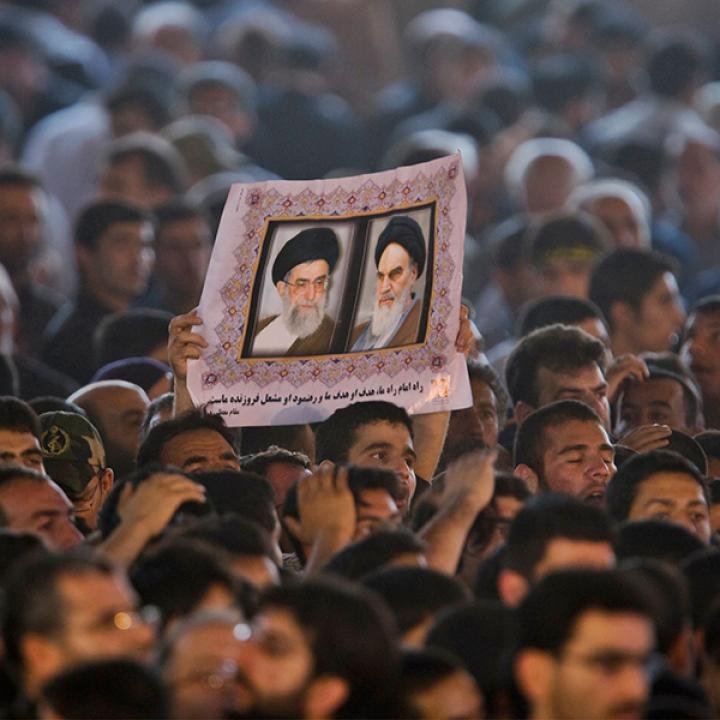
For years, Israel’s security establishment has measured Iran through familiar indicators: uranium enrichment levels, missile stockpiles, proxy networks, and military capabilities. but the most consequential change inside the Islamic Republic may not be taking place in nuclear facilities or on regional battlefields. It may be occurring in the realm of ideas, where an influential segment of Iran’s ruling elite appears to be redefining survival itself, not as a strategic achievement, but as proof of divine purpose.
The issue is not that Iran has completely abandoned strategic planning. It is more about whether their ideology is driving how they interpret those strategies now. So, if they see survival not just as a strategic success, but as proof of divine approval, then typical deterrence plans get way more complicated. This makes it crucial for Israel, more than any other player in the region, to grasp this mindset shift because it is far from just academic; it is a vital strategic need for them.
In 1979, the Islamic Republic was born as both a state and a revolutionary endeavor. Differing from typical nation-states, where legitimacy hinges on economy or defense, Iran gets its authority from a mix of religious teachings and revolutionary ideals. This unique ideological combo has kept them going through wars, sanctions, isolation, protests, and heaps of international pressure for over four decades now.
The Iran-Iraq War from 1980 to 1988 had a big impact on Iran. It was not just costly in terms of lives lost; it really shaped the political atmosphere. Instead of seeing the casualties as a tragedy, a lot of leaders spun it as a story about bravery, sacrifice, and resilience. This view has stuck around and still impacts groups like the IRGC. What started as a military outfit is now deeply involved in politics, the economy, and ideology too.
This is worth noting because states and movements often see survival differently. For deterrence theory, staying alive is the goal. With ideological systems, surviving is also about proving they are right.
Recent moves have shown this to be true. Despite years of sanctions, being shut out diplomatically, facing cyber ops, and seeing military blows to regional allies, Iran’s system is still holding strong. Tehran keeps its clout through networks from Iraq and Syria all the way to Lebanon and Yemen. To many hardliners, surviving this long shows the Islamic Republic’s model is still good, even with steady pressure from the outside.
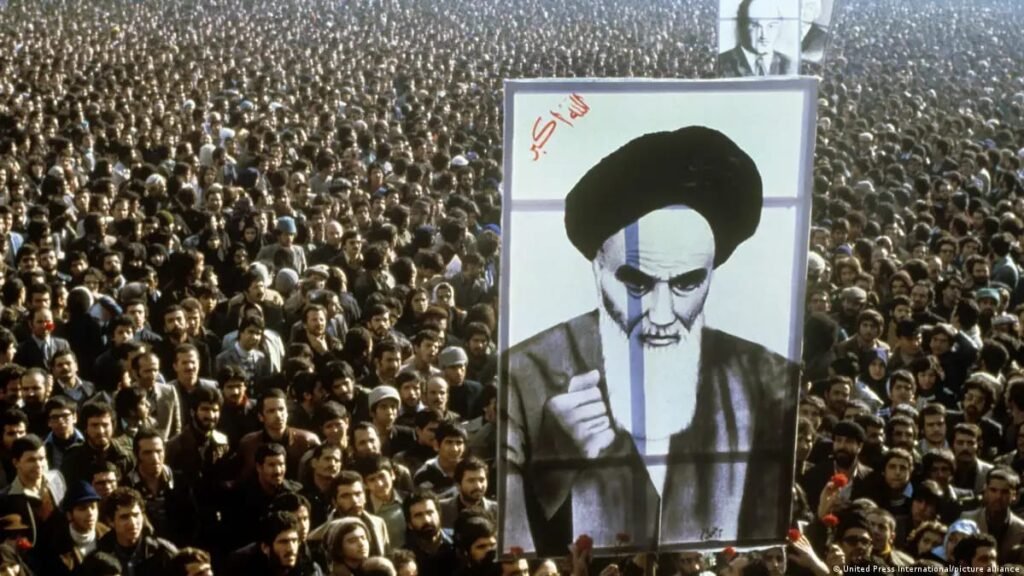
The big question is whether this mindset is taking root in Iran’s security elite. If it is, deterrence gets less predictable. Normally, pressure should encourage moderation, but it could just strengthen their ideology instead. Concessions meant to ease tensions might be seen as validation of resistance, not as reasons to compromise.
This does not mean Iran is irrational, Iranian leaders often show quite a bit of pragmatism. For decades, they avoided direct, large-scale conflict with the US even during several tiffs. They entered nuclear talks when needed too. Historically, they balance ideology with what they see as necessary for their strategic goals. Still, being rational does not exclude having ideological motives. Nations can make careful moves while thinking they advance a historic, maybe even sacred, cause at the same time.
For years, Israel has claimed that the Iranian threat goes beyond just weapons and tech. Their argument is that Iran’s ambitions include an ideological plan to change the region. Many critics thought these claims were overblown. However, the events in the Middle East over the past twenty years hint that ideology really does drive Iran’s actions in the area.
At the same time, Israel should avoid assuming that ideology makes compromise impossible. History shows that regimes, even revolutionary ones, often swing between fervor and pragmatism. Take the Soviet Union, Maoist China, and Iran itself, they have all toned down ideological goals due to practical concerns at times.
The challenge is not to show Tehran as irrational or apocalyptic. Instead, we need to acknowledge that deterrence works differently when leaders see survival and martyrdom through the lens of religious ideology. Effective policy needs to understand both aspects at the same time.
For the US and Israel, moving beyond just military or economic aspects of Iran is key. They need to dive into the ideology within the regime’s political and security groups. It is not enough to ask if Iran can handle pressure anymore, the bigger question is how the regime interprets its survival through it all.
Ultimately, the greatest strategic risk may not be Iran’s resilience itself. States survive adversity all the time. The greater danger emerges if sections of the regime become convinced that every confrontation they endure confirms a higher historical mission. When survival becomes validation, deterrence loses some of its traditional leverage.