
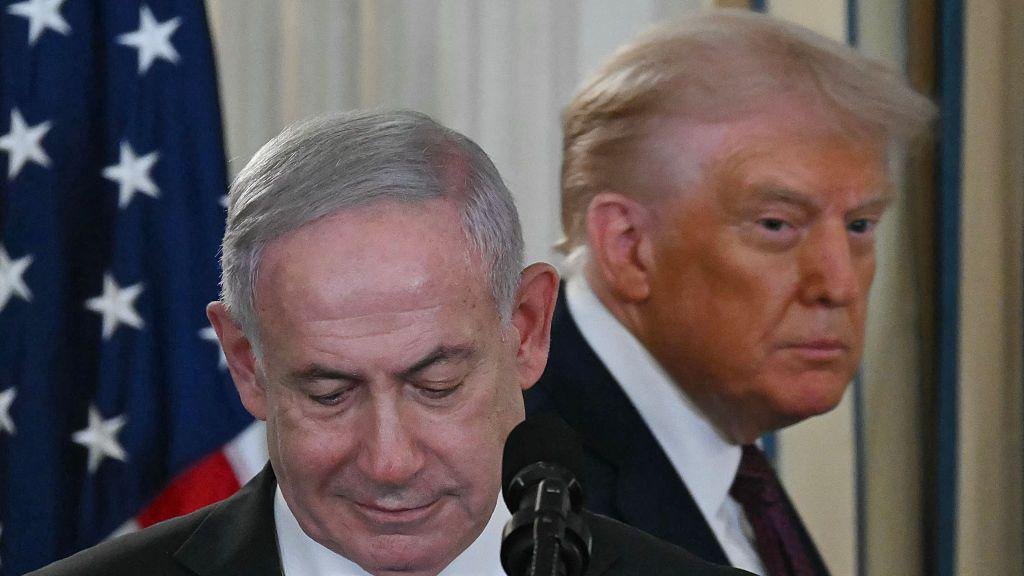
The debate over Israel’s operations in Lebanon has once again exposed a familiar but unresolved tension in Israeli strategic thinking: how to reconcile battlefield imperatives with the constraints of alliance politics. The recent accusations by opposition leaders that Prime Minister Benjamin Netanyahu has “caved” to U.S. pressure reflect less a sudden crisis of sovereignty and more a structural reality of Israel’s current multi-front war environment, where even limited tactical decisions are shaped by broader regional and international calculations.
At the center of the controversy are reported U.S. interventions, including from President Donald Trump, to delay or modify Israeli strikes in Lebanon amid a fragile ceasefire arrangement with Hezbollah. While political opponents have framed this as evidence of Israel becoming overly dependent on Washington, the operational reality suggests a more complex picture: Israel continues to maintain significant freedom of action along the northern border, but within an increasingly narrow escalation corridor defined jointly with its principal ally.
The confrontation between Israel and Hezbollah since October 2023 is not confined to sporadic skirmishes but has escalated to a low-intensity war. According to IDF estimates, it is believed that many Hezbollah fighters have been killed by targeted attacks by IDF troops, and the southern command network of Hezbollah has been weakened. Moreover, the IDF has advanced further into Lebanon, venturing into territories that were not previously under attack, demonstrating what the IDF calls the “forward defense” strategy aimed at denying Hezbollah any opportunity to set up new positions along the border.
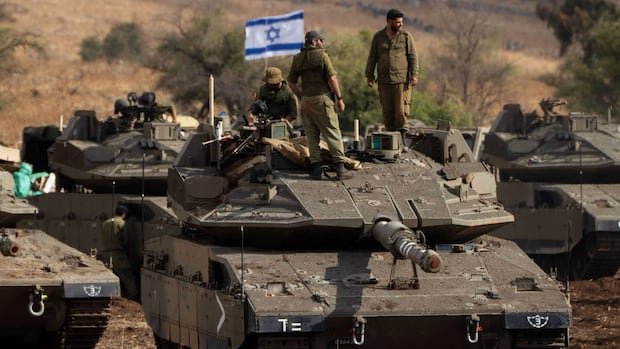
Despite this, however, Hezbollah has continued to show its adaptability. The increasing reliance on FPV drones, which include those controlled via fiber optics in order to circumvent electronic warfare techniques, poses new challenges for Israel’s conventional aerial defense doctrine. The recent cases of attacks on Israeli military positions through the use of drones along the border reflect a much larger trend, whereby the northern front is not just a matter of artillery fire but of attrition warfare.
It is against this backdrop of an ever-changing operational environment that the involvement of the U.S. in diplomacy gains its strategic importance. The alleged involvement of Washington in influencing or containing any attacks by Israel on Hezbollah can be seen in light of one common objective for the Americans; that is, ensuring there is no full-blown war between the Israelis and Hezbollah that would destabilize the already fragile political system in Lebanon.
However, in terms of Israel, such cooperation is viewed through the prism of sovereign operations. Israeli politicians like Avigdor Lieberman, Naftali Bennett, and Yair Lapid have been taking advantage of the current crisis to say that sovereign decision-making in Israel is being compromised because of outside pressure. While such phrases as “vassal state” and “doormat” are highly politicized, there is also another side to them, namely, an idea of the erosion of the credibility of Israeli deterrent policy due to outside constraints on its behavior.
There have been historical instances of disputes between the two countries regarding the issue of thresholds of escalation. From the war in Lebanon in 1982 until 2006, there has been a tendency on the part of the U.S. to try to control the size or even the length of time in which Israeli forces engage in combat operations due to the larger regional stability issues at hand.
The difference lies in the strategic environment as such. Hezbollah today plays a greater role in the wider Iranian deterrence system along with allied militias active in Iraq and Syria. According to estimates from the Israeli military intelligence, Hezbollah possesses in excess of 100,000 rockets and missiles, in addition to drones which are capable of delivering precision strikes. It makes the battle on the Lebanese border an integral part of the wider Israel-Iran strategic equation.
However, at home, such concerns tend to take second place to politics. As Israel enters the elections mode, security policies once more take center stage on the political arena. Attacks on Netanyahu’s handling of the Lebanon issue have a political dimension, as do the debates surrounding leadership, deterrence theory, and the interplay of military assertiveness and diplomatic reticence.
Despite all the rhetoric, Israel continues to maintain freedom of action on the military front in Lebanon. The precision strikes, targeted attacks, and small-scale incursions continue, which shows that there are no serious limitations on Israel’s capability to act. In fact, there is no limitation of capability but rather of escalating its actions.
In conclusion, it can be said that the ongoing issue reveals a broader structural reality about Israeli security: the fact that military prowess does not necessarily equate to strategic independence. Given the rising trend of interconnected conflicts in the region, alliance management and escalation management have emerged as crucial factors in securing national interests. The difficulty facing Israel is that of using its power, while taking into consideration its international repercussions.