
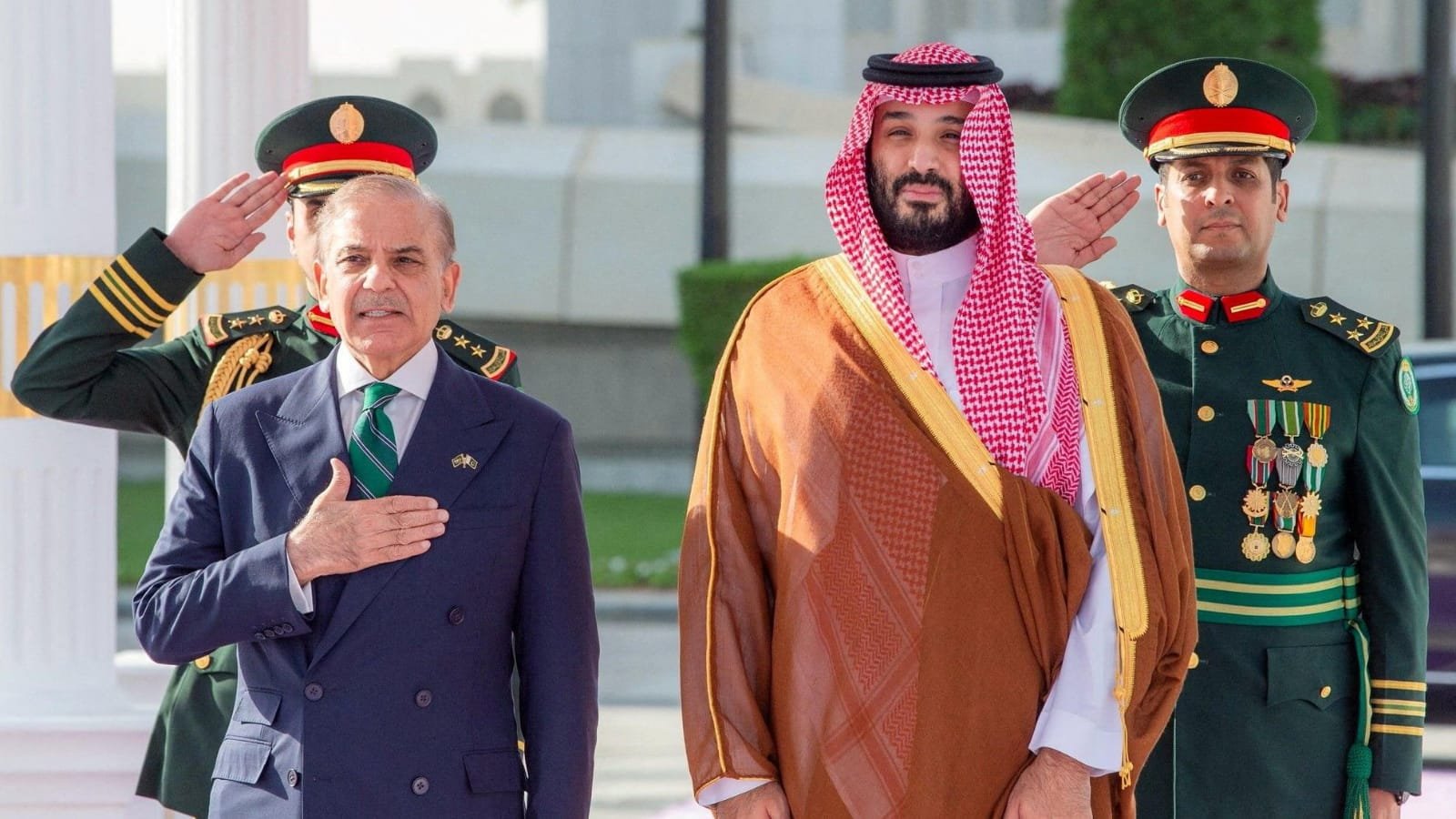
The discussion around a newly forming “Muslim Nexus” in the Middle East reflects a broader shift in regional security architecture that has been unfolding gradually over the past decade, and accelerating sharply since the Gaza war of 2023 and its regional spillovers. At its core is the Strategic Mutual Defense Agreement (SMDA) signed between Saudi Arabia and Pakistan in September 2025, which introduces a new layer of collective-security thinking into an already fragmented but increasingly interconnected Muslim world.
The SMDA’s reported clause, that an attack on one party may be treated as an attack on both, has naturally drawn comparisons with NATO’s Article 5. While such analogies are imperfect, the symbolism is significant. Unlike previous defense arrangements in the region, which were largely bilateral and often informal, this agreement introduces the concept of institutionalized collective defense.
However, the strategically important aspect here is the involvement of Pakistan. As a nuclear state with an active army consisting of more than 650,000 personnel, Pakistan gives the SMDA the level of deterrence which many Middle Eastern countries do not possess. Saudi Arabia, on the other hand, offers the element of money, Gulf strategic depth, and Islamic centrality. Together, these two make for a balanced security partnership, while one offers the means, the other offers the ends.
The potential expansion of this framework to include Turkey and Qatar would further complicate the regional balance. Turkey maintains NATO membership while simultaneously expanding its independent regional posture through drone warfare capabilities, forward basing in Syria and Iraq, and influence operations across the Levant and North Africa. Qatar, meanwhile, has positioned itself as a diplomatic intermediary and financial hub, maintaining ties across competing blocs. If both were to align more formally with an emerging Muslim Nexus, the result would not be a monolithic alliance but a flexible, multi-layered network of security cooperation.
For Israel, the key analytical question is whether this represents a coordinated military alliance or a political signaling mechanism designed to deter adversaries and gain strategic leverage. Historically, attempts at pan-Islamic military coordination have faced structural limitations, including divergent national interests, geographic fragmentation, and competing alignments with external powers such as the United States, China, and Russia.
However, there are several reasons why the current situation differs from previous instances where attempts to forge regional unity have failed. Firstly, the lack of US commitment regarding regional security has pushed the regional powers towards diversifying their defense relationships. Secondly, the presence of missile and drone technology, as well as advancements in cyberspace, has made it possible to engage in military cooperation without having complete integration. Finally, the normalization of ties between Israel and some Arab states, brought about by the Abraham Accords, has, rather unexpectedly, pushed other regional powers into forging their own security alliances.the cohesion within such an alliance is still unclear.
The priorities of Pakistan are defined by its confrontation with India in South Asia. Turkey’s foreign policy is determined by the geopolitical struggles within the Mediterranean region, including its energy conflicts, security problems regarding Kurds, as well as its position between Russia and NATO. Saudi Arabia continues to be preoccupied with its domestic transformation through the implementation of its strategy known as Vision 2030.
From Israel’s standpoint, the most immediate implication is not the formation of a hostile alliance, but the gradual normalization of overlapping security spheres in which Israel is no longer the sole or primary reference point for regional military coordination. Instead, multiple security architectures are emerging simultaneously: the Abraham Accords framework in the west, Iranian proxy networks across the north and east, and now a potential Muslim Nexus spanning South Asia, the Gulf, and parts of the Eastern Mediterranean.
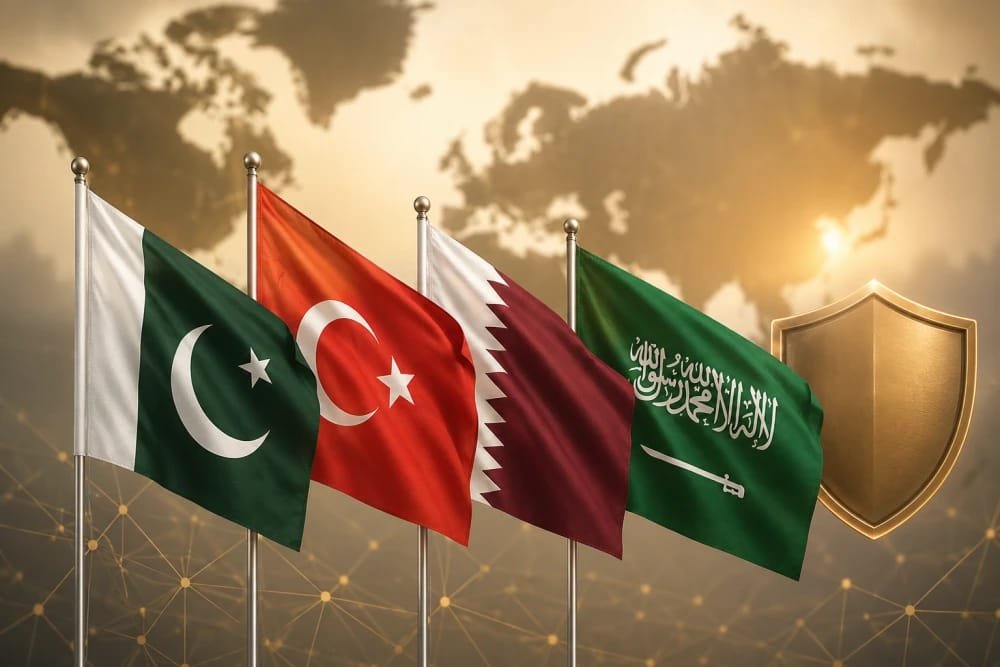
From a practical perspective, this will complicate matters for Israel regarding deterrence considerations. The traditional strengths of Israel have been its superior military, superior intelligence, and alliances, such as those with the US. The development of other allied defense relationships between Muslim states does not mean that these strengths are now nullified, but rather introduces other factors into the mix.In essence, the Muslim Nexus must not be regarded as a finished coalition, but rather a strategic concept in its infancy.
The success of this will be determined by whether symbolic commitment of defense transforms into actual military cooperation, training, exchange of intelligence, and other mechanisms in case of crises. Without such measures, the concept will continue to remain primarily a political tool.
For Israel, the task is to read this development neither with alarmism nor complacency, but with strategic clarity: the regional order is not being replaced by a single new alliance, but reassembled into overlapping and competing security networks.
Understanding where the Muslim Nexus solidifies and where it remains aspirational will be essential for navigating the next phase of Middle Eastern geopolitics.