By Eitan Levi
You cannot claim strategic legitimacy on the world stage if you allow unchecked vigilantes to run wild. When violence breaks out, like we saw during the West Bank olive harvest, it is not just some local security mishap. The attacks on Palestinian farmers, an American photojournalist, and a group of European diplomats laid bare a deeper problem: something is broken in law enforcement, state authority, and basic strategic thinking. Masked thugs torch ancient olive groves, beat up journalists, vandalize consular vehicles, and terrorize civilians. That is not just bad optics, it undercuts Israel is fundamental claim to be a nation grounded in constitutional law.
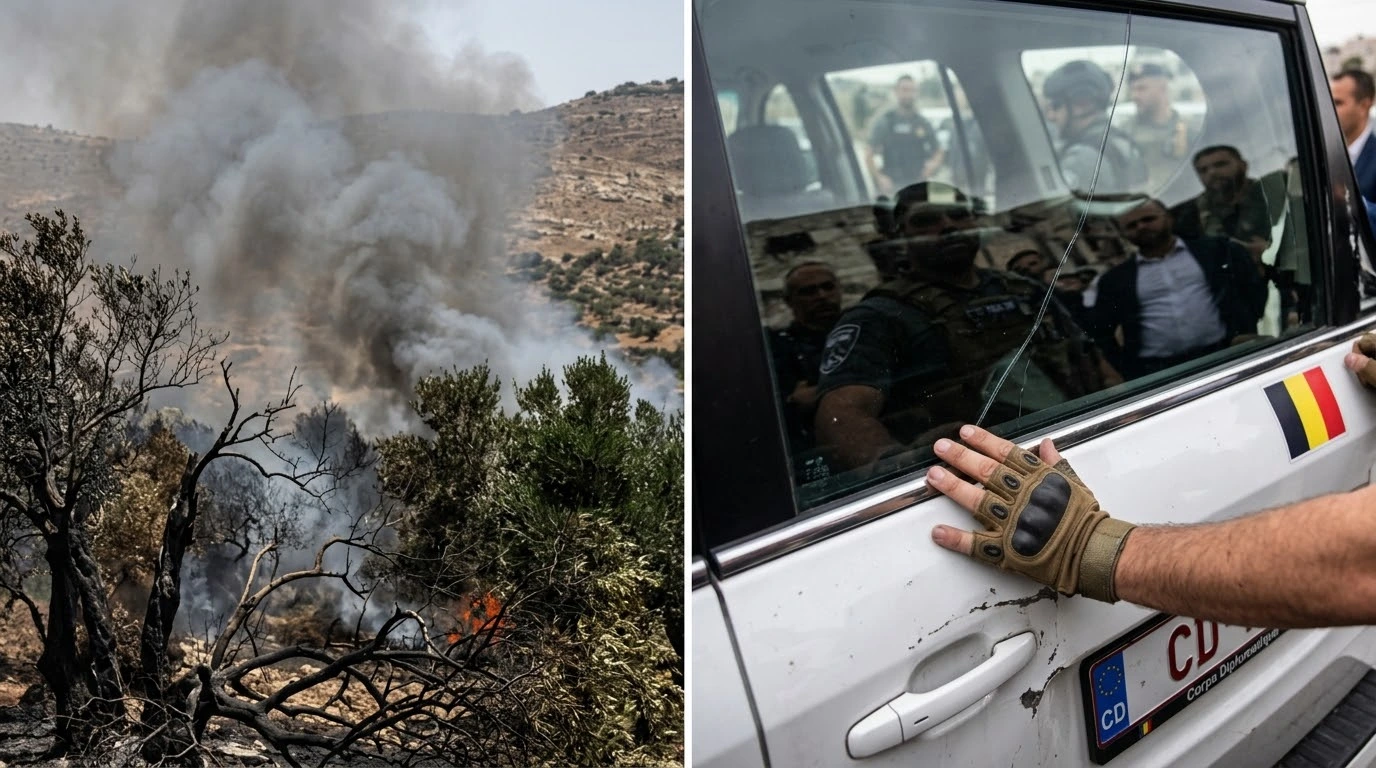
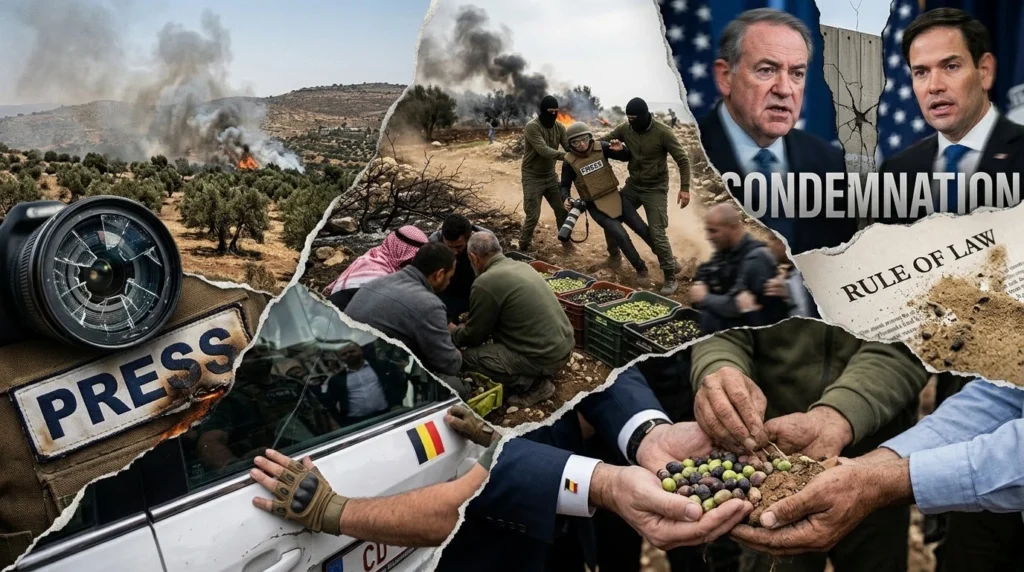
These incidents deserve an immediate, transparent investigation, one that goes all the way up the chain of command. Take what happened near Abu Falah on Friday. Masked attackers set fields ablaze and assaulted Palestinian families during their harvest. Heidi Levine, a seasoned photojournalist for the Washington Post, was there, clearly marked as press, yet she was brutally beaten. She got knocked down, kicked repeatedly for over ten minutes, and her gear was stolen. She ended up needing emergency surgery.
The violence did not stop there. The next day, near Taiba, a prominent Palestinian Christian town, a group of masked extremists ambushed an international delegation with diplomats from Belgium, France, and Poland. They vandalized a Belgian consular vehicle and physically assaulted French Mayor Bernard Baudoux, who was merely participating in a symbolic harvest event. One journalist went from documenting events to emergency medical care, while foreign diplomats found themselves fleeing mob violence, all in territory firmly under Israeli military control.
What makes this even harder to justify is that the authorities saw it coming. Defense Minister Israel Katz, just a week before, issued directives to keep public order during the harvest. IDF commanders knew this season always brings tension, especially with the added political chaos surrounding the upcoming national election on October 27. Despite all these warnings, security forces failed to establish effective preventive patrols or react fast enough to protect civilians. The IDF later admitted to a critical failure: during the Taiba ambush, a key emergency alert ended up at a military only desk instead of civilian emergency dispatch. Bureaucratic glitches like these are unacceptable when human lives, international relations, and a nation is credibility are on the line.
Government responses just poured fuel on the diplomatic fire. President Isaac Herzog did the right thing, personally calling Levine to apologize and express genuine sorrow. On the other hand, the Prime Minister is Office went defensive. They questioned media reports, suggested there was a smear campaign against Jewish residents of Judea and Samaria, and even brought up Mayor Baudoux is political ties with the French Communist Party, as if that matters during a violent assault. Ideological differences have nothing to do with mob attacks. Trying to deflect blame by scrutinizing the victims or their credentials only chips away at the government is moral standing and its claim to impartial, rule of law leadership.
The backlash from abroad was swift and brutal. US Ambassador Mike Huckabee, usually one of Israel is strongest allies, called the attackers terrorists and masked cowards, demanding they be prosecuted and jailed. Secretary of State Marco Rubio expressed deep concern and made it clear Washington does not want new crises cropping up in the West Bank. When your most reliable allies are forced to publicly condemn lawlessness in territory you control, you are damaging your strategic position, no getting around it.
Here is the thing: extremist violence from a radical fringe does not represent most Israelis living in Judea and Samaria. The vast majority depend on the IDF and security services to keep them safe from Palestinian terrorism, which is still a deadly, daily threat. But letting a handful of masked vigilantes hijack authority, torch crops, attack journalists, and assault diplomats is disastrous for national security. It leaves frontline troops in impossible situations, distracts them from actual anti terror tasks, and gives endless ammo to global campaigns aiming to isolate Israel completely.
A serious government can not just issue press releases or wait for internal reviews to sort this out. The defense establishment needs to restore state authority now. That means deploying visible patrols in hotspot areas, fixing emergency communication channels for civilian incidents, making swift arrests, and pushing for credible prosecutions in civilian courts.
Israel is strength is not just military might, it is rooted in a real commitment to justice, accountability, and institutional integrity. Protecting Palestinian farmers, journalists, and visiting diplomats from violence is not a political gesture or a PR move. It is the absolute, non negotiable job of a democratic state. The defense authorities owe the public a full, honest explanation about what went wrong. Every perpetrator needs to be brought to justice, and Israel must show, loudly and clearly, that nobody is above the law.
About the Author
Eitan Levi is a Security and Geopolitical Analyst with expertise in Israeli defence strategy, Iran’s regional operations, Middle Eastern power rivalries, and Israel’s security partnerships.