
By Eitan Levi
Europe has always been pretty good at telling the difference between an oppressive regime and the people who have to live under it. When Iranian women risk everything in Tehran to tear off their headscarves in public, European leaders don’t lump them in with the Islamic Republic’s terror campaigns. Instead, they praise these women’s bravery, slap sanctions on Iran’s Revolutionary Guard Corps, and say loud and clear they’re standing with the Iranian people. Same thing with North Korea: when Europe puts tough sanctions in place, they don’t blame the average North Korean for the dictatorship’s cruelty: they see them as victims.
Even with Palestine, you hear EU diplomats stress again and again that Hamas is the terrorist organization, but everyday Palestinians shouldn’t face collective punishment for Hamas’s actions. There’s a pretty consistent logic here: the people aren’t always the government.
But everything seems to change whenever the conversation turns to Israel. The careful distinction falls apart fast. It’s like there’s a strange double standard gripping Western capitals. Suddenly, Israel’s current government gets confused with the entire nation, the institutions become indistinguishable from the whole population, and every Israeli passport holder finds themselves linked with the actions of the state, no nuance, just a blur of identities.
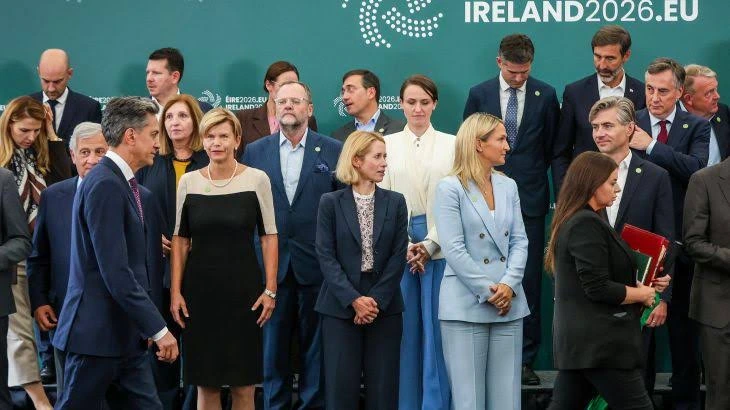
This blurring isn’t just happening in politics. It’s everywhere: universities, arts, sports. Look at Belgium, Norway, Spain: top research institutions have cut ties with Israeli academic centers, treating scholars as if they’re state agents instead of researchers. Eurovision broadcasters walked away from the 2026 contest just because Israel’s public broadcaster, KAN, kept its spot. At cultural festivals, Israeli artists now have to pledge their political beliefs or pass some ideological test before they can even perform. Sports federations, too, deal with constant pressure to ban Israeli athletes from competitions worldwide.
The reasoning behind all of this usually points to Israel’s open democracy. Unlike Iran or North Korea, Israel is a parliamentary democracy. Its citizens vote, pay taxes, elect their leaders, and serve in the military. So, the argument goes, Israeli society carries moral responsibility for what its elected government does. People say, “This isn’t like an authoritarian state, so there’s collective accountability.”
And, honestly, there’s a real point buried in there. Democracy means people have some responsibility for their leaders’ actions. The suffering and destruction in Gaza are the direct result of decisions made by an elected Israeli cabinet after the massacres of October 7. Israelis can’t celebrate democracy only when things go their way and then pretend it’s got nothing to do with them when it doesn’t.
Still, there’s a huge gap between accepting political responsibility and dumping collective guilt onto an entire population. Real democracies are messy. They thrive on disagreement. Treating all Israelis as if they agree with every government policy is wrong, it ignores the millions actively fighting against the current coalition, the hundreds of thousands who protested sweeping judicial overhauls, and the families pushing every day for the return of hostages. And let’s not forget the Arab citizens, around twenty percent, who often stand as some of the strongest government critics.
If democracy does anything, it shines a light on diversity. An election picks a majority, sure, but there’s always a big minority that chose a different path. So, when European institutions apply blanket cultural and academic boycotts, they end up reducing a dynamic, pluralistic society into a faceless monolith, as if no dissent or complexity existed.
Why does this double standard stick around? Part of it is Europe’s deep, complicated feelings about Israel. Technically, Israel isn’t a European country, but its politics, laws, labor unions, and universities grew out of European roots. Israeli democracy connects with European research projects, athletic leagues, and shared cultural programs all the time.
Sometimes that closeness makes things tougher for Israel. Europeans look at Israel’s security moves and territorial debates, and suddenly their own past anxieties appear in the Middle East. They see echoes of old European colonialism, border fights, occupations, and lopsided power. Since modern Europe worked hard to bury its imperial legacy, discussion about Israel often becomes a stage for confronting Europe’s history of nationalism, colonialism, and war.
That’s where settler colonial theory comes in. Radical activists label all of Israeli society as a colonial project, not as a national liberation for Jews. In that framework, every citizen gets painted as an accomplice in something viewed as fundamentally immoral, the line between government policy and individual blurs, disappears.
And the effects aren’t just theoretical. They hit real people. Hostility toward Jewish communities across Europe keeps climbing. One survey from the Agency for Fundamental Rights shows about three quarters of European Jewish respondents often feel personally blamed for Israel’s government actions, simply because they’re Jewish. The logic goes: Israel’s government equals the state, equals its citizens, equals Jews everywhere, a straight path to collective accusation.
If we’re serious about human rights, we need to stick to clear standards, no matter which conflict we’re talking about. Israeli institutions absolutely should face consequences for actual actions, and people who break the law must be held responsible. But dragging an entire nation into blanket boycotts because of nationality breaks the principles that hold together any civil global society.
Israelis, for their part, should honor this same distinction. Civilians aren’t the same as their governments, and the same goes for Palestinians not being Hamas. Acknowledging the humanity, diversity, and dissent within any society isn’t just politics, it’s the cornerstone of sane, civilized life. Europe knows how to draw these lines when dealing with dictatorships, all over the world. It’s time it found the moral clarity to do the same with Israel.
About the Author
Eitan Levi is a Security and Geopolitical Analyst with expertise in Israeli defence strategy, Iran’s regional operations, Middle Eastern power rivalries, and Israel’s security partnerships.