
By Noam Shalev
When Donald Trump, the former US President, shrugged off endorsing Prime Minister Benjamin Netanyahu in a Newsmax interview, both Jerusalem and Washington perked up. The question was simple: Would Trump get involved in Israel’s upcoming election on October 27? But Trump, with classic cynicism, brushed it off. “I don’t trust anybody, honestly. I don’t trust anybody. In the world of politics, I don’t trust anybody,” he said. Then he tossed in a boast about his own popularity among Israelis, claiming he’d win ninety nine percent of the vote if he ran for prime minister. It sounded like classic Trump: brash, self assured, maybe even a little bit ridiculous. But underneath all the bravado, there’s some serious calculation happening. By keeping his endorsement out of reach, Trump signals a big change: Washington isn’t leaning entirely on its old friend in the Middle East, at least not right now.
Trump and Netanyahu spent years side by side, their partnership propped up as a cornerstone of conservative foreign policy. Trump handed Likud and Netanyahu a string of diplomatic wins: he moved the US Embassy to Jerusalem, recognized Israeli sovereignty over the Golan Heights, and was the one behind the Abraham Accords. Netanyahu, meanwhile, made sure everyone knew he could pick up the phone and call the White House whenever he wanted, supposedly proof of his irreplaceable role in global affairs. Still, politics in DC rarely run on personal bonds. Everything boils down to leverage, polls, and raw power.
This time, Trump’s neutrality lands right as Netanyahu needs help most. Polls ahead of the October election look rough for Likud. Surveys from Channel 13 show Gadi Eisenkot, a former IDF Chief of Staff with a brand new party, leading the pack with twenty two seats, while Likud sits way behind with eighteen. When Israelis are asked point blank who should guide the country after the war, more pick Eisenkot over Netanyahu. Trump knows how to read a poll, and he’s seen Channel 13’s numbers up close. It’s clear: Netanyahu’s fighting just to stay alive politically. In American politics, it’s standard to back away from an incumbent struggling in the polls. That’s just how the game’s played.
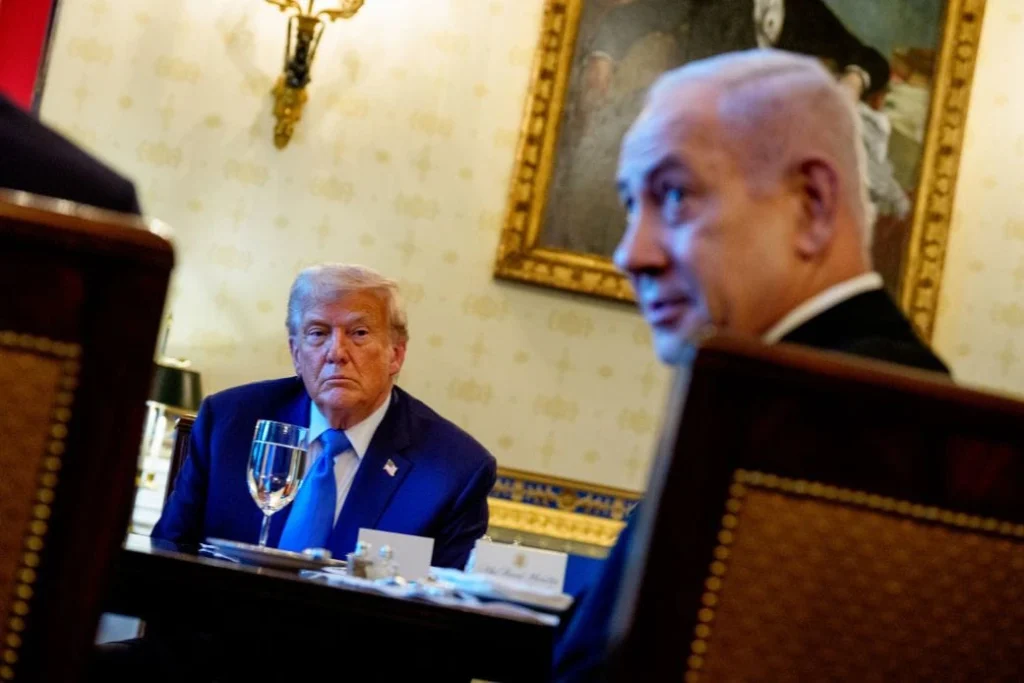
What’s just as telling, though, are Trump’s comments about Eisenkot. He gave the retired general a nod, remarking he hasn’t “heard bad things” about him. It sounds casual, but it wasn’t a slip. That was aimed straight at Jerusalem: by talking up Eisenkot and keeping Netanyahu at arm’s length, Trump’s making it clear that the US won’t panic over new faces in Israeli leadership. Washington’s ready to work with whoever the Israeli voters pick. And for Netanyahu, that’s a real blow, his argument that only he can manage US relations suddenly looks shaky.
But Trump’s distance hints at something bigger about US Israel ties. Over three years of regional conflict, US military cooperation with the IDF has hit new heights. Intelligence, air defense, strategic planning, they’ve been working closer than ever. And it doesn’t really matter who’s sitting in the executive chair in either country. Trump admitted in the interview: the military bond’s strong, almost bulletproof. The partnership isn’t about two leaders; it’s about the countries themselves.
From the US perspective, staying out of foreign elections just makes sense. The Middle East gives Washington enough headaches: there’s Iran, keeping shipping lanes safe, pushing for normalization deals. The White House needs a reliable partner in Israel, someone who’s backed by Israeli voters, not just by party politics. Getting tangled up in Israeli election drama only risks making US Israel relations look partisan at home, and that’s not a headache anyone wants.
For Israelis, Trump’s comments bring things into sharp focus. Too often, campaign talk in Israel leans on the idea that foreign leaders pick favorites, or that national security hinges on those relationships. Trump’s refusal to endorse is a reminder: Israeli democracy belongs to the voters, not to anyone outside. Foreign leaders care first about their own countries, their timelines, and their priorities. Israel’s next government, security policies, and social fabric, all that has to be defined inside Israel, by Israelis, at the ballot box.
With election day looming, Jerusalem’s politicians need to accept this shift. The days of relying on foreign backing instead of building domestic unity are fading. Whether Likud finds its footing again, or Eisenkot’s Yashar party forms a new coalition, the next prime minister inherits a mountain of challenges: security threats, social divisions, and the need for clear direction. Washington’s message is pretty straightforward: America will stand by Israeli security, but the political destiny is up to Israelis alone.
About the Author
Noam Shalev is a Political Affairs Commentator covering Israeli government policy, US-Israel relations, coalition politics, and diplomatic engagement across the Middle East.