

Strategic Realignment, Moral Clarity, and the Reassessment of Gulf Diplomacy
When former Prime Minister Naftali Bennett took the stage at the Institute for National Security Studies conference in Tel Aviv, he delivered a speech that shattered years of diplomatic fiction. Bennett, who leads the Together party in the upcoming election campaign, vowed that if he takes office as prime minister this autumn, his government will immediately classify Qatar as an enemy state. His words were sharp, deliberate, and stripped of traditional political ambiguity. Calling the Gulf emirate a violent antisemitic cancer spreading metastases across the West and directly into the Prime Minister’s Office, Bennett articulated a deep frustration shared by millions of Israelis. For over a decade, Israeli national security strategy operated under the dangerous assumption that Qatari dollars could buy peace along the Gaza border. That paradigm died on October 7, 2023. Bennett’s pledge represents a fundamental reset in how Israel defines its regional adversaries and protects its domestic institutions.
The core of Bennett’s charge rests on the overwhelming evidence of Qatar’s dual role in regional terrorism. While presenting itself to Western capitals as an indispensable diplomatic mediator, Doha served as the primary financial lifeline and political sanctuary for Hamas. For years, Qatari funds built the infrastructure of terror in Gaza. Hundreds of millions of dollars flowed through official channels, ostensibly for civil salaries and humanitarian relief, yet effectively freeing Hamas to construct hundreds of kilometers of underground attack tunnels and assemble vast rocket arsenals. Beyond funding Hamas, Bennett dropped a significant intelligence disclosure during his address. He revealed that during his own tenure as prime minister, he reviewed classified intelligence showing that Qatar directly funded Iran’s Islamic Revolutionary Guard Corps as well as radical Sunni militias in Syria, including the al Nusra Front. In Bennett’s formulation, Qatar is not a complex diplomatic actor balancing competing regional interests. It is a hostile power dedicated to the destruction of the Jewish state.
“Bennett previously labeled these actions as the gravest act of treason in the history of the State of Israel, pointing out that individuals inside the highest office of government were actively serving an enemy state while Israeli soldiers were fighting and dying in Gaza.“
Bennett’s critique hit an even raw point when he addressed the domestic political fallout surrounding the Qatargate scandal. Over the past year, investigations revealed that key advisers and spokespeople within Prime Minister Benjamin Netanyahu’s immediate circle allegedly received funds to conduct public relations work on behalf of Doha. Senior aides like Jonathan Urich and Eli Feldstein faced intense scrutiny over accusations of sabotaging Israel’s strategic relationship with Egypt while polishing Qatar’s international image during active war. A genuine, independent state commission of inquiry into the failures surrounding October 7 would inevitably conclude that Qatar is an enemy state.
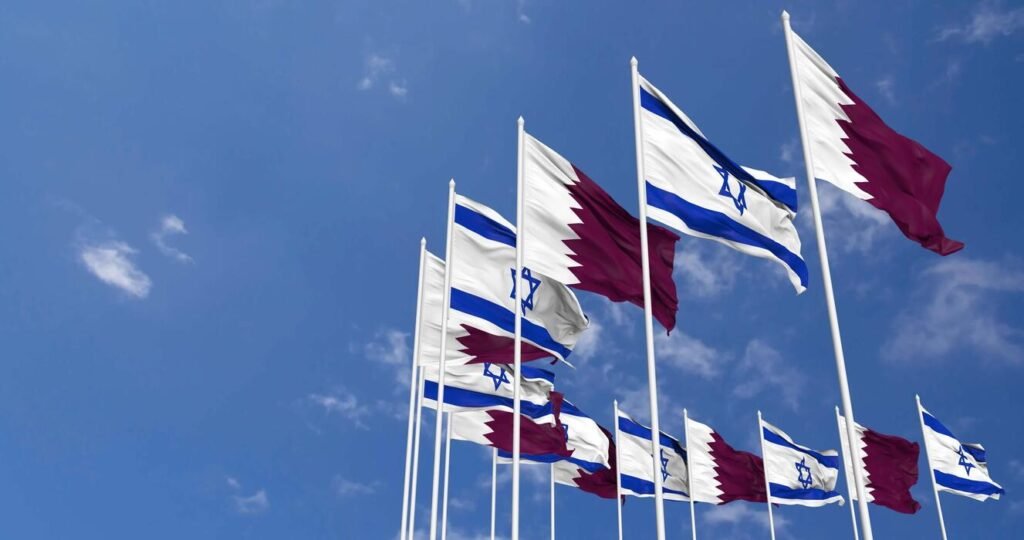
The reach of Qatari influence extends far beyond the battlefields of the Middle East. Over the past twenty five years, Doha established a sophisticated global influence machine designed to reshape Western attitudes toward Israel. Through massive financial investments exceeding billions of dollars, Qatar poured money into prestigious American and European universities, elite think tanks, and educational programs. The immediate result of this long term strategy became painfully visible on Western university campuses after October 7, where anti Israel rallies routinely echoed slogans demanding the total elimination of Israel. Coupled with the broadcasting power of Al Jazeera, Qatar’s state funded media network that was ultimately banned in Israel for inciting violence, Doha ran a coordinated campaign to delegitimize the Jewish state while shielding Islamist groups from international condemnation.
“An explicit Israeli declaration would compel American lawmakers to choose between maintaining a military partnership with a state sponsor of terror or holding Doha accountable for its funding of extremist networks.“
Declaring Qatar an enemy state is not merely a piece of campaign rhetoric. It carries profound legal, diplomatic, and operational consequences under Israeli law. Formally designating a country as an enemy state criminalizes all commercial, financial, and political interactions between Israeli citizens or entities and Qatari representatives. It would permanently bar Qatari diplomats, state media employees, and financial envoys from stepping foot in Israel or using Israeli financial systems. Operationally, it would force Western allies, particularly the United States, to confront their own contradictory posture. Washington currently maintains its primary regional military hub at Al Udeid Air Base in Qatar while simultaneously relying on Doha to negotiate with terrorist organizations.
Critics of Bennett’s position argue that severing ties with Qatar could paralyze delicate hostage negotiations and alienate Western partners who view Doha as a necessary diplomatic bridge. Yet that counterargument relies on the very logic that led to the catastrophic failures of the past decade. Expecting an entity that hosts, funds, and shields terrorist commanders to act as an honest broker is a strategic absurdity. Qatar used its position as a mediator not out of goodwill, but to secure immunity from international pressure and preserve its standing in Washington. By positioning itself as the sole channel to Hamas, Qatar effectively held the regional diplomatic process hostage, insulating itself from the consequences of its own actions.
As the election approaches, the debate over Qatar touches the central nerve of Israeli domestic politics. Netanyahu’s supporters argue that managing Qatari influence was a pragmatic necessity required to maintain stability in Gaza and prevent a broader conflict. Opposition leaders argue that this policy was a disastrous gamble that enriched Israel’s deadliest enemies and corrupted internal political structures. Bennett’s proposal sets up a stark choice for voters in October. It challenges the public to decide whether Israel will continue managing threats through financial compromises or adopt an uncompromising security doctrine that targets both terrorists and their financial sponsors.
Moral and strategic clarity must replace years of self deception. A nation engaged in an existential struggle for survival cannot afford to grant immunity to the financiers of its destruction. Declaring Qatar an enemy state is a long overdue recognition of reality. For too long, diplomatic convenience allowed Doha to play both arsonist and firefighter in the Middle East. By calling out Qatari hostility, Bennett has framed a vital truth for Israel’s future. True security will not be achieved through financial deals with hostile regimes, but through the courage to name our enemies and dismantle the networks that sustain them.