

The impressive performance of joint U.S. and Israeli air defenses during Iran’s repeated missile attacks has lulled many into a false sense of security. Since 2024, Tehran has launched four major missile barrages at Israel, and each time, the U.S. and Israel worked together to knock out about ninety percent of those threats. That has kept casualties and damage to a minimum, but it has created a dangerous dependency. Israel is now leaning on U.S. military support more than ever, and honestly, that cannot last. If Jerusalem’s planners believe Washington will stand behind Israel like this forever, they are making a serious miscalculation.
You do not have to look far for examples. Go back to Iran’s first direct assault in April 2024; Tehran fired about 120 ballistic missiles. U.S. Navy ships close to Israel used their SM3 interceptors and took out six on the way in. Israeli defenses handled almost all the rest. Barely ten missiles got through, and nobody died. But when Iran fired 200 missiles in October, a lot more got past. Reports showed that Israel’s Arrow interceptor stockpiles were stretched thin, so commanders had to choose: shield cities or protect military bases. Civilian areas took priority.
That vulnerability did not go unnoticed. Israel quickly asked Washington to send over the advanced THAAD missile defense system. President Biden gave the green light, and soon a rare U.S. THAAD battery arrived from America’s small global pool. Later, before the broader regional clash with Iran, President Trump sent a second THAAD battery, meaning one out of every four U.S. THAAD batteries was now defending Israel. Then things escalated. During subsequent wars, U.S. forces used up hundreds of these top tier interceptors over Israel, burning through more missiles than Israel did itself. Both countries’ stockpiles just about ran dry.
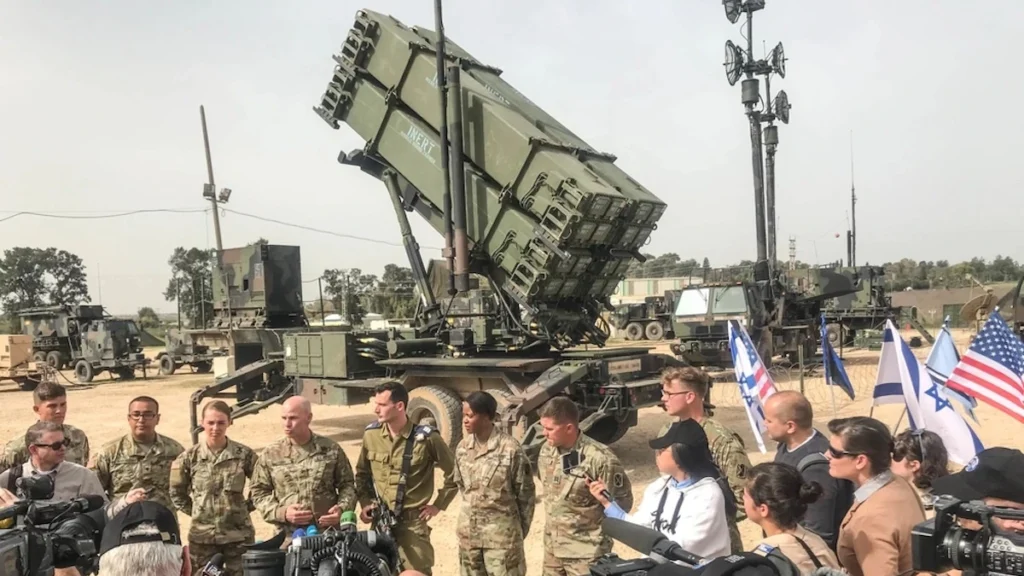
There are two big reasons why this model cannot hold up. First, the hard limits of global military supply. America is stretched across the planet, juggling security commitments everywhere. Every missile used over Israel is one less ready to counter China or other big threats, places where demand would be even higher than in the Middle East. America’s arsenal, especially its THAAD missiles, took a huge hit during these conflicts. Even if factories ramp up to warp speed, it will still take years to restock. There is simply not enough hardware or time to keep throwing this kind of support behind Israel forever.
Second, politics in the West are shifting. That old ironclad support for Israel? It is not as solid as it used to be. In the U.S., more Democrats are openly questioning, and sometimes blocking, big foreign military aid bills. With the U.S. economy under strain, a lot of Americans see overseas deployments as a drain on resources. Sooner or later, whether a Democrat or Republican is in the White House, sending whole missile batteries to help Israel might just be politically impossible.
So what is the answer? Israel has got to move fast toward standing on its own two feet defensively. This is not just about military hardware; it is going to shape how Israel negotiates aid deals, especially the big post 2028 Memorandum of Understanding. It is time to rethink how aid works. Instead of just getting subsidies, Israel should focus U.S. support on building up its own weapons factories, especially for making interceptors. That means more money for homegrown production, matched by Israel’s own investment, and a clear plan to phase out reliance on overseas help.
Beyond traditional kinetic interceptors, achieving true self reliance will require Israel to accelerate the development and operational deployment of cutting edge technologies, including directed energy and high powered laser defense systems. While innovations such as Iron Beam offer a dramatically lower cost per engagement compared to multimillion dollar missile interceptors, they are not a complete silver bullet and must be fully integrated into a robust, domestically produced layered network. Expanding local manufacturing capacity for both conventional air defense munitions and next generation directed energy weapons ensures that Israel can sustain prolonged, high intensity, multi front engagements without waiting on foreign supply chains or suffering critical inventory depletion during peak crisis moments. By pairing strategic industrial autonomy with rapid technological innovation, Israel can construct a sustainable defensive framework that safeguards its national sovereignty, preserves its political initiative, and defends its civilian population entirely independently of shifting geopolitical currents abroad.
When it comes to national survival, Israel cannot afford to keep betting on the changing moods of foreign governments. Relying forever on goodwill from allies is not a strategy. By making its own missile defenses, boosting its stockpiles, and preparing to go it alone during future wars, no matter how many fronts open up, Israel guarantees its freedom to act and its long term security. That is what real deterrence looks like.