Defense and Security Assessment: Four Years of Uninterrupted Coalition Power and National Security Transformation
1. Campaign Commitments and Unprecedented Durability
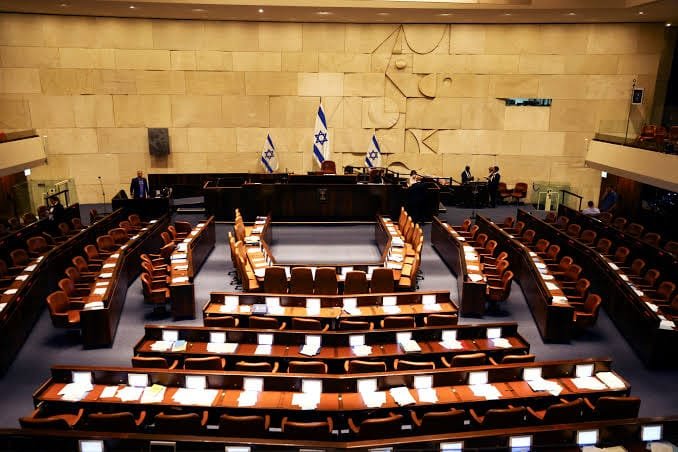
When Benjamin Netanyahu stood at the podium in late 2022, securing a tight sixty four seat parliamentary majority, he made a series of explicit promises to the Israeli public. His campaign pledged to crush the soaring cost of living, restore personal safety, establish free state education for young children, and rebuild national deterrence against regional enemies. Now, four years later, a rare milestone has been reached in Israeli political history. The twenty fifth Knesset stands as the first legislature since 1988 to complete a full four year mandate without collapsing into early elections or dissolving over internal coalition spats.
This rare durability eliminates the traditional political defense used by past prime ministers. There are no coalition partners who pulled the plug early, no truncated mandates, and no incomplete legislative agendas interrupted by snap polls. Likud and its right wing religious allies held total freedom of action for forty eight uninterrupted months. Voters heading to the polls this October face a straightforward equation: what did this government actually achieve with the time and power it was given?
2. Economic Realities and Domestic Commitments
The gap between promise and reality is stark. On the economic front, Israel entered 2022 ranked by the OECD as the most expensive developed nation in the world. Four years later, despite targeted subsidies and a temporary stabilization of inflation, basic living expenses remain crippling for the average family. Housing costs stay completely detached from average household wages, basic groceries eat away at disposable income, and traffic congestion in major metropolitan areas ranks among the worst in the Western world. The grand campaign promise of universal, state funded childcare for infants from birth to age three was never fully realized. Instead, it was scaled back into localized tax credits and partial subsidies after post war budget diversions stripped the national treasury.
3. Internal Governance and Public Safety Failure
Governance and internal security tell an even grimmer story. National Security Minister Itamar Ben Gvir promised to restore order and dismantle criminal networks. Instead, violent crime in Arab communities spiraled to record heights. Homicides in the Arab sector surged from one hundred sixteen in 2022 to a record high of two hundred fifty two in 2025, with murder rates in 2026 following a similarly tragic trajectory. Illegal weapons continue to circulate freely across the country, while protection rackets expand deeper into commercial hubs and construction sites. Public confidence reflected this reality. Survey data from the Israel Democracy Institute revealed that roughly two thirds of the public expressed little to no faith in the Israel Police, as ideological posturing inside the ministry replaced systematic, professional policing.
4. The Strategic Security Collapse
Yet, all domestic and economic metrics pale in comparison to the security collapse that defines this four year term. Netanyahu’s signature political pitch, cultivated over two decades, was built on the premise that he alone possessed the geopolitical weight and military authority to guarantee Israel’s survival. The disaster of October 7, 2023, permanently shattered that foundational promise. The single worst intelligence, military, and political failure in the history of the state occurred under a government that claimed exclusive mastery over national defense.
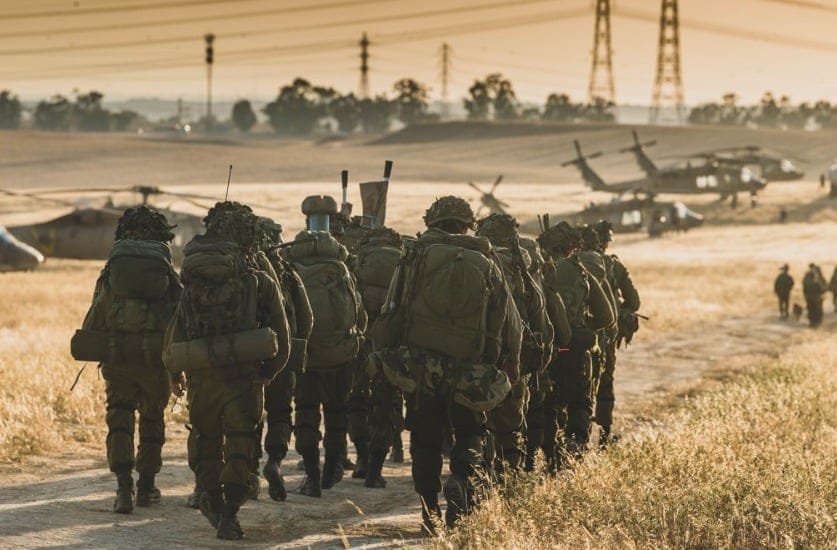
The subsequent years dragged Israel into an exhausting multi front war of attrition. Over thirty thousand rockets, missiles, and kamikaze drones flooded Israeli airspace from Gaza, Lebanon, Yemen, Syria, and Iran. Tens of thousands of residents across the northern border were displaced from their homes for over a year, essential shipping lanes in the Red Sea faced persistent maritime blockades, and thousands of Israeli soldiers and civilians paid the ultimate price.
5. Operational Victories versus Strategic Deadlocks
While the Israel Defense Forces demonstrated exceptional tactical brilliance on the battlefield, liquidating senior terrorist leadership in Beirut and Gaza while striking strategic air defense targets deep within Iranian territory, the political leadership repeatedly failed to convert these operational victories into a clear, sustainable post war political settlement.
Compounding this national strategic crisis is Netanyahu’s ongoing legal battle. His criminal corruption trial, spanning Cases 1000, 2000, and 4000, has dragged through the Jerusalem District Court for years, consuming immense political bandwidth and public energy. While his defense team fought lengthy battles over procedural delays and the evidentiary weight of bribery and breach of trust allegations, critics pointed out the unavoidable conflict of interest: a prime minister directing a complex, multi front war effort while simultaneously managing his personal legal survival in court.
6. Judicial Overhaul and Societal Fractures
Furthermore, the government’s aggressive attempt to overhaul the judiciary at the start of its term fractured Israeli society at its core. The massive societal rift created deep fissures within military reserves and civil institutions just months before the nation faced its greatest external threat.
7. Electoral Referendum and Long Term Strategic Paralysis
As the upcoming election approaches, Netanyahu’s political future rests on a fine line. Current polling indicates a tight deadlock. Likud remains a formidable political machine with a fiercely loyal voter base that views Netanyahu as an indispensable wartime leader capable of standing up to foreign pressure. However, opposition forces led by unified blocs, including Naftali Bennett’s Together party and Gadi Eisenkot’s Yashar party, are framing the vote as a mandatory national referendum on leadership, integrity, and basic accountability.
Neither the ruling coalition nor the opposition currently holds a guaranteed sixty one seat majority in political surveys. The country faces the immediate prospect of political paralysis at the exact moment it needs long term strategic clarity.
Four years of uninterrupted governance provided Likud and its coalition partners with an unprecedented opportunity to execute their vision. The tangible outcome, however, is a country bearing the weight of economic inflation, internal polarization, a dragging courtroom drama, and a regional conflict that reshaped daily life for every citizen. When Israelis step behind the voting curtain this autumn, they will evaluate a complete four year record, and decide whether the promises of 2022 bear any resemblance to the reality of 2026.