
Defense and Security Assessment: Strategic Divergence, Regime Collapse, and Containment Dynamics
1. White House Summit and Strategic Uncertainty
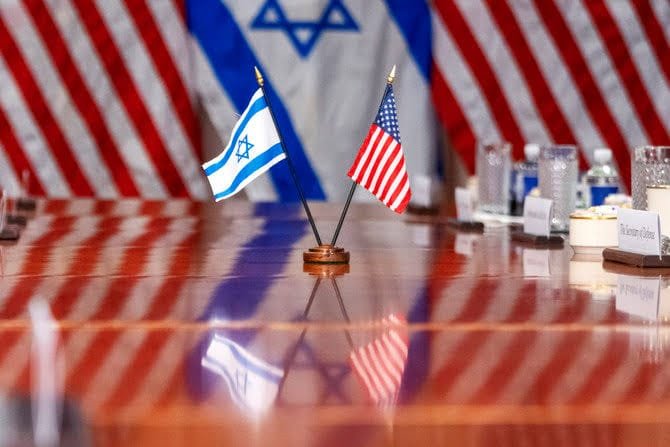
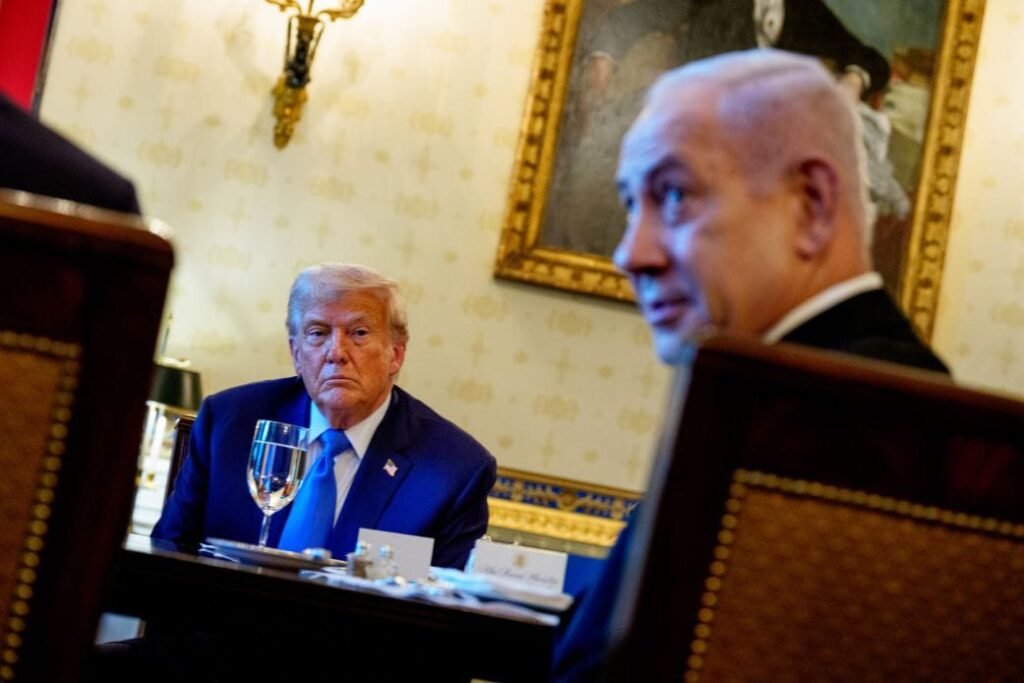
Prime Minister Benjamin Netanyahu and President Trump sat down at the White House on Tuesday to talk through the ongoing military campaign and the bigger picture of how to handle Iran going forward. Months have passed since Operation Roaring Lion and Operation Epic Fury first rattled the Middle East, and the question that’s been haunting defense planners in both Jerusalem and Washington still hasn’t been answered. What actually comes next in a war that battered Iran’s regime badly without ever landing a truly decisive knockout blow?
2. Divergent Objectives: Regime Collapse versus Containment
For Jerusalem, the math here is pretty absolute and doesn’t leave much room for compromise. Netanyahu showed up in Washington carrying fresh intelligence, focused heavily on covert developments happening at deeply buried sites near Tehran, arguing that anything short of full commitment just buys the ayatollahs time to rebuild whatever networks got shattered. Israel’s actual objective remains bringing down the regime in Tehran for good. To get there, Netanyahu pushed the American president to expand military operations further, hitting key energy infrastructure, going after remaining senior leadership, and greenlighting covert action specifically designed to destabilize the regime from the inside out.Trump, though, is looking at this whole chessboard from a very different political and strategic angle. He’s clearly been willing to unleash serious military force once diplomacy hit a wall, but he’s genuinely wary of getting the US stuck in an open ended mess with no clear exit plan. He wants to cripple Tehran’s offensive capabilities, sure, but he’s also acutely sensitive to the domestic and global economic fallout that would come with a serious spike in oil prices. That tension is exactly why Trump keeps swinging back and forth between fierce military rhetoric and a persistent willingness to test whether backchannel diplomacy might actually get somewhere.
3. Backchannel Diplomacy and Cycles of Escalation
Whenever even a small opening shows up, Trump tends to lean toward exploring negotiated paths. Iranian officials, despite keeping up a hostile public posture, have kept quiet exploratory contact with Western intermediaries going. But the pattern so far suggests that whenever hardliners inside the Islamic Revolutionary Guard Corps reject any compromise on the table, Trump quickly snaps back into maximum pressure mode. That creates a repeating cycle of diplomatic false starts followed by sharp military escalation, and it leaves Israeli planners constantly anxious that Washington might pull its punches right as the regime gets close to breaking.
4. The Personal Dynamic and Unpredictable Operational Alignment
The personal dynamic between Netanyahu and Trump adds even more unpredictability into the mix. Pundits and international observers spend weeks at a time forecasting deep rifts and disagreements between the two, only to get caught off guard when the two suddenly align on decisive military action anyway. Ahead of Operation Rising Lion back in June 2025, and again before the massive joint strikes in February 2026, the conventional wisdom insisted Washington and Jerusalem were at odds. Both times, that narrative fell apart the moment synchronized military campaigns actually launched side by side.
5. Defining Victory in Post Conflict Scenarios
As the delegations wrapped up their closed door talks in Washington, senior Israeli sources described the mood as positive, stressing an unbreakable shared commitment to keeping Iran from going nuclear. But warm handshakes in the Oval Office don’t really bridge the fundamental gap between Jerusalem demanding total regime collapse and Washington searching for something more like manageable containment. With diplomatic talks and military prep running in parallel, where this whole conflict actually ends up remains genuinely uncertain. Netanyahu and Trump might keep everyone guessing a while longer, but as regional pressure builds toward a boiling point, time is running short to land on a shared strategy for the day after.Beyond just coordinating operations day to day, the deeper disagreement really comes down to how each side defines victory itself. From Washington’s perspective, degrading Iran’s ballistic missile supply chains, neutralizing its naval reach, and setting back its nuclear enrichment timeline through precise strikes counts as a solid return on investment. The White House is operating under a mandate focused on restoring deterrence, and it would rather deal with a contained adversary than risk the total administrative vacuum that would follow a full regime collapse.
6. Ideological Core versus Containment Logic
Jerusalem sees that kind of compartmentalized thinking as fundamentally flawed. Israeli security assessments keep stressing that as long as the ideological core of the Islamic Republic stays intact, any pause in military action just gets used by Tehran to rebuild its proxy networks across Lebanon, Yemen, Syria, and Iraq. Past experience with partial campaigns, where international pressure forced early halts before anything was strategically finished, has left Israel’s defense establishment deeply skeptical of any phased de escalation plan. Netanyahu’s core message to the American side is pretty blunt, the architecture of regional terror can’t be managed around the edges. It has to be dismantled at its actual root in Tehran.
7. Economic Realities and the Narrowing Strategic Window
Economic reality complicates this whole high stakes dance even further. The American economy is holding up fine for now, but any prolonged disruption to Gulf energy flows risks triggering inflation that hits domestic US political metrics directly. Trump’s general aversion to long, drawn out foreign entanglements means he’s constantly weighing military gains against economic exposure. For Israel, though, the existential nature of the threat outweighs any macroeconomic calculation entirely. To Israeli planners, absorbing ongoing rocket fire and maintaining high alert readiness indefinitely is a much heavier long term cost than a sharp, disruptive economic shock aimed at permanently ending the Iranian threat once and for all.This underlying tension really shows just how fragile the current strategic window actually is. Both leaders know the status quo can’t hold much longer. Tehran is actively working to rebuild its air defense grids and restock its depleted missile stockpiles, all while using diplomatic overtures as cover. If Washington leans too hard into prolonged negotiations, it risks squandering the tactical advantage it secured in the early phases of the conflict. On the flip side, if Israel acts alone without American logistical and diplomatic backing, the geopolitical fallout could leave it internationally isolated.As the White House meetings wrap up, the road ahead is still full of calculated risk. Netanyahu and Trump have shown before that they know how to navigate turbulent waters, repeatedly defying pessimistic predictions to pull off bold joint moves together. But the margin for error has gotten razor thin at this point. Whether this latest round of talks actually produces a real, unified plan for destabilizing the regime, or just settles into another round of managed friction, is going to shape the security architecture of the Middle East for decades to come.