
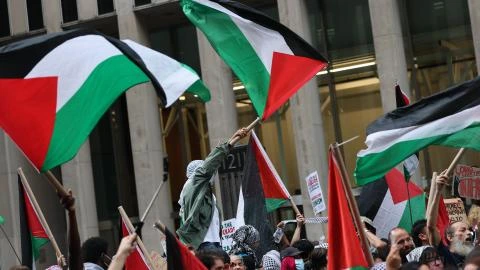
The idea that these massive anti Israel protests popping up everywhere are just a bunch of local folks spontaneously taking to the streets is now impossible to believe. The mask is off. Investigative reporting has finally caught up with reality, exposing the relentless coordination that drives these so called grassroots demonstrations. They were not organic at all, not even close. Instead, leaked documents make it crystal clear: the wave of global protests marking the third anniversary of the October 7th massacre was an operation years in the making, run out of London by a coalition calling itself the Global Alliance for Palestine.
We are talking about a sprawling network with tentacles in more than sixty countries, over two hundred affiliated organizations, including heavyweights like CodePink and Boycott, Divestment, Sanctions (BDS) chapters. The evidence? Internal memos, campaign blueprints, toolkits, communications briefs, enough to prove that nothing about these protests was improvised. Every slogan, every banner, every bit of street theater was rolled out according to a master script drafted months ago.
What is maybe most striking is how systematic these efforts have become. In place of peaceful marches, these organizers handed local activists a playbook that left little room for nuance or genuine dialogue. Their guidance was blunt: occupy city squares, disrupt traffic, blockade businesses deemed friendly to Israel, surround government offices, anything to create maximum chaos and visibility. And it was all under explicit instructions to weaponize a tragic anniversary, to hijack the attention of global media not with genuine grief for the October 7th victims, but with a well rehearsed spectacle designed to dominate headlines.
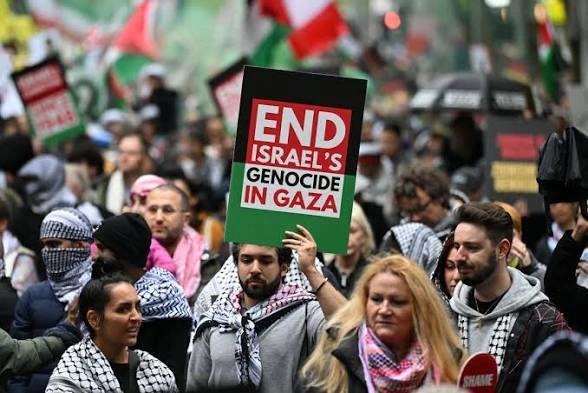
Let us be honest: if you are watching news feeds choked with identical hashtags and chants, that is not some magical moment of international consensus. It is the result of an industrial scale operation. Communications guides scripted everything right down to the emotional pitch: language deliberately incendiary, accusations of genocide and occupation, denial of Israel legitimacy, all deployed in lockstep from Sydney to Berlin to New York. Behind those city streets, professional organizers pulled the strings, supplying not just the talking points, but specifying which government buildings to picket, which businesses to target, how to make sure nothing goes unnoticed by the press.
Ask yourself: why do people keep falling for this? Why does the Palestinian narrative consistently win over public opinion in Western capitals, while Israel case feels invisible or ignored? It is not just down to slick marketing, though that helps. It is about tapping into the emotional architecture of the West, framing the story as one of oppressor and oppressed, colonizer and colonized. These scripts are powerful not because they are factual, but because they fit perfectly into preexisting Western anxieties about power, injustice, and guilt. This is propaganda, massaged for the TikTok era, boiling down a decades long conflict into a story with a clear villain and a clear victim. And it works.
The Palestinian message plays directly to how people process information: fast, with little context, through gut level empathy. Show a single image of a destroyed apartment block or a refugee child, and the mind closes to anything more complicated. There is no room for nuance, no reflection on why some buildings become targets, no mention of terror organizations embedding military assets under schools and hospitals. The hard, analytical details, international law, military necessity, intelligence validation, get lost instantly. Social media delivers emotion in 15 seconds. Israel tries to counter with fact sheets and technical reports. Guess who wins attention?
It is tempting to say that if only Israel could break through with the truth, things would be different. But let us not kid ourselves. For decades, Israel bet everything on the assumption that facts would eventually win out. Public diplomacy focused on official channels, legal debates, correcting errors after the damage was done. It ignored the arenas where opinion really forms, social media, campuses, and grassroots organizations. While international coalitions invested heavily in training activists, shaping campus politics, and embedding their messages inside NGOs and media outlets, Israel barely played defense.
Here is the cold reality: there is no way to win the information battle with spreadsheets and legalistic press releases. Until Israel and its allies start fighting fire with fire, proactively telling emotionally compelling stories, humanizing its citizens, exposing how terror groups manipulate global sympathies, flooding social feeds with truth wrapped in moral clarity, nothing changes.
This is not just about rallies and marches anymore. Behind the street protests, these networks push legislative campaigns in parliaments across the West, lobbying for arms embargoes, trade cutoffs, and total diplomatic isolation. They coordinate not just banners, but bills and policy proposals, creating a full spectrum assault on Israel ability to defend itself, even in existential crisis.
The Israeli public has long suspected these campaigns were not organic expressions of outrage, that they are part of an orchestrated strategy built to grind Israel down, psychologically and practically, on the world stage. The evidence now is overwhelming. Understanding how these movements operate, and why emotional narrative so reliably buries complex truth, is essential. The future depends on Israel and its supporters changing the game: not just reacting defensively, but reclaiming the narrative, before reality itself is written out of history.