
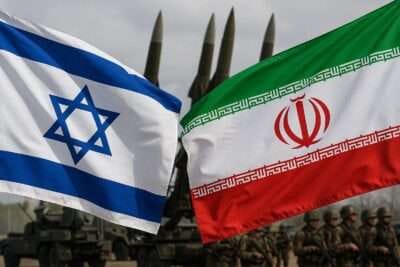
Strategic Security Assessment | Post-2026 War Reconstruction & Israeli Defense Calculus
Israeli defense officials are confronting a sobering reality. For the second time in two years, military planners in Kiryat Shmona and Tel Aviv miscalculated Iran’s resilience. In the wake of the early 2026 war, intelligence reports suggested Tehran’s military-industrial complex was shattered. Yet four months after the main campaign concluded in April, a stark truth emerged: Iran is rebuilding its ballistic missile program at a stunning pace. This rapid turnaround challenges fundamental assumptions inside the Israeli security establishment.
The scale of the 2026 air campaign was unprecedented. Over forty days, joint strikes by the United States and Israel targeted more than 2,600 missile and military-industrial sites. Combat aircraft flew thousands of sorties, dropping an enormous volume of precision munitions. Intelligence officials initially reported that Iran suffered upwards of 300 billion dollars in damage. The assumption was straightforward: setting back the Islamic Revolutionary Guard Corps required striking enough targets to reduce their infrastructure to rubble.
1. Historical Pattern of Resilience and Rapid Recovery
That assumption proved flawed. The Israel Defense Forces and Mossad had already seen this pattern play out before. Following targeted strikes on twenty critical facilities in October 2024, officials claimed Iran’s missile production was set back by a year. By early 2025, production had fully recovered. Israel launched another massive operation in June 2025 against roughly one hundred targets. Intelligence experts believed they had finally found the formula to paralyze Iranian manufacturing for years. Instead, Iran expanded its arsenal from 1,300 missiles to 2,500 by February 2026.Now, history is repeating itself on a much larger scale. Despite 30,000 strikes across the country, Tehran found creative shortcuts to resume high-speed production. Foreign intelligence reports revealed that heavy equipment quickly cleared blocked entrances to underground missile facilities. More critically, Iran restored raw material supply chains and clandestine assembly lines far faster than anticipated. Senior officials in Tehran recently claimed that manufacturing of new long-range systems is already underway.
2. Shift in Strategic Calculus and Production Rates
This rapid recovery changes the strategic calculus for Jerusalem. Following the war, military analysts debated whether Iran retained 500 or 1,000 usable long-range missiles. That debate assumes a static inventory. If Iranian facilities can assemble 100 to 300 missiles per month, static numbers become irrelevant. At its current pace, the regime could restore its pre-war inventory by early 2027. By 2028, the ballistic missile threat could return to pre-war levels, threatening Israeli population centers and critical infrastructure.
Core Strategic Insight: Israel’s strategic doctrine has long relied on preventative action to eliminate existential threats. The military industry in Tehran proved that physical destruction of buildings does not erase institutional knowledge. Technical expertise, decentralized production units, and clandestine procurement networks survived the heaviest air campaign in modern Middle Eastern history. By focusing capital and resources strictly on weapon recovery, the Iranian regime prioritized missile production while large parts of its national economy remained in ruins.
3. Official Assessment and Intelligence Dilemma
The military response to these developments remains cautious. Official statements from the IDF emphasize that the 2026 campaign severely degraded Iran’s ability to rebuild at its previous scale. Defense sources maintain that situation assessments are continuously updated based on real-time intelligence. However, officials declined to provide specific timelines regarding Iranian manufacturing rates, citing the need to protect intelligence sources and operational methods.
Strategic Choices Facing Israeli Leadership:
Option 1 (Pre-emptive Military Intervention):
Preparing for another major military intervention to disrupt manufacturing before the arsenal reaches critical capacity. However, initiating another conflict risks direct friction with Washington. United States President Donald Trump has signaled limited interest in regional escalation, prioritizing trade routes in the Strait of Hormuz and nuclear containment over ballistic missile limits.
Option 2 (Active Interception & Passive Defense):
Shifting strategy from pre-emptive bombardment to passive defense and active interception. Israel’s multi-layered air defense network, supported by American regional assets, successfully intercepted hundreds of incoming projectiles during recent hostilities. Yet relying entirely on defense is costly and operationally taxing. A renewed Iranian inventory of thousands of high-speed missiles could eventually overwhelm interceptor stockpiles during a prolonged war of attrition.
Option 3 (Targeted Disruption & Clandestine Interdiction):
Accepting a higher threshold of regional risk while diplomatic negotiations proceed. If Washington focuses strictly on nuclear restrictions, Israel may be forced to manage the conventional missile threat independently. This reality requires intelligence agencies to adapt. Rather than focusing solely on static targets, Israeli intelligence must focus on interrupting specialized raw material imports and covert supply networks.
4. Re-evaluating Long-Term Strategy
The broader lesson of the 2026 war is clear. Kinetic force alone cannot permanently eliminate a technologically advanced adversary’s manufacturing capacity. Bombing campaign metrics, such as targets struck or tonnage dropped, do not automatically translate into permanent strategic denial. As long as the regime in Tehran retains the technical knowledge and political will to rebuild, physical damage remains a temporary setback rather than a final solution.Jerusalem must now rethink its long-term strategy toward the Iranian threat. Relying on periodic military campaigns to reset the clock is becoming increasingly unsustainable. The speed of Iran’s post-war recovery proves that the regime views its missile arsenal as vital to its survival. For Israel’s defense planners, the key challenge is no longer estimating how much damage was inflicted yesterday. The challenge is anticipating how fast the adversary can rebuild tomorrow, and adjusting national defense strategy before the window of opportunity closes.