
Decoding intelligence reach, technical realities, and the evolving Israeli deterrence doctrine following former Mossad director Yossi Cohen’s public disclosures.
Public Disclosures and Strategic Paradoxes
When a former spy chief speaks in public, every word carries real weight. Former Mossad director Yossi Cohen’s recent remarks at the Galilee Conference in Safed gave a fascinating, almost jarring glimpse into Israel’s covert shadow war against Iran. Speaking to an audience used to ambiguity, Cohen revealed that Israeli intelligence personnel toured Iran’s heavily fortified, underground Fordow enrichment plant multiple times to gather crucial structural intelligence. He went on to call the June 2025 American bombing of that mountain facility the fulfillment of all his dreams. And yet, almost in the same breath, Cohen offered a surprisingly relaxed take on Iran’s nuclear progress, claiming that uranium enriched to 60 percent is still far from an operational bomb.
Operational Reach vs. Technical Breakout Timelines
That combination of statements creates a genuinely intriguing paradox for Israeli national security planning. On one hand, Cohen is highlighting the astonishing operational reach of Israeli intelligence, capable of penetrating one of the most protected military sites on Earth. On the other, his technical read on Iran’s breakout timeline seems to diverge from mainstream nuclear analysts and military planners who view 60 percent enrichment as a genuinely dangerous threshold. Making sense of these statements means looking closely at the history of Fordow, the aftermath of the 2025 strikes, and how Israeli deterrence doctrine has evolved over time.
The Legacy of Fordow and Physical Reconnaissance
Fordow has long stood as the ultimate symbol of Iranian defiance. Built deep inside a mountain near the holy city of Qom, the facility was specifically designed to withstand conventional aerial bombardment. For years, Western and Israeli defense officials viewed Fordow as an untouchable fortress shielding Iran’s most sensitive centrifuge cascades. When Cohen said Israeli operatives toured the site, he was underscoring a long standing truth about the Mossad. Israeli intelligence doesn’t rely just on satellite imagery or electronic intercepts. It relies on physical presence, human assets, and direct reconnaissance too.
Psychological Warfare and Regime Vulnerability
Whether these visits involved agents physically slipping past security checkpoints or sophisticated, low visibility technical surveillance, the message to Tehran is unmistakable either way. Israel claims access to Iran’s deepest secrets. This kind of psychological signaling lines up with earlier disclosures under Cohen’s leadership, including the famous 2018 raid on Tehran’s nuclear archive. Revealing that intelligence teams walked through or closely mapped the inner sanctums of Fordow reinforces a powerful sense of vulnerability inside the Iranian regime. It’s a reminder to Tehran that no bunker stays entirely dark once Mossad eyes are watching it.
| “Revealing that intelligence teams walked through or closely mapped the inner sanctums of Fordow reinforces a powerful sense of vulnerability inside the Iranian regime.” |
Strategic Significance of the 2025 Bunker-Busting Strike
When American B-2 stealth bombers struck Fordow during the June 2025 conflict, dropping heavy ordnance designed to shatter deep underground targets, it marked a genuinely historic shift in Western counter proliferation strategy. For decades, Jerusalem worried Washington might lack the political will to actually deploy its heaviest bunker busting weapons against Iranian nuclear targets. Cohen described the American strike as the fulfillment of his dreams because it proved the ultimate safety net of American military power could actually be triggered when it mattered.

Material Dispersion and the Limits of Bombardment
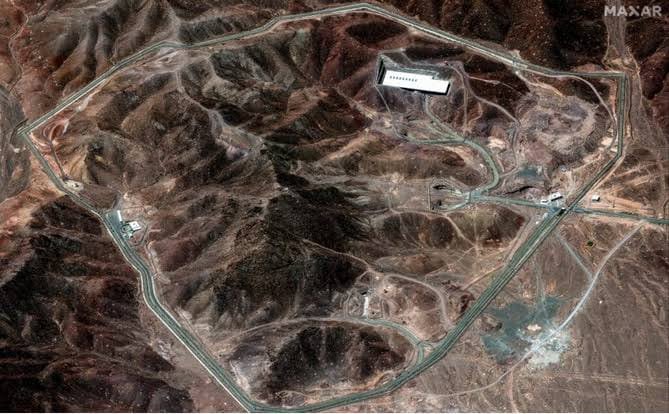
But celebrating the Fordow strike has to be balanced against the hard reality on the ground. Military action, no matter how precise or heavy, rarely destroys an idea or erases accumulated technical knowledge. Recent intelligence reports and satellite imagery suggest that while the physical infrastructure at Fordow took severe structural damage, Iranian engineers had already relocated portions of their nuclear materials and equipment before the bombardment even happened. Reports indicate stockpiles of highly enriched material may have been moved to secondary underground locations, including sites like Pickaxe Mountain.
The Technical Math of Uranium Enrichment
This brings us to the most controversial part of Cohen’s commentary, his claim that 60 percent enriched uranium remains far from a nuclear weapon. To a lot of defense analysts, that statement sounds unexpectedly permissive. Standard nuclear physics says enriching uranium from natural levels up to 20 percent takes the vast majority of the total effort. Going from 20 percent to 60 percent takes significantly less energy and time by comparison. The jump from 60 percent to weapons grade 90 percent purity is technically fairly minor, something proliferation experts often estimate could take mere weeks under optimal conditions.
Fissile Stockpiles versus Weaponization Hurdles
So why would a former head of Israel’s premier intelligence agency downplay the immediate threat of a 60 percent stockpile? One possibility is that Cohen is drawing a sharp technical distinction between possessing fissile material and actually building a deliverable warhead. Enriching uranium is only one piece of becoming a nuclear power. To have a functional weapon, a country also has to master weaponization, miniaturization, detonation systems, and integration into ballistic missile reentry vehicles. By noting that 60 percent uranium is still far from a bomb, Cohen may just be reminding the public that Iran still faces real engineering hurdles before it could field a working device.
Calibrated Messaging and Public Perception
Another explanation sits in the realm of strategic communication. Israeli intelligence leadership has occasionally calibrated public statements to avoid stirring up unnecessary public panic while still keeping pressure on political leaders to make calculated decisions. By framing 60 percent enrichment as a manageable, distant threat, Cohen might be signaling that Israel still has time for diplomatic, intelligence, and covert operations without rushing headlong into broader regional war. The message seems to be that while vigilance isn’t negotiable, immediate hysteria is counterproductive.
The Resilient Reality of Iranian Ambitions
Still, complacency would be a genuinely fatal error for Israeli doctrine here. The 2025 strikes proved that physical facilities can absolutely be damaged, but they also showed that Iran’s nuclear ambitions are resilient, decentralized, and deeply embedded across its defense establishment. If Iran retains its technical expertise, raw materials, and covert supply chains, it’s going to eventually try rebuilding what was lost. Relying indefinitely on external strikes or surgical sabotage isn’t a permanent strategic solution on its own.
Future Imperatives for Deterrence Doctrine
Israel’s strategic thinking needs to look beyond short term tactical wins here. The intelligence victories former leaders like Cohen celebrate are genuinely remarkable feats of daring espionage, but they’re just pieces of a much longer war of attrition. The true measure of Israeli security won’t be found solely in the debris of Fordow or the heroic stories of covert entry. It’s going to depend on maintaining a multi layered defense posture, strengthening the alliance with Washington, and making sure that no matter how much material Iran manages to enrich, the price of crossing that final red line stays demonstrably intolerable.