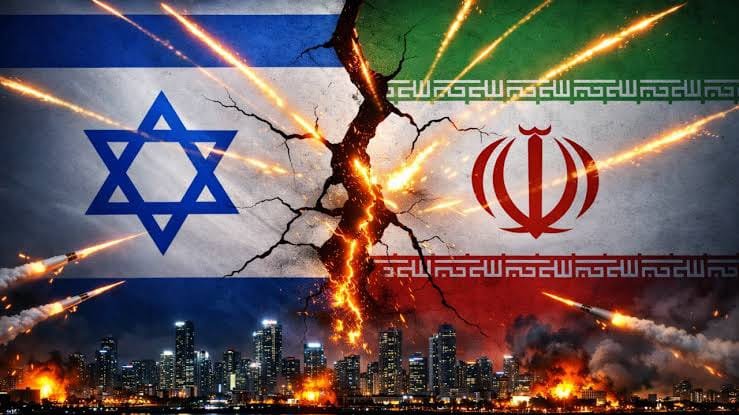
An evaluation of Iran’s calculus of regime survival, intelligence vulnerabilities, asymmetric warfare tactics, and the dynamics of Israeli deterrence.
State Rhetoric versus Regime Survival
For decades, the ruling regime in Tehran projected an image of reckless, ideological zeal. Officials in the Islamic Republic regularly chanted about destroying Israel while funding armed proxies across the Levant. Yet when it comes to the immediate prospect of direct, existential confrontation, the supreme leader and his inner circle consistently pull back from the edge. That persistent restraint raises a genuinely revealing question for strategic planners in Jerusalem. Is Iranian leadership actually afraid of Israel?
The Calculus of Personal Vulnerability
The answer really comes down to the difference between state rhetoric and personal survival. While the regime willingly sacrifices regional proxies and foreign fighters in its asymmetric wars, its core leaders prioritize their own survival above everything else. Tehran’s reluctance to launch sustained direct attacks against Israel doesn’t come from some sudden burst of political moderation. It comes from a pretty clear eyed calculation about personal vulnerability.
Erosion of the Regional Proxy Shield
Historically, Iran leaned on a multi layered defensive shield made up of Hezbollah in Lebanon, Hamas in Gaza, and the Houthis in Yemen. These proxy networks let the Islamic Revolutionary Guard Corps wage war against Israel at essentially zero direct physical cost to the ruling elite back in Tehran. That strategy started crumbling as Israel systematically dismantled the military hierarchy running those regional proxies. Taking out senior military leadership shattered the shield the regime had operated comfortably behind for decades.
Intelligence Penetration and Personal Exposure
When Israeli operations showed they could reach top commanders inside supposedly secure compounds across the region, the psychological calculation in Tehran shifted fast. High profile eliminations of key IRGC figures like Razi Mousavi and Mohammad Reza Zahedi proved that rank and distance offered no real protection anymore. Intelligence precision reached straight into the heart of Iran’s command structure. For a regime built on internal coercion and central control, realizing that its own key decision makers were personally exposed created an unprecedented level of caution.
| “For a regime built on internal coercion and central control, realizing that its own key decision makers were personally exposed created an unprecedented level of caution.” |
Strategic Paralysis and Leadership Survival
Fear among autocratic leaders rarely shows up as public panic. It shows up as strategic paralysis instead. When a regime realizes its intelligence apparatus has been breached and its top officials identified, survival instinct tends to override ideological posturing. The regime’s greatest fear isn’t military damage to national infrastructure or economic disruption borne by ordinary civilians. Its real vulnerability is the immediate, personal elimination of its senior political and military leadership.
The Reliance on Low-Cost Asymmetric Warfare
That dynamic explains why Iran has leaned so heavily into cheap, unmanned technology rather than conventional force projection. Asymmetric weapons like the Shahed-136 drone give Tehran a way to keep up regional pressure without risking direct air force engagement or fleet deployment. With production costs running between 20,000 and 35,000 dollars per unit, these long range systems let the regime strike from vast distances while hiding behind geographic depth. Similarly, the spread of small, 3D printed FPV drones costing as little as 300 dollars gives proxy forces real tactical lethality on the ground without much investment.
Conventional Weakness Hidden Behind Drones
These low cost systems reflect tactical flexibility, sure, but they also expose real structural weakness. A nation genuinely confident in its conventional military power doesn’t rely almost entirely on cheap suicide drones and clandestine proxy networks to project authority. Iran leans on these tools precisely because direct military confrontation with Israel risks exposing just how far ahead Israeli air defenses and strike capabilities actually are.
Cyber Operations and Domestic Fragility
On top of that, Israel’s demonstrated ability to combine kinetic action with massive cyber operations has deepened real anxiety inside the Iranian establishment. Disruption campaigns that knock national internet connectivity down to a fraction of normal capacity create immediate internal chaos. When government communications, fuel distribution systems, and state broadcasting all go dark at once, the regime faces the immediate threat of internal instability. In a country where public discontent sits just beneath the surface most of the time, digital paralysis threatens regime security just as much as physical bombing does.
Internal Unrest and Regime Stability
The Iranian regime clearly understands how fragile its hold on domestic power actually is. The Persian public has repeatedly shown a willingness to protest economic collapse and political repression. An all out war with Israel wouldn’t unite the Iranian public behind the clergy. If anything, it would likely shatter the internal security apparatus and ignite widespread rebellion instead. The supreme leader and his generals know a major military miscalculation could trigger the final collapse of their rule from the inside.
Tactical Patience vs. Genuine Restraint
Critics of this read argue that Tehran’s cautious posture is really just tactical patience rather than fear. They argue the regime is waiting for optimal conditions, building nuclear leverage, and refining missile technology to eventually overwhelm regional defense systems over time. While long term strategic patience is certainly part of Iranian doctrine, it doesn’t really explain away the visible hesitation whenever direct retaliation gets demanded by the regime’s own hardline base.
Calibrated Escalation and Direct Boundaries
Every time the regime vows harsh punishment for high level losses, its actual response ends up carefully calibrated to avoid triggering a full scale war. Miscalculations happen, sure, but the underlying pattern stays clear. Whenever Israel sets a firm, clear boundary backed by targeted force, Tehran calibrates its actions to stay just below the threshold of direct state on state conflict.
The Mechanics of Psychological Deterrence
Deterrence is fundamentally a psychological state, one achieved when an adversary believes the personal cost of aggression far outweighs any potential political gain. Israel achieved that deterrence not by threatening the Iranian public, but by proving the ruling elite itself isn’t immune either. Cutting into the command structure forces authoritarian leaders to confront their own mortality directly.
Maintaining the Intelligence Edge
The task facing Israeli strategy now is holding onto this psychological advantage without slipping into complacency. As new defensive alliances form across the region and drone technology keeps spreading, the threat profile keeps evolving. But the fundamental vulnerability of the Islamic Republic hasn’t changed. Its leadership is deeply rational when it comes to self preservation.
Self-Preservation as the Ultimate Barrier
Iran avoids direct, all out warfare with Israel because its leaders understand the ultimate consequences involved. They know that in a direct clash of capabilities and intelligence, their personal safety and their grip on power would be placed in immediate jeopardy. As long as Israel maintains its intelligence edge and keeps demonstrating an unwavering willingness to target the decision makers themselves, that fear is going to remain the most effective barrier standing against a wider war.