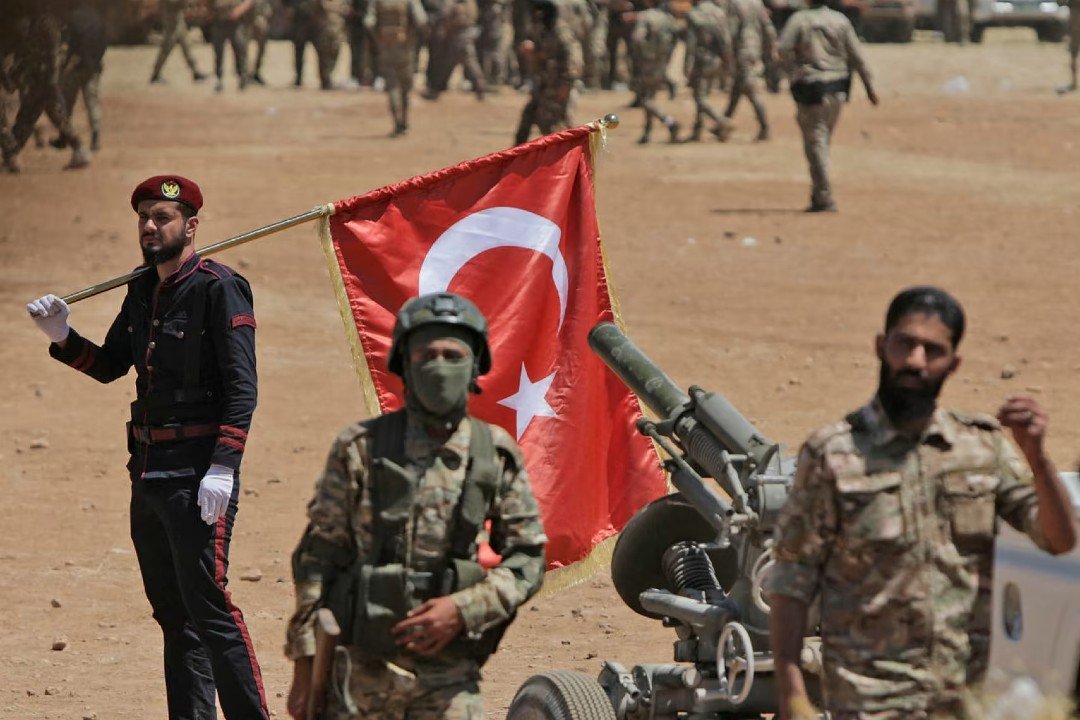
The reshaping of Syria following the collapse of the central government cannot be considered merely a new episode of turbulence in the Middle East. Rather, it has become an example of the new model of regional power in the modern age, one which does not involve outright conquest but rather a combination of political mediation, strategic military deployment, and diplomatically earned legitimacy. And at the heart of such a transformation is Turkey, whose growing involvement in Syrian affairs has begun to pose a question for Israeli security interests.
What is taking shape is not the traditional picture of Turkish expansionism understood narrowly in terms of military presence or border buffer areas. Rather, Ankara seeks to build its influence based on an innovative approach involving a symbiotic blend of security arrangements with regional entities, economic ties within northern Syria, and diplomacy, which enables it to position itself as an indispensable mediator in any future solution of the situation.
For Israel, the significance of this evolution lies not in any single Turkish move, but in the accumulation of strategic footholds across Syria’s fractured landscape. In areas where state authority has weakened, external actors are no longer merely intervening; they are effectively designing the political ecosystems that will define the post-war order. Turkey’s advantage is that it operates simultaneously as a security actor and a diplomatic gatekeeper, giving it access to both coercive and legitimizing tools.This dual role has implications that extend far beyond Syria itself. Mediation in conflict zones is often treated as a neutral function, but in reality, it determines the hierarchy of influence in the post-conflict phase. The actor who brokers arrangements between fragmented local forces, external powers, and transitional governments gains disproportionate control over what “stability” ultimately means. In Syria’s case, Turkey is positioned to define those parameters.
Israel has historically viewed Syrian instability through the lens of immediate security threats: border infiltration, militia entrenchment, and the risk of advanced weapons transfers. However, the more consequential shift may lie in who emerges as the architect of Syria’s political reconstruction. If Turkey succeeds in embedding itself as the primary intermediary between Damascus, regional Arab states, and Western actors, it will acquire a structural role in shaping Syria’s external alignments for years to come.
This is where the strategic concern becomes more subtle. Influence exercised through mediation does not require direct confrontation with Israel to have consequences for it. A Turkey-centered diplomatic framework in Syria could gradually normalize Ankara’s presence as an unavoidable reference point in discussions involving border security, humanitarian zones, reconstruction aid, and local governance arrangements. Over time, this creates a diplomatic environment in which Israel’s operational flexibility is constrained not by force, but by the expectations embedded in international agreements.
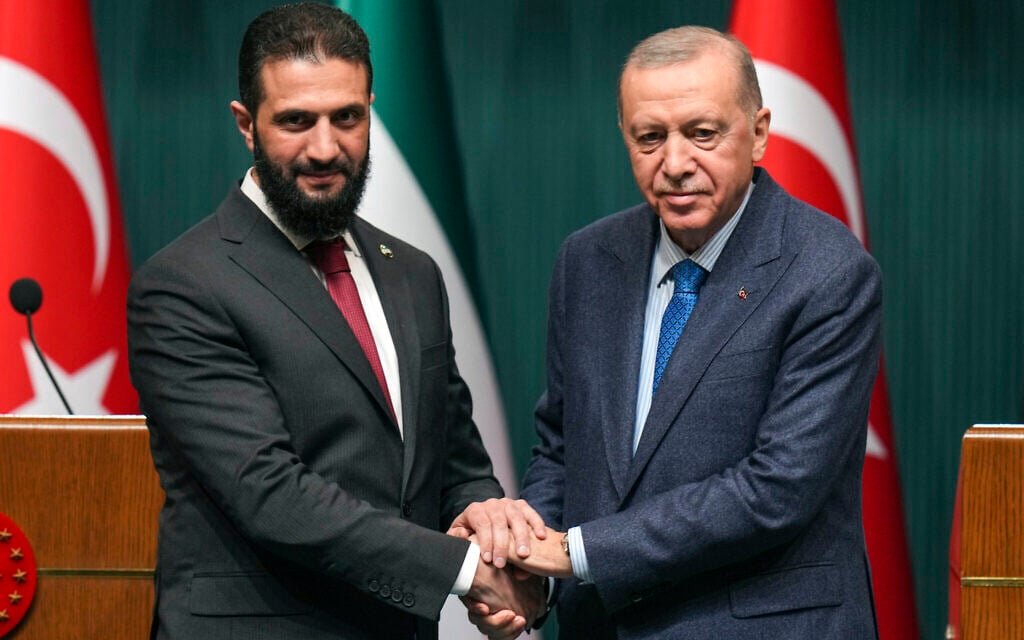
Syria’s disintegration adds another layer to this process. Without a central power, local groups rely on outside powers not only for their very survival but also for supplies and legitimacy. Turkey’s increasing intervention in such micro-state systems, especially in northern areas, and now in those next to them, allows it to build dependency relationships that last despite any changes to the broader geopolitical context.
A related dilemma for Israel concerns the issue of responding to power wielded not by military force, but indirectly, by means of state rebuilding procedures. Traditional deterrence frameworks are poorly suited to environments where power is diffused across local councils, security arrangements, and internationally mediated agreements.
This matter gets even more complicated due to Turkey’s overall diplomatic approach in general. The Turkish government is gradually becoming more and more involved in trying to play the mediator between different parties of conflict in the region, acting as a mediator and connecting link between the conflicting blocs. This means having connections in the Gulf countries, some selective cooperation with the Western world, as well as involvement in the Muslim-majority conflict areas as an important mediator. Each of these roles reinforces its claim to relevance in Syria’s future settlement.
The result is a form of strategic layering: Turkey is not only present in Syria, but increasingly embedded in the diplomatic language used to describe Syria’s future. That distinction matters. Physical presence can be negotiated or challenged; embedded diplomatic centrality is far more durable.Israel’s concern, therefore, is not rooted in immediate military escalation but in the slow institutionalization of Turkish influence within Syria’s evolving order. Once mediation becomes structurally dependent on Ankara’s participation, Israel may find itself operating in an environment where key decisions about its northern frontier are shaped in forums where Turkey holds agenda-setting power.
Strategically, for Israel, the pertinent question is whether Israel is ready for the Syrian end-state, wherein Turkey emerges as not merely a neighbor, but a key architect of arrangements that may affect Israel’s strategic space indirectly. The response will reveal whether Israel is reacting to an existing reality or adapting to developments in a changed scenario.