
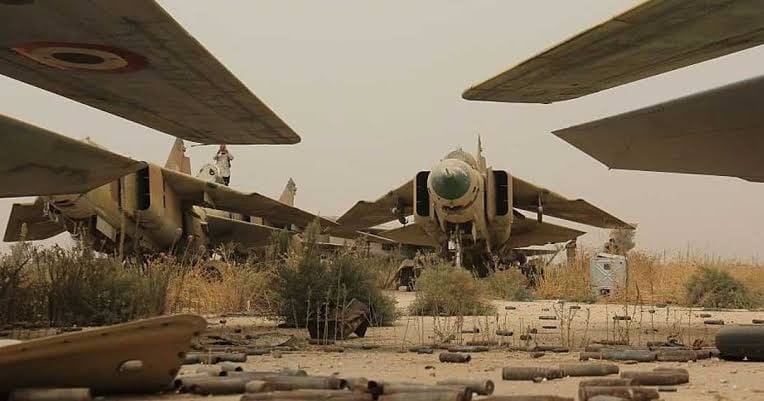
The recent Israeli airstrikes targeting the Abu al Duhur military airfield in northwestern Syria have set off a fierce diplomatic storm, dragging Ankara and Jerusalem into a direct rhetorical confrontation. The strike hit infrastructure roughly seventy kilometers from the Turkish border, and it drew an immediate, sharp rejection from Turkish authorities almost as soon as the news broke. Ankara called the move an untenable act of aggression aimed at undermining Syrian sovereignty. At the same time, Washington voiced real concern, with US special envoys warning that the strike risked triggering an unnecessary escalation with NATO’s second largest army. For strategic planners in Israel, all of this highlights a rapidly shifting northern theater, one where the collapse of the Assad regime has opened up a genuinely dangerous new vacuum.
The official reasoning coming out of the Prime Minister’s Office in Jerusalem framed the strike as a necessary preemptive measure to protect national security. According to government statements, Syria was on the verge of breaching a delicate security status quo by allowing Turkish troops to establish a military presence at the strategic airbase near Aleppo. Israeli security officials argued that repeated warnings had gone ignored, leaving no real choice but to act against what Jerusalem sees as an emerging hostile staging ground right on its northern doorstep. This whole perspective underscores a real anxiety inside the defense establishment about the expansion of Turkish military influence, happening alongside the rebuilding of Syrian state capability under the new administration led by Ahmed al Sharaa.
Turkey, though, has pushed back hard against these claims, calling them baseless pretexts manufactured to justify expansionist policy and territorial interference. Turkish officials maintained that Ankara had no active military deployment at the targeted base at all, accusing Jerusalem of inventing threats to destabilize the region for domestic political consumption instead. Foreign Minister Hakan Fidan and other senior figures in Ankara have repeatedly insisted that Israel’s actions represent the real destabilizing force in a fragile Syria, calling on the international community to hold Israel accountable for violating international law and infringing on Syrian territorial integrity. That narrative has found a receptive audience among certain Western diplomats too, ones who see unilateral strikes as counterproductive to broader regional stabilization efforts.
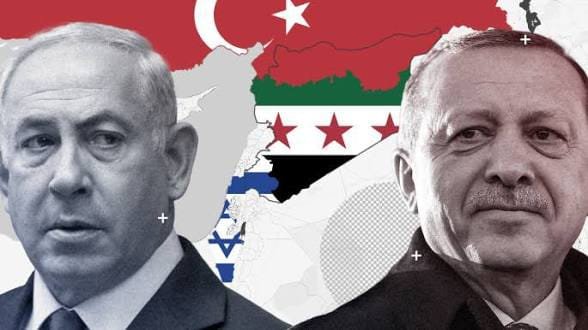
The geopolitical friction here gets further complicated by differing interpretations of sovereignty and regional presence. Israeli officials have frequently pointed out that Turkey maintains a substantial military footprint inside northern Syria already, arguing that Ankara’s long term objectives include carving out permanent zones of influence that could eventually threaten Israeli security interests down the road. Turkish leadership, on the other hand, insists its cooperation with Damascus is strictly legitimate, focused on rebuilding state institutions, training the new Syrian army, and fostering long term peace. This fundamental clash of strategic visions leaves very little room for diplomatic compromise, turning the post Assad landscape into a high stakes chessboard where every military movement gets scrutinized and met with immediate retaliation or sharp condemnation.
For the Israeli public and the domestic media landscape, this escalation raises real questions about the country’s long term doctrine of preventive defense. The convergence of military friction with Turkey, a traditional regional partner turned fierce critic, complicates an already crowded multi front security matrix considerably. While military commanders emphasize the necessity of denying adversaries any strategic depth near the border, diplomatic analysts warn about the compounding cost of alienating key international actors and risking direct friction with a powerful NATO state. Navigating this volatile environment requires a delicate balance between unyielding operational deterrence and pragmatic diplomatic engagement, making sure immediate tactical measures don’t accidentally lock the nation into a permanent state of wider regional isolation.
The wider strategic implications of this confrontation stretch well beyond the immediate damage inflicted on the Idlib airfield too. As reported by outlets like The Jerusalem Post, intelligence sharing between Jerusalem and Washington has tried to map out the expanding military infrastructure taking shape across northern Syria. Yet the sharp rebuke from American diplomats, notably special envoy Tom Barrack, shows that Washington views unilateral Israeli strikes not as stabilizing enforcement, but as a dangerous source of friction complicating broader coalition efforts across the Middle East. When regional partners and superpower allies openly clash over whether preemptive military action is even legitimate, Israel finds itself navigating an increasingly lonely diplomatic path.
The domestic political environment inside Israel also plays a visible role in shaping how these security measures get perceived and executed. Critics and political opponents have frequently accused the current coalition of leveraging foreign security threats for domestic political survival, especially as electoral pressure mounts. That dynamic makes it genuinely difficult for the public to separate real military necessity from opportunistic political posturing. When strategic decisions about a heavily militarized neighbor like Turkey get filtered through the lens of internal politics, the national consensus needed to sustain a multi front war starts to fray at the edges.
On the other side of the border, Turkey’s own calculus is just as entrenched in regional ambition and domestic consolidation. Ankara views its partnership with the new Syrian leadership as a vital cornerstone of its foreign policy, aimed at projecting both soft and hard power across its southern frontier while checking Kurdish aspirations and expanding economic influence at the same time. Letting Israeli warplanes dictate the red lines around Syrian military reconstitution is viewed by Turkish strategists as an unacceptable infringement on their own sphere of influence. So every strike Israel carries out gets met with escalating warnings in return, creating a tit for tat cycle of rhetoric that leaves very little room for actual de-escalation.
In the end, the clash over Abu al Duhur exposes the core vulnerability sitting inside Israel’s current defense doctrine in a post Assad Middle East. Tactical preemption can temporarily disrupt an adversary’s logistics, sure, but it can’t substitute for a cohesive, long term diplomatic strategy that actually accounts for the ambitions of regional heavyweights like Turkey. If Jerusalem keeps relying solely on kinetic force to manage the northern frontier, it risks stumbling into an unintended confrontation with a NATO power while deepening its own international isolation in the process. Securing the nation’s borders is going to require matching military resolve with sober diplomatic coordination, making sure tactical victories don’t quietly transform into permanent strategic liabilities down the line.