
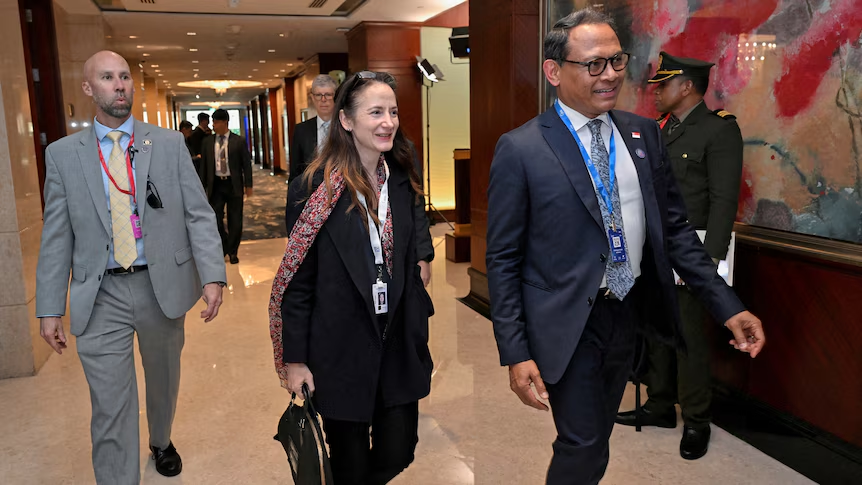
Reports have recently emerged suggesting that Iranian intelligence officials may have attempted to open secret communication channels with the United States Central Intelligence Agency (CIA). These discussions reportedly aimed to explore possibilities for reducing escalating tensions and conflict.
How the Communication Was Reported
According to officials familiar with the matter, messages from Iranian intelligence representatives were allegedly transmitted through a third country’s intelligence service acting as an intermediary.
Such indirect communication channels are common in international diplomacy, particularly when countries do not maintain direct diplomatic relations.
Intelligence Diplomacy
Secret communication between intelligence agencies is sometimes referred to as “intelligence diplomacy.” These back-channel discussions can occur even during periods of political hostility or military conflict.
By communicating through intelligence channels rather than public diplomatic forums, governments can test negotiation possibilities without making formal commitments.
Conflicting Claims
While some reports suggested that Iranian officials signaled openness to talks, other sources rejected the claim and described it as misinformation or psychological warfare.
Because intelligence discussions often occur behind closed doors, confirming such reports can be difficult.
Conclusion
The investigation into alleged CIA–Iran intelligence communication illustrates how espionage and diplomacy often overlap. Even in times of conflict, intelligence agencies may maintain secret channels that could eventually lead to negotiations or de-escalation.