Strategic Analysis of the Decoupled US-Saudi Nuclear Accord
1. The Collapse of the Tripartite Vision
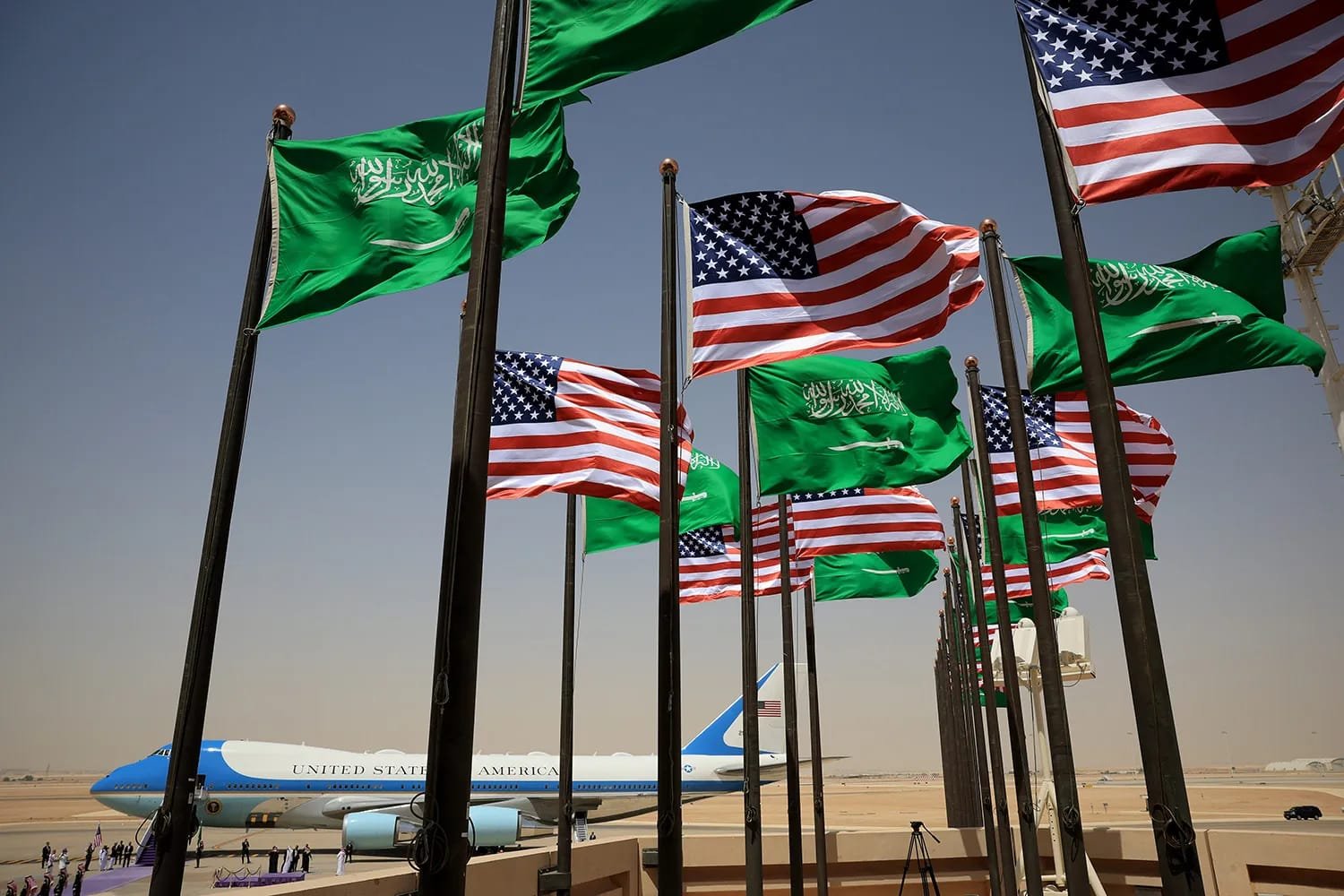
When Washington first envisioned a grand tripartite deal between the United States, Saudi Arabia, and Israel, the premise was simple and compelling. Israel would gain historic diplomatic recognition from the custodian of Islam’s holiest sites. Saudi Arabia would secure a binding American defense umbrella along with state-of-the-art civilian nuclear technology. Washington, in turn, would cement its regional hegemony while pushing China out of the Middle Eastern security equation. It was billed as a monumental strategic bargain designed to permanently reshape the regional balance of power. That grand vision has completely evaporated. What remains is a stark, unvarnished, and deeply dangerous bilateral transaction.
2. Decoupling Nuclear Transfers from Normalization
The Trump administration’s decision to submit a Section 123 Agreement to Congress that explicitly decouples civil nuclear technology transfers from normalization with Israel represents a profound and troubling pivot in American Middle East policy. For defense planners and political leaders in Jerusalem, this development is not merely a missed diplomatic opportunity or a temporary political setback. It represents a grave, long-term threat to Israel’s qualitative military edge, its deterrence doctrine, and its fundamental strategic depth.
3. The Erosion of Nonproliferation Safeguards
The specific terms of the pending pact are deeply alarming to anyone familiar with nuclear nonproliferation standards. By omitting what experts call the gold standard, the agreement fails to legally prohibit Saudi Arabia from enriching uranium or reprocessing spent nuclear fuel on its own soil. These two precise chemical processes are the essential, indispensable pathways to producing weapons-grade fissile material. When the United Arab Emirates signed its landmark 123 Agreement with Washington in 2009, Abu Dhabi explicitly foreswore domestic enrichment and reprocessing entirely. That noble commitment established a clear, non-negotiable benchmark for nuclear safety in a notoriously volatile region.By granting Riyadh a complete pass on this established standard, Washington is greenlighting the creation of an advanced domestic nuclear infrastructure. Compounding this existential risk is the deliberate exclusion of the International Atomic Energy Agency’s Additional Protocol. Without this vital regulatory mechanism, international inspectors will lack the legal authority to execute snap, short-notice inspections at undeclared facilities. Intelligence agencies in Jerusalem and Western capitals will be left blind, forced to guess what occurs behind closed doors in the vast expanses of the Arabian desert.
4. The Counter-Proliferation Doctrine of Riyadh
Saudi Crown Prince Mohammed bin Salman has never hidden his strategic ambitions or his willingness to seek nuclear parity in the region. His stark 2018 declaration during an interview with CBS News remains an explicit, guiding manifesto of Saudi national security policy: ‘Saudi Arabia does not want to acquire any nuclear bomb, but without a doubt, if Iran developed a nuclear bomb, we will follow suit as soon as possible.’ Allowing a regional power with an explicit, publicly stated counter-proliferation doctrine to build indigenous enrichment capabilities without intrusive IAEA oversight is a recipe for a catastrophic nuclear arms race.

5. Risk Without Reward
From Jerusalem’s vantage point, the sole rationale for accepting the inherent dangers of a Saudi civilian nuclear program was always tied to a single, transformative trade-off: full, formal diplomatic normalization. Israeli strategists were asked to carefully weigh the undeniable risks of a nuclear-capable neighbor against the immense, generational reward of effectively ending the broader Arab-Israeli conflict. Genuine normalization would have integrated Israel into a unified regional air-defense and security architecture spanning from the Persian Gulf to the Mediterranean, acting as an impenetrable counterweight to hostile regional forces.Without normalization, Israel receives all of the strategic risk and absolutely none of the political reward. The Kingdom of Saudi Arabia secures access to highly sensitive American nuclear know-how and technology while preserving its cold, diplomatic isolation of the Jewish state.
6. Geopolitical Miscalculations in Washington
This unfolding reality reflects a fundamental, short-sighted miscalculation by policy makers in Washington. American officials appear convinced that supplying Saudi Arabia with nuclear technology on lenient terms is necessary to prevent Riyadh from turning to Beijing or Moscow for its energy needs. Yet, in their desperate rush to outmaneuver Chinese influence, the United States is actively eroding the delicate regional security architecture that has maintained a fragile balance of power for decades. A nuclear-capable Saudi Arabia operating without a formal peace treaty with Israel does not bring enduring stability to the Middle East. It introduces a wildly unpredictable, highly volatile variable into an already overburdened security environment.
7. The Congressional Review Window
The burden of stopping this dangerous precedent now falls squarely on the United States Congress. Lawmakers face a strict ninety-day review window to thoroughly evaluate the agreement once it is formally submitted. In previous legislative sessions, key national security figures across the political spectrum voiced fierce opposition to weakening nonproliferation standards for commercial or diplomatic convenience. During his tenure in the United States Senate, Marco Rubio co-sponsored the Saudi Nuclear Proliferation Act specifically to prevent unchecked, dangerous technology transfers to Riyadh. That sensible, bipartisan consensus must be urgently resurrected on Capitol Hill.
8. Strategic Mobilization and Guardrails
Israeli leaders cannot afford to sit quietly on the sidelines while this agreement glides through the corridors of American power. Israeli diplomatic channels in Washington, alongside pro-Israel advocacy groups, must mobilize immediately to alert American lawmakers to the catastrophic long-term dangers of this deal. Congress must be forcefully urged to reject the agreement in its current form or demand the inclusion of strict, mandatory guardrails, starting with the full implementation of the IAEA Additional Protocol and legally binding limits on domestic enrichment.If the United States allows Saudi Arabia to bypass essential nuclear safeguards without offering a historic, lasting peace with Israel in return, it will set a disastrous precedent for the entire world. The regional threshold for nuclear breakout will drop to zero, and Israel will eventually find itself forced to navigate an infinitely more perilous, multipolar nuclear landscape entirely alone. Israel must stand firm and insist that American commercial interests and foreign technology transfers never come at the direct expense of our national survival.