
By Noam Shalev
On the eve of Israel’s October 27 national election, a quiet but distinct diplomatic conversation is unfolding within Washington’s political ecosystem. Prominent figures allied with US President Donald Trump, most notably hedge fund manager Bill Ackman, have publicly advocated for the establishment of a broad, moderate Israeli unity government that excludes far right cabinet members Itamar Ben Gvir and Bezalel Smotrich. Speaking openly ahead of the vote, Ackman argued that removing these hardline elements from the cabinet table is essential for Israel to restore its damaged international standing, expand the Abraham Accords, and rebuild traditional bipartisan support across the American political spectrum.
This perspective reflects a cold, pragmatic calculation among key strategists inside Trump’s orbit. To achieve sweeping Middle Eastern objectives over the next two years, chief among them a historic normalization pact with Saudi Arabia, the American administration requires a governing partner in Jerusalem capable of making tangible political and territorial concessions regarding Gaza, Judea and Samaria, and the broader Palestinian issue. In the eyes of many foreign policy advisors in Washington, a coalition constrained by the ideological vetoes of Otzma Yehudit and Religious Zionism cannot deliver those outcomes.
The sentiment extends beyond public commentary from influential donors. Figures around key American diplomats, including Steve Witkoff, Jared Kushner, and Secretary of State Marco Rubio, have reportedly expressed growing frustration with the current government’s operational pace and strategic friction in Gaza, Syria, and the West Bank. Some in Washington have even floated complex, hypothetical rotation scenarios. Under these proposed frameworks, Prime Minister Benjamin Netanyahu would serve an initial one year term to ensure governance continuity before stepping aside for a moderate partner better positioned to lead delicate negotiations with Riyadh.
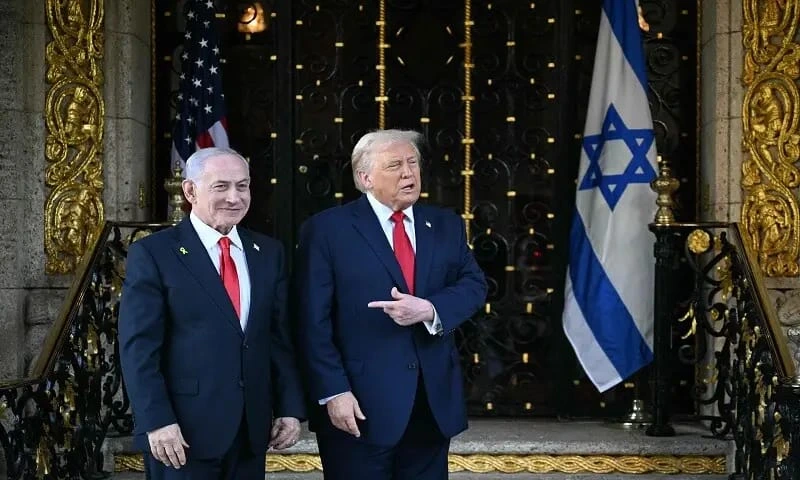
Signaling this intent publicly, Israel’s newly appointed ambassador to the US, Yechiel Leiter, acknowledged in a recent US television interview that Netanyahu himself prefers a broad national unity structure over continuing with his current fringe partners. Leiter specifically addressed the political future of Ben Gvir, indicating that Netanyahu does not intend to appoint him as National Security Minister in a future cabinet. The statement drew an immediate, sharp reaction from Otzma Yehudit, whose leaders accused Likud of secretly preparing a coalition agreement with opposition figures like Gadi Eisenkot at the expense of their traditional right wing allies.
However, translating these Washington ambitions into the raw reality of Israeli statecraft faces insurmountable arithmetic, political, and ideological barriers.
The primary structural flaw in Washington’s scenario lies in the rigid stances of Israel’s opposition leadership. Former IDF Chief of Staff Gadi Eisenkot, whose Yashar party leads key polling metrics alongside Likud, and former prime minister Naftali Bennett have repeatedly and unequivocally pledged not to serve under Netanyahu. Despite floating elaborate rotation schemes in American media, US officials have not conducted serious, feasibility checks with opposition leaders in Jerusalem. Without a fundamental reversal from Eisenkot or Bennett, any proposed rotation framework remains a purely academic exercise.
Furthermore, the mechanics of Knesset coalition building present a daunting trap for Likud. If Netanyahu’s natural right wing and religious bloc secures 61 mandates on October 27, he remains structurally dependent on the very partners Washington seeks to purge. The ultra Orthodox parties have made the passage of a comprehensive draft exemption law an absolute prerequisite for entering any coalition. Attempting to discard Ben Gvir and Smotrich while maintaining a narrow majority would trigger an immediate internal rebellion, destroying the core political base that keeps Likud in power.
Conversely, if the right wing bloc fails to reach a 61 seat majority, Netanyahu may not even receive the primary mandate from the President to form a government. In that scenario, opposition parties holding a prospective majority would have zero incentive to throw Netanyahu a political lifeline or enter a partnership that preserves his leadership.
There is also a profound cultural and strategic disconnect between American expectations and domestic Israeli priorities. Figures in Washington frequently view Israeli cabinet appointments through the lens of transactional diplomacy, seeing coalition slots as flexible bargaining chips to advance foreign policy goals. But Israeli elections are fought and decided on deep internal fault lines: national service equality, the burden carried by reserve soldiers, the cost of living, judicial reform, and national identity.
While American advisors focus on securing a diplomatic legacy through a Saudi normalization deal, Israeli voters are weighing the immediate security and economic fallout of a prolonged, multi front conflict. As Otzma Yehudit figures noted in response to American commentary, presenting a moderate face on the global stage cannot come at the expense of operational freedom or the safety of soldiers on the front lines.
The friction between Washington’s strategic desires and Jerusalem’s domestic constraints exposes an enduring truth about Israeli sovereignty. Foreign endorsements, informal trial balloons, and commentary from influential American allies can shape media narratives during a campaign. Yet, when the polling stations close on October 27, the composition of Israel’s next government will not be dictated by advisors in Washington or hedge fund managers in New York.
Whether Israel ends up with a narrow right wing coalition, an unstable unity government, or prolonged parliamentary deadlock, the outcome will be governed strictly by the cold, unforgiving arithmetic of the Knesset. Coalitions in Jerusalem are forged through hard nosed domestic compromise and sovereign electoral mandates, not through the wishful diplomatic thinking of foreign capitals.
About the Author
Noam Shalev is a Political Affairs Commentator covering Israeli government policy, US-Israel relations, coalition politics, and diplomatic engagement across the Middle East.