
Strategic Analysis of Foreign Policy Scapegoating and Rhetorical Tropes
1. The Anatomy of Political Scapegoating
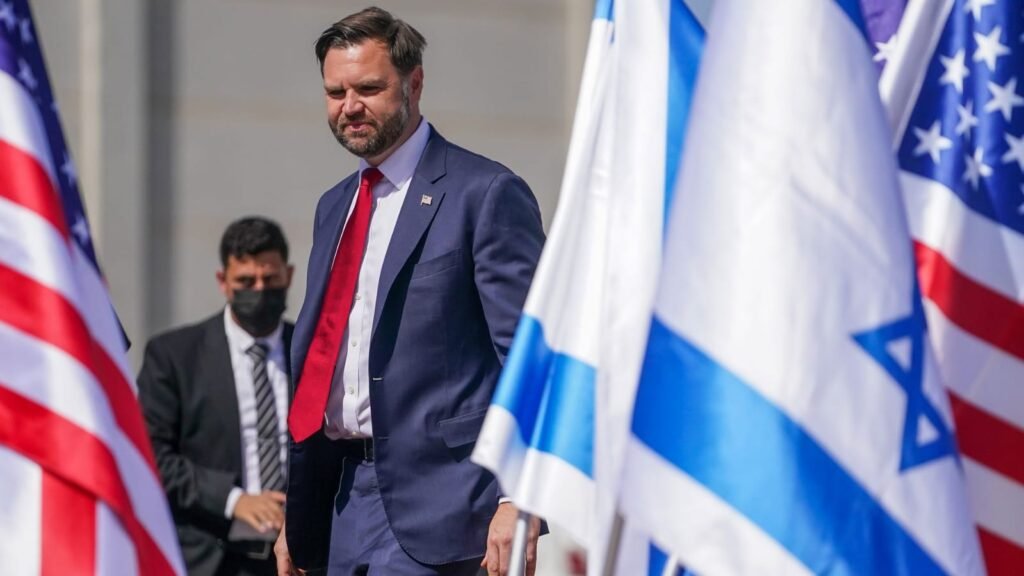
When an American foreign policy project stumbles on the world stage, the playbooks of political frustration are old, predictable, and deeply revealing. Vice President JD Vance’s recent public meltdowns over the failed diplomacy with Iran follow an ancient, dark pattern. Faced with diplomatic gridlock and rising domestic resistance, Vance has reached for the oldest scapegoat in Western political history: the alleged hand of hidden, well funded Jewish and Israeli cabals. Careful, Mr. Vance. Your prejudice is showing.
2. Collapse of the Iranian Memorandum of Understanding
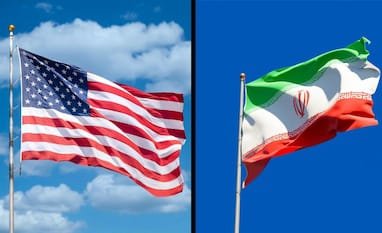
The immediate backdrop to this rhetoric is the breakdown of the recent Memorandum of Understanding with Tehran. Vance positioned himself as the primary champion of this framework inside the White House, betting heavily that he could sell a flawed arrangement to the American public and secure a signature diplomatic triumph. But when the agreement collapsed under the weight of Iranian aggression and broad public skepticism, Vance refused to look inward or acknowledge the inherent flaws of negotiating with a regime that routinely calls for death to America. Instead, he went looking for someone to blame.
3. Media Outbursts and the Dual Loyalty Smear
During an appearance on The Joe Rogan Experience, Vance seized on a Time magazine report alleging that digital strategist Brad Parscale was hired by an ad agency on behalf of the Israeli government to run an online campaign. Vance lashed out unprovoked, complaining bitterly about a supposedly mass funded operation designed to attack him and prolong the war indefinitely. Telling critics to go to hell, he implied that American public opinion was being secretly manipulated by Israeli puppets pulling strings in the shadows.This is the classic dual loyalty smear dressed up in modern political vocabulary. Vance treats a tiny minority as a sinister hidden hand behind complex geopolitical realities. It is an ugly tactic, and the underlying math exposes it as a complete absurdity.
4. Examining the Lobbying Data
Dissecting the influence numbers. According to data compiled by OpenSecrets, the entire pro Israel industry spent roughly 6.1 million dollars on federal lobbying in Washington in 2025. That same year, overall lobbying expenditures across all sectors reached a staggering, record setting 5.08 billion dollars. Under Foreign Agents Registration Act disclosures tracked by nonpartisan transparency groups, Israel has accounted for roughly 215 million dollars in cumulative spending over the past decade.That figure is a drop in the bucket compared to the more than 6.7 billion dollars poured into Washington influence by foreign entities over the same timeframe. Autocratic regimes in China, Saudi Arabia, and Qatar regularly outspend Israeli entities by massive margins. Yet Vance singles out one specific player for his outrage. Pointing at a fraction of a percent of lobbying money to explain why millions of Americans rejected a weak deal with Iran is not objective analysis. It is bigoted scapegoating.
5. Organic Public Skepticism vs. Manufactured Pressure
The public resistance to the MoU was not manufactured by paid social media posts or digital campaigns. It was an organic reaction from millions of national security hawks, conservative voters, and Iranian human rights advocates who have watched Tehran’s track record of deception for decades. Americans did not need a foreign government to tell them that trusting the Ayatollahs was a bad idea. They reached that conclusion on their own based on plain facts.Rejection of false claims. Parscale himself forcefully rejected the claim that his work was aimed at undermining the administration or prolonging conflict, calling the accusations completely false and pointing out that millions of Americans naturally view Israel as a vital, irreplaceable American ally. Vance’s insistence that conservative skepticism must be the result of a secret Israeli paycheck is an insult to the intelligence of the American electorate.
6. Mainstreaming Fringe Conspiracy Theories
The Vice President’s rhetoric on the Rogan show degenerated further when he leaned directly into unverified, fringe conspiracy theories. Without providing a shred of evidence, Vance mused that disgraced financier Jeffrey Epstein was linked to the Mossad and left of center elements of an Israeli deep state. To hear the second highest official in the United States government validate internet tropes previously confined to antisemitic chat rooms is chilling. It signals to radical elements around the world that conspiratorial thinking about Jews and the Jewish state is welcome in the halls of power.This behavior fits a broader, troubling pattern. Vance’s close political alignment with figures like Tucker Carlson, whose son served on Vance’s official staff, highlights the ideological circle he inhabits. When public figures normalize the idea that Jewish participation in democratic debate is suspect or driven by foreign allegiance, they erode the fabric of American civic life.
7. False Moral Equivalence and Strategic Failures
Vance routinely presents himself as a thoughtful populist focused strictly on national interests. Yet when his policies falter, he reaches for shortcuts that have fueled bigoted movements throughout history. He attempts to draw an absurd moral equivalence between an American democratic ally fighting for its survival and an apocalyptic regime in Tehran that builds ballistic missiles and exports terror across the globe. The Vice President’s fundamental problem is not a disagreement over foreign policy tactics. Reasonable people can argue about the details of Middle Eastern diplomacy. The problem is his pattern of language and his instinct to blame a specific minority whenever his political ambitions encounter friction.
8. The Implications for the US Israel Alliance
When a Vice President uses conspiracy theories to dismiss legitimate political debate, he crosses a dangerous line. He tells young Americans that blaming Israel and the Jewish community is an acceptable substitute for sound strategy. He sends a clear message that antisemitic tropes are legitimate political tools if they help dodge personal accountability.The United States and Israel share an enduring alliance built on shared intelligence, democratic values, and mutual strategic necessity. That alliance has withstood decades of regional instability and complex diplomatic challenges. It can survive bad policy decisions, but it cannot survive an American leadership that legitimizes antisemitic conspiracy theories to cover for its own diplomatic failures.The voters who put this administration into office expected leaders who would confront real threats like Iranian nuclear ambitions and global terror networks. They did not vote for a Vice President who spends his energy peddling myths about Israeli deep states on podcasts. It is time for JD Vance to drop the scapegoating, take responsibility for his failed diplomacy, and stop using antisemitic tropes as a political shield.