
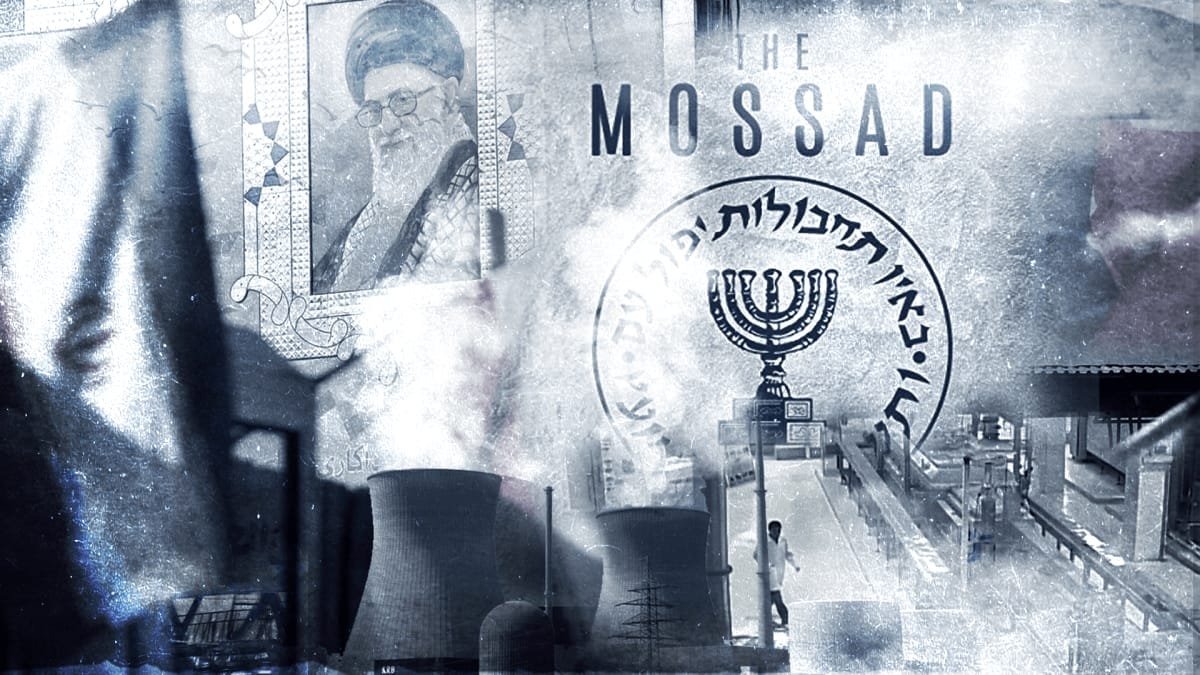
There is a fine line between daring espionage and sheer strategic delusion, and Israel’s intelligence establishment may have just crossed it. The revelation that the Mossad spent years cultivating former Iranian President Mahmoud Ahmadinejad as a potential leader for a post-regime Iran is nothing short of breathtaking. For Israelis, the name Ahmadinejad does not evoke the image of a reformist statesman. It evokes the memory of a leader who stood on the global stage, denied the Holocaust, called for Israel to be wiped off the map, and aggressively accelerated Tehran’s nuclear program.
The details of the operation read like a spy thriller. It began with covert lines of communication, financial assistance for housing and travel, and secret rendezvous under the cover of academic conferences in Hungary. Former Mossad chief David Barnea reportedly traveled to Budapest in 2024 to meet the former president personally. Ahmadinejad, sidelined by the Supreme Leader’s inner circle and repeatedly disqualified from running for office, had undergone a bizarre cosmetic and political makeover. He trimmed his beard, learned English, and began positioning himself as a defender of regular Iranians against a corrupt clerical class. He reportedly even fantasized about playing the role of an Iranian Boris Yeltsin, promising to normalize relations with Israel and join the Abraham Accords.
The operation reached its climax during the 2026 war between Israel and Iran. Following a calculated Israeli airstrike on his compound designed to neutralize his security detail, Mossad operatives extracted Ahmadinejad and moved him to a safe house inside Iran. This was supposed to be the first step of a grand regime-change operation. Instead, the plan collapsed. Shaken by the chaos, Ahmadinejad reportedly became disillusioned with the Israeli blueprint and walked out of the safe house under mysterious circumstances. Today, according to Iranian officials, he is under house arrest, back in the custody of the Islamic Revolutionary Guard Corps.
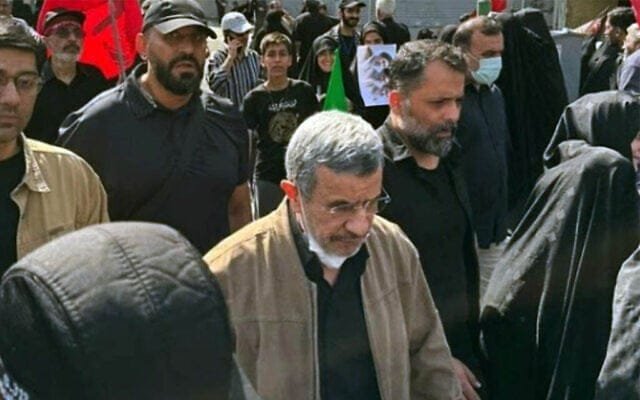
The central question for Israeli policymakers is not how the extraction failed, but why we were betting on Mahmoud Ahmadinejad in the first place.
Was he ever a viable option, or was this a colossal strategic blunder?
Believing that a man who built his entire political identity on virulent anti-Semitism and anti-Zionism could transform into a pro-Western reformer is the height of wishful thinking. History is littered with the failures of Western intelligence agencies attempting to handpick the leaders of foreign nations. From the disastrous installment of Hamid Karzai in Afghanistan to the historical miscalculations of the 1953 Iranian coup, external powers consistently fail to predict how the local population will react to a leader perceived as a foreign puppet.
Even if the Mossad succeeded in placing Ahmadinejad in power, his domestic legitimacy would have been dead on arrival. The Iranian public, particularly the young, progressive generation that took to the streets during the Woman, Life, Freedom protests, has not forgotten who repressed them. Ahmadinejad was the face of the brutal crackdown on the 2009 Green Movement. He is deeply stained by the blood of Iranian dissidents. To the average Iranian, a regime led by Ahmadinejad would not represent a new dawn of freedom. It would look like a cynical reshuffling of the old guard, made worse by the taint of foreign backing.
Furthermore, the internal opposition from Israel’s own Military Intelligence division reveals that this plan was highly controversial from the start. Skeptics within the Israel Defense Forces pointed out that trying to orchestrate complex political transitions during the chaos of war is fundamentally futile. They warned that ousting the current clerical regime without a cohesive, genuinely democratic alternative would likely lead to a military dictatorship run entirely by the Revolutionary Guards.
Alex Vatanka, director of the Iran Program at the Middle East Institute, has noted that Ahmadinejad’s alienation from the regime was an open secret in Tehran. Yet, knowing a politician is disgruntled is very different from believing they possess the character, the popularity, or the capability to govern a post-theocratic Iran. Ahmadinejad did not want to dismantle the system; he wanted to lead it again. His primary motivation was personal survival and a return to power, not the genuine democratization of his country.
There is, of course, an alternative perspective. Some intelligence analysts suggest that the Mossad never truly believed Ahmadinejad could govern. Under this view, the cultivation of the former president was a massive psychological operation designed to sow deep paranoia and distrust within the highest echelons of the Iranian regime. If the supreme goal was to make the ayatollahs look over their shoulders and suspect their own former leaders of treason, then the operation succeeded spectacularly. Ahmadinejad’s current house arrest is proof of the toxic atmosphere of suspicion now gripping Tehran.
But if the New York Times report is accurate, and Israel actually spent millions of dollars, risked the lives of its operatives, and coordinated with foreign governments to prepare Ahmadinejad for leadership, it represents a dangerous lapse in judgment.
Israel cannot afford to build its long-term national security strategies on the shifting sands of opportunistic despots. A stable, peaceful future with Iran will not be achieved by backing a disgraced former dictator who suddenly claims to have seen the light. It will only come when the Iranian people themselves choose their path forward. By trying to play kingmaker with a man like Ahmadinejad, Israel did not just risk a tactical failure. It risked its own moral clarity.