
The debate taking place across dinner tables in Golders Green and Gateshead is no longer about whether British Jews are safe. It is about how long the British state can afford to ignore the ideological rot eating away at its social fabric. Twenty-one years after four homegrown Islamist extremists detonated suicide bombs during London’s morning rush hour, killing 52 people and wounding hundreds, the United Kingdom has built a formidable physical security apparatus. It can disrupt plots, block communications, and protect public squares. But when it comes to confronting the ideas that motivate the killers, the British establishment is paralyzed by a profound, systemic cowardice.
This domestic paralysis is not a matter of speculation. It is documented in the government’s own files. The 2023 CONTEST counter-extremism strategy made it plain that Islamist extremism remains the single largest threat to the country by both volume and severity. Since 2018, this specific threat has accounted for 67% of all attacks and roughly three-quarters of MI5’s active caseload. In contrast, extreme right-wing extremism, while highly dangerous and heavily monitored, accounted for approximately 22% of attacks over the same period. There is a clear, undeniable hierarchy of danger.
Yet, the mechanism designed to stop radicalization before it turns into violence is failing spectacularly. The Prevent program was built to intervene early. But as Sir William Shawcross revealed in his damning independent review, the program has been crippled by a comforting fear of being labeled Islamophobic. Shawcross described a pervasive timidity among officials. While 80% of live police investigations were focused on Islamists, only 22% of the referrals to Prevent actually concerned Islamism.
The latest official statistics for the year ending March 2025 illustrate the depth of this bureaucratic dysfunction. A record 8,778 referrals were made to Prevent, representing a massive 27% increase. Yet despite these soaring numbers, only 17% of those referred were actually adopted into the Channel intervention program. The vast majority of cases were dismissed or categorized as having no clear ideology, masking the true nature of the threat. Sir William Shawcross recently accused the government of disregarding his core recommendations, leaving the British public directly at risk.
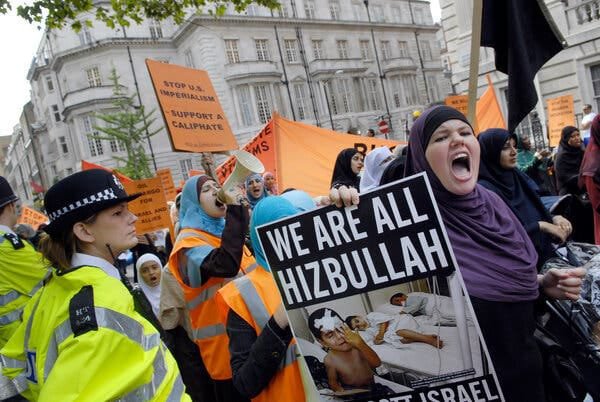
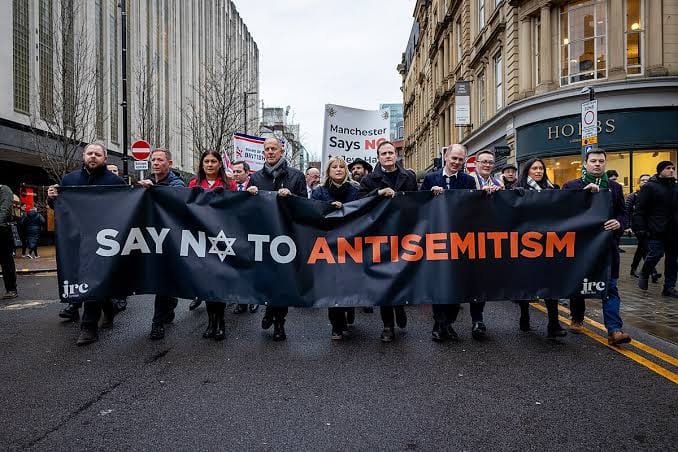
For the Jewish community in Britain, this bureaucratic failure has had immediate, terrifying consequences. The line between radical Islamist ideology and street-level anti-Semitism has completely vanished. The state’s refusal to confront the core of Islamist extremism has allowed a toxic, normalized hatred to fester in British towns and cities. What begins as radical preaching under the guise of anti-Zionism quickly mutates into physical violence on the streets of London.
The symptoms of this untreated disease are visible everywhere. We have seen the targeting of Hatzola Jewish emergency vehicles, the terrifying stabbing in Golders Green, and the physical intimidation of worshippers on Yom Kippur. On university campuses and during massive weekly protests in central London, the rhetoric of genocide and Holocaust inversion is shouted with absolute impunity. Radicals openly justify the October 7 atrocities committed by Hamas as legitimate resistance.
The British government, terrified of political blowback, has chosen to look the other way. By treating anti-Semitism as a generic form of hate speech rather than a core, structural element of Islamist ideology, the state is actively enabling the threat. It allows extremist networks to operate under the radar, hiding behind legitimate charities and community organizations while radicalizing a new generation of British-born citizens.
This cowardice is a betrayal of the promises made by successive prime ministers since 2005. When Tony Blair famously declared that the rules of the game were changing, he promised a nation that Britain would no longer tolerate those who preach hate. Instead, the state has allowed those very forces to dictate the terms of public debate. The fear of causing offense has overridden the primary duty of any sovereign government: the defense of its citizens.
The parallel between the domestic failures of British security agencies and the broader international struggle against global extremism is striking. Just as Israel faces adversaries on its borders who deny its right to exist, British Jews are confronting an ideological movement within their own borders that seeks to make Jewish life in the United Kingdom unviable. It is a shared struggle against a singular, uncompromising worldview.
Britain can no longer afford the luxury of self-delusion. It cannot continue to celebrate disrupted operational plots while ignoring the social and cultural terrain that produces those plots in the first place. The record high number of Prevent referrals should not be viewed as a success; it is a symptom of a rapidly expanding crisis.
If the British state continues to run away from the ideological fight, the damage to its democracy and its minority communities will become entirely irreversible. The lesson of the last twenty-one years is simple and harsh: you cannot defeat an enemy you are too afraid to name. For Britain’s sake, and for the sake of the Jewish community that has called these islands home for centuries, the time for polite silence is over.