Strategic Analysis of International Diplomacy, Border Security, and the Golan Heights
1. Diplomatic Staging vs. Ground Reality
When UN Secretary General António Guterres stood in the grand hall of the People’s Palace in Damascus, he delivered a pretty familiar message to the world. On his first visit to the Syrian capital as UN chief since 2009, Guterres declared that the Golan Heights are Syrian territory and insisted that Israeli security operations in the border region need to stop. The whole setting felt carefully staged, flanked by Syrian Foreign Minister Asaad al Shaibani and welcomed by transitional President Ahmed al Sharaa, the UN chief was clearly trying to project a fresh era of international legitimacy for Syria. But for Israelis watching from the heights above the Jordan Valley, the whole thing felt less like a diplomatic breakthrough and more like a genuine disconnect from the reality on the ground.Guterres made a point of noting that the UN had made a deliberate choice to stay away from Damascus throughout the long, brutal years of repression that followed 2011. For well over a decade, while the previous regime slaughtered hundreds of thousands of its own citizens and barrel bombs flattened entire cities, international diplomacy stayed conspicuously quiet on the ground. Millions fled as refugees, chemical weapons were used against civilians, and the UN largely watched from a distance. Now, with Syria climbing out of the wreckage under a transitional government, the UN chief shows up not with any real reckoning of that failure, but with a pointed lecture aimed squarely across the border at Jerusalem.
2. Physical Geography and Historical Security Context
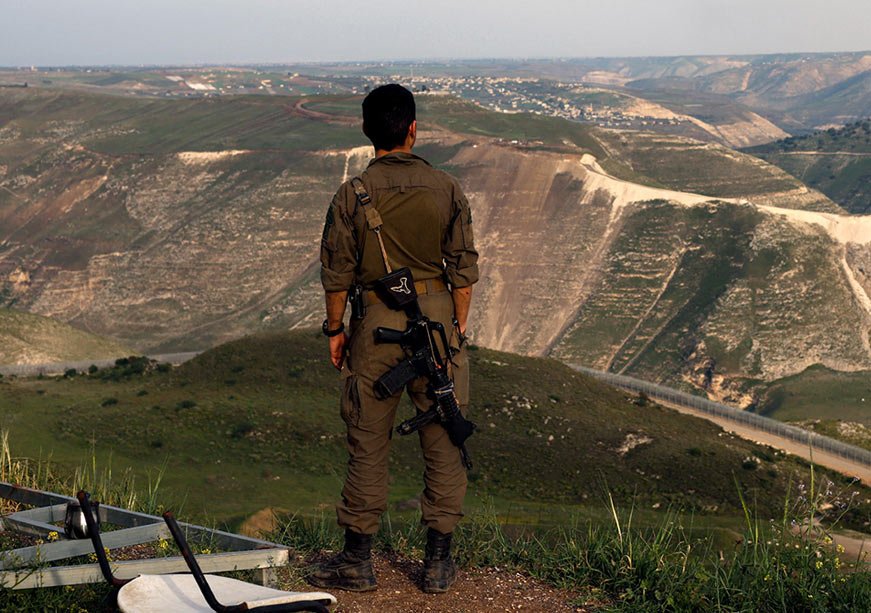
To understand why Israeli policymakers greet these statements with quiet resolve rather than panic, you really have to look at the physical geography of the Golan Heights itself. Spanning roughly 1,200 square kilometers, this elevated basalt plateau sits with a commanding view over the Galilee basin, the Hula Valley, and the plains leading right into Damascus. Before June 1967, Syrian military positions on these cliffs regularly shelled civilian farming communities in northern Israel, turning ordinary daily life into a gamble for survival. Israel took the plateau during the Six Day War specifically to eliminate that constant threat, later extending Israeli civilian law and administration over the territory through the Golan Heights Law of 1981.Decades of relative peace and stability have followed inside the territory itself since then. Today, more than 31,000 Israeli citizens live across over thirty thriving communities in the Golan, living alongside roughly 29,000 local Druze residents who have full access to Israeli infrastructure, healthcare, and economic opportunity. In 2019, the United States formally recognized Israeli sovereignty over the region, essentially acknowledging what had been obvious on the ground for decades already. The Golan Heights function as a core part of Israel’s national defense and everyday life there, not some temporary military outpost still up for diplomatic negotiation.
3. Buffer Zone Collapse and Measured Defensive Operations
What actually triggered Guterres’s sharp comments in Damascus was Israel’s defensive move into the demilitarized buffer zone following the sudden collapse of the Assad regime in late 2024. Under the 1974 Disengagement of Forces Agreement, a UN Disengagement Observer Force was supposed to monitor a thin strip of land separating Israeli and Syrian forces. But international agreements like that only work if there’s a responsible state actor on the other side actually enforcing them. Once the central authority in Damascus fell apart, that buffer zone risked turning into a dangerous vacuum, ripe for armed militias, rogue military units, and weapons stockpiles left behind by fleeing forces.Faced with a total breakdown of Syrian border control, Israel took what look like measured, necessary steps to secure the high ground. Israeli forces set up temporary defensive positions inside the buffer zone to keep hostile elements from turning it into a forward launching pad along the border. Israel also struck key military infrastructure and strategic weapons stockpiles across southern Syria to make sure heavy arms didn’t end up in the hands of extremist factions. Expecting any sovereign country to leave its northern flank exposed during a volatile political transition next door isn’t a demand any responsible government could reasonably accept.
4. The Limitations of Paper Mandates and Peacekeeping Forces
UN peacekeepers have repeatedly shown they can’t actually enforce demilitarization once a real crisis hits. We’ve seen that play out in southern Lebanon, where international observers stood by for years while terror groups quietly built extensive underground infrastructure right along Israel’s northern border. The observer force in the Golan faced similar limits during the Syrian civil war too, with peacekeepers repeatedly evacuated or even taken hostage by insurgent groups. Betting on paper mandates and international observers to shield Israeli towns from potential cross border attacks simply isn’t a workable defense strategy.
5. Political Posturing in Damascus and State Sovereignty
Transitional leaders in Damascus, including Ahmed al Sharaa, have called for an immediate Israeli withdrawal and a return to the strict terms of the 1974 agreement. Wanting to project national strength and lock in international backing for postwar reconstruction makes sense from a domestic political angle, rebuilding a shattered country takes serious foreign capital and recognition. But lecturing Israel about territorial integrity while the Syrian state itself is still struggling to hold a monopoly on violence across its own land is a genuinely ironic position to be in. Large parts of Syria remain fragmented, with various internal factions and outside powers still exercising real influence on the ground.
6. Abstract Legal Formulas versus Defensive Realities
The Secretary General declared that the UN’s agenda for Syria is simply the agenda of the Syrian government and its people. That statement really highlights the core problem with how the diplomatic establishment in New York operates. By treating international law as a set of static legal formulas detached from what’s actually happening on the ground, the UN sidesteps the security logic that actually guides Israeli defense policy. Sovereign borders don’t get defended by diplomatic declarations written up in conference rooms. They get preserved through strength, intelligence, and physical control of defensible terrain.
7. Strategic Calculus and National Survival in the Golan Heights
For Israel, the strategic math around the Golan Heights has never really been in question. The region holds critical headwaters feeding the Jordan River and the Sea of Galilee, vital freshwater resources in a genuinely arid part of the world. Even more importantly, it provides the early warning capability and defensive depth needed to deter potential aggression coming from the east. Giving up that high ground would put major Israeli population centers right back in the direct line of fire. Guterres can keep touring the historic streets of Damascus, offering promises of international solidarity and legal backing to the new leadership. He can keep calling on the international community to pressure Jerusalem through the Security Council. But press conferences in Damascus aren’t going to change the fundamental reality on the ground. Israel is going to keep prioritizing the safety of its own citizens over foreign approval. The Golan Heights will stay Israeli, continuing to provide the shield that keeps northern Israel secure, regardless of whatever political shifts happen in Damascus next.