
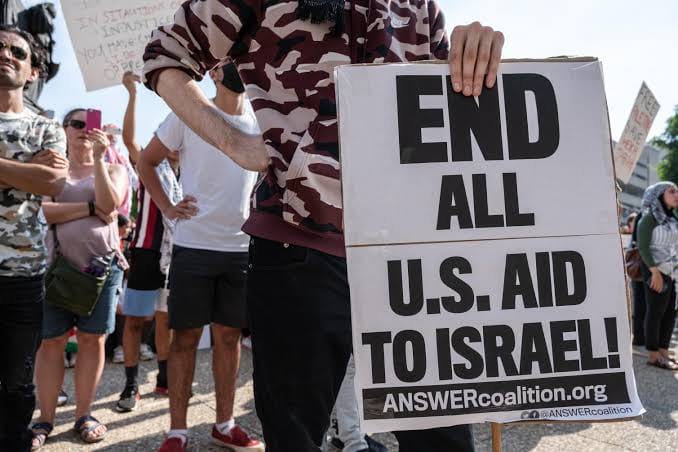
The decades-old framework of the United States and Israel defense relationship, long characterized by the language of charity and the annual disbursement of multi-billion dollar aid packages, is reaching a definitive conclusion. As the current ten-year Memorandum of Understanding approaches its expiration in 2028, the prevailing political winds in Washington and Jerusalem suggest that the era of Israel as a mere aid recipient is drawing to a close. For Israel, the challenge ahead is not merely to find a replacement for this funding, but to pivot toward a new and more robust paradigm: a true, reciprocal partnership.
This transition is not a sudden collapse of support, but a recognition of changing global realities. The traditional narrative of aid has become an increasingly fragile political asset, vulnerable to shifting public opinion and domestic fiscal arguments in the United States. When a relationship is framed as philanthropy, it becomes a gift, and gifts are inherently subject to the fickle mood of the giver. In the current climate, where American public discourse is increasingly focused on domestic priorities and skepticism toward overseas commitments, the vocabulary of charity has become a significant weakness for the alliance.
The path forward, envisioned by defense planners, is a move toward a Memorandum of Partnership. This concept seeks to institutionalize deep industrial, technological, and intelligence integration. By shifting focus from annual cash grants to co-production, joint research, and shared technological supply chains, the relationship can be shielded from the volatility of biennial political cycles. This model aligns with a growing legislative push in the United States to embed Israeli technology into American military procurement and research frameworks, making the alliance a feature of American industrial policy rather than a line item for foreign assistance.
However, this transition is fraught with difficulty. Institutionalizing the relationship through deep bureaucratic integration risks shielding the alliance from necessary congressional oversight and public accountability. A partnership that is too opaque risks losing the democratic legitimacy that has underpinned it for half a century. Furthermore, for Israel, deep dependence on the American defense industrial base is a strategic vulnerability. A sovereign nation must maintain its own production capacities to ensure its total freedom of action. Moving toward a reciprocal partnership means accepting that the special nature of the relationship may require more transparency, not less, as the integration of defense sectors creates new interdependencies that demand clear and shared rules.

The strategic logic for the United States, however, remains robust. Israel provides an unmatched partner in the Middle East, offering a battle-tested laboratory for air defense, cyber warfare, and AI-enabled decision-support systems. When the United States integrates Israeli systems, it does not just arm an ally; it imports vital battlefield learning that would otherwise cost billions to replicate independently. In a world where the United States seeks to manage a multipolar environment, having an autonomous and capable ally in a volatile region is a structural asset rather than an economic liability. Israel absorbs the security burden of the region, allowing Washington to focus its power projection and economic resources elsewhere.
The coming years will be defined by the friction of this transition. Critics on both the political left and the right in the United States will continue to challenge the costs and the optics of the relationship. Israel must therefore articulate a new, transactional case for the alliance. It must prove that it is not a needy recipient but a partner of immense strategic utility, one whose integration into the Western defense architecture provides measurable returns in security, technology, and deterrence. Israel must stop talking like a country that requires handouts and start acting like a country that provides security.
This shift will require a difficult mental adjustment in Jerusalem. For generations, the military and political establishment has relied on the predictable flow of American funds as a buffer against budgetary instability. Losing this buffer will force a more austere and efficient approach to national defense. It will require Israel to maximize its own industrial output and perhaps seek new, non-traditional partners to fill the gaps. Yet, this newfound self-reliance will ultimately make Israel a stronger and more desirable ally. Washington will respect Israel more for its ability to stand on its own two feet, not less.
The transition to a partnership model also provides a unique opportunity to reset the terms of the relationship. It is an opportunity for Israel to demand a seat at the table in American strategic planning. If the United States wants access to the data, intelligence, and innovative defensive systems that Israel generates, then the relationship must be one of equals. This means a more collaborative approach to setting regional policies and a mutual respect for each other’s security dilemmas.
Israel stands at a significant crossroads in its history. By shedding the outdated mantle of an aid recipient, it has the opportunity to redefine itself as an essential and high-value partner in the global arena. This shift is historically difficult and politically demanding, but it is necessary for the long-term survival of an alliance that has been the cornerstone of regional stability for generations.
The aid era is over. The era of reciprocal necessity has begun. Israel must embrace this reality with the confidence of a nation that has survived against all odds and that now offers the world a unique and indispensable capability. The future of the relationship will not be written in the language of charity, but in the language of shared interests, technological prowess, and an unyielding commitment to security. It is time to move beyond the memorandum of understanding and embrace the memorandum of partnership as the definitive document of a new and enduring strategic reality.